- Participants
- NDIS Plan
- Funding Periods
Funding Periods
Overview
Astalty supports adding services for an NDIS Plan that has funding periods associated with it. For more information about funding periods, please visit the NDIS website. This feature is available for all funding types this includes NDIA, Plan, and Self Managed Participants.
Video Walkthrough
For a detailed walkthrough about how to manage funding periods and view utilisation data, please view the video below.
How to add funding periods
Create a NDIS Plan
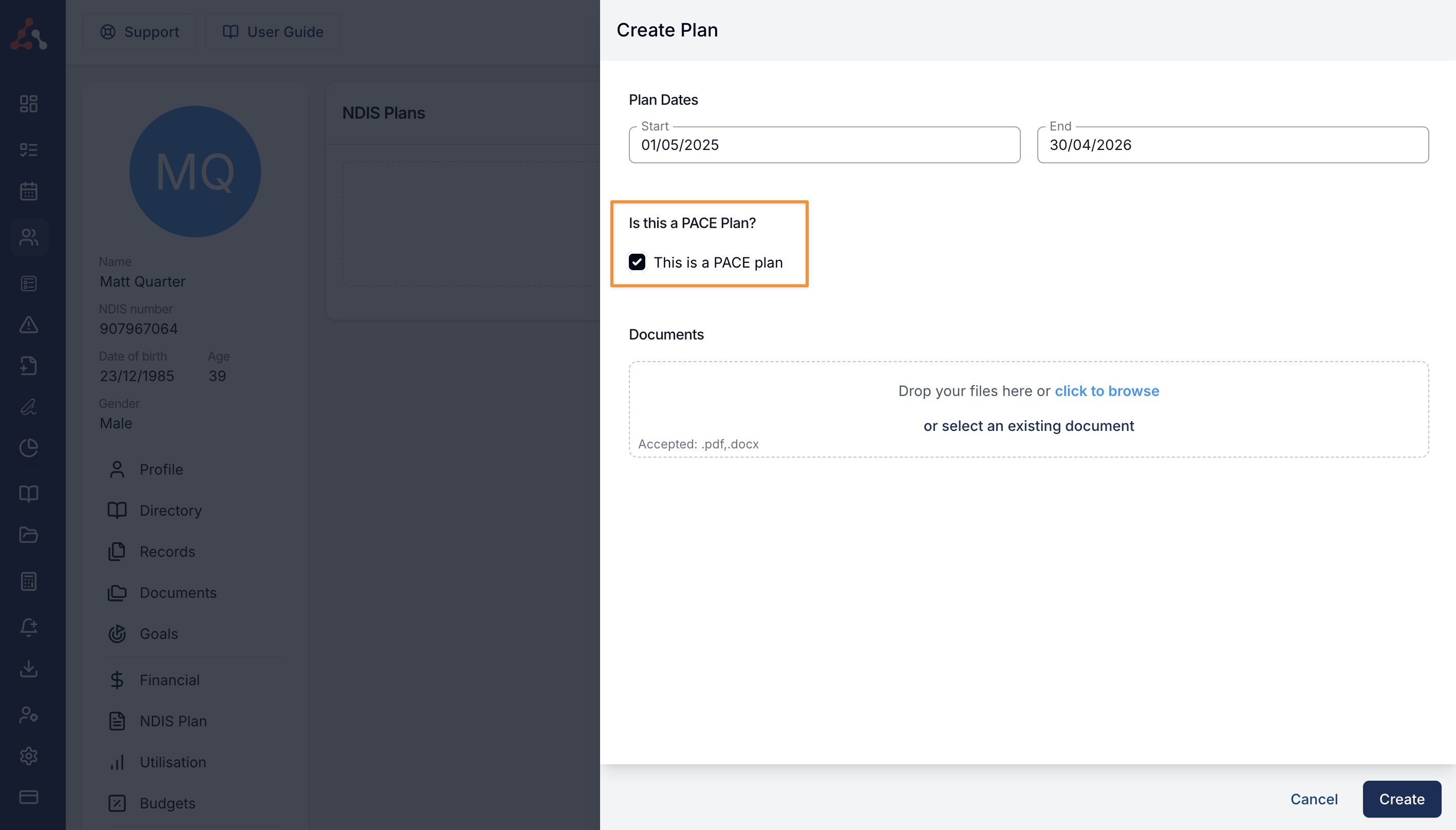
The first step is to create an NDIS plan within a Participant's profile - it's important to ensure the "Is this a PACE plan" checkbox has been selected.
Create a Service
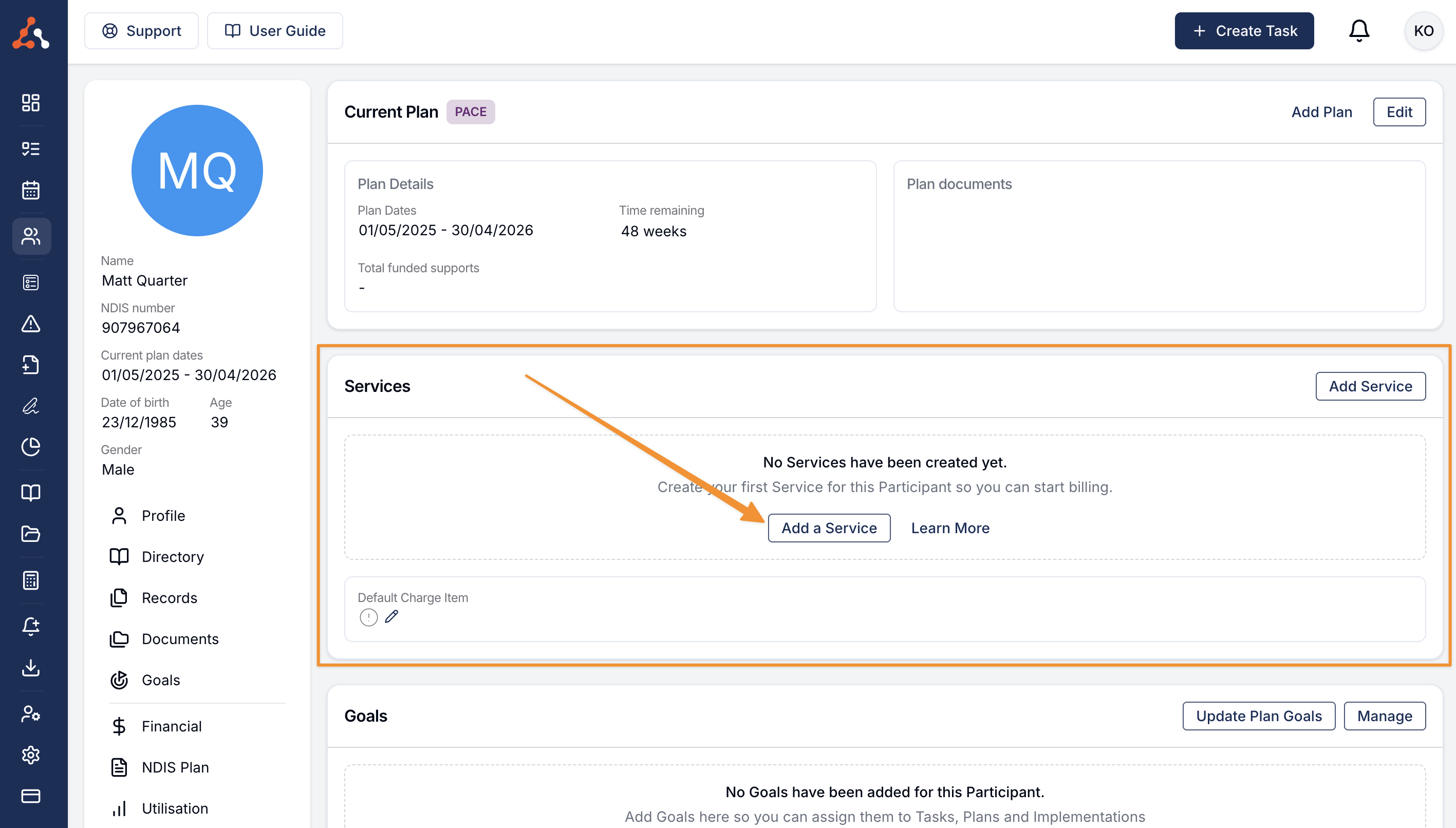
Once the NDIS Plan has been created, navigate into the plan from the Participant's profile and click "Add a Service".
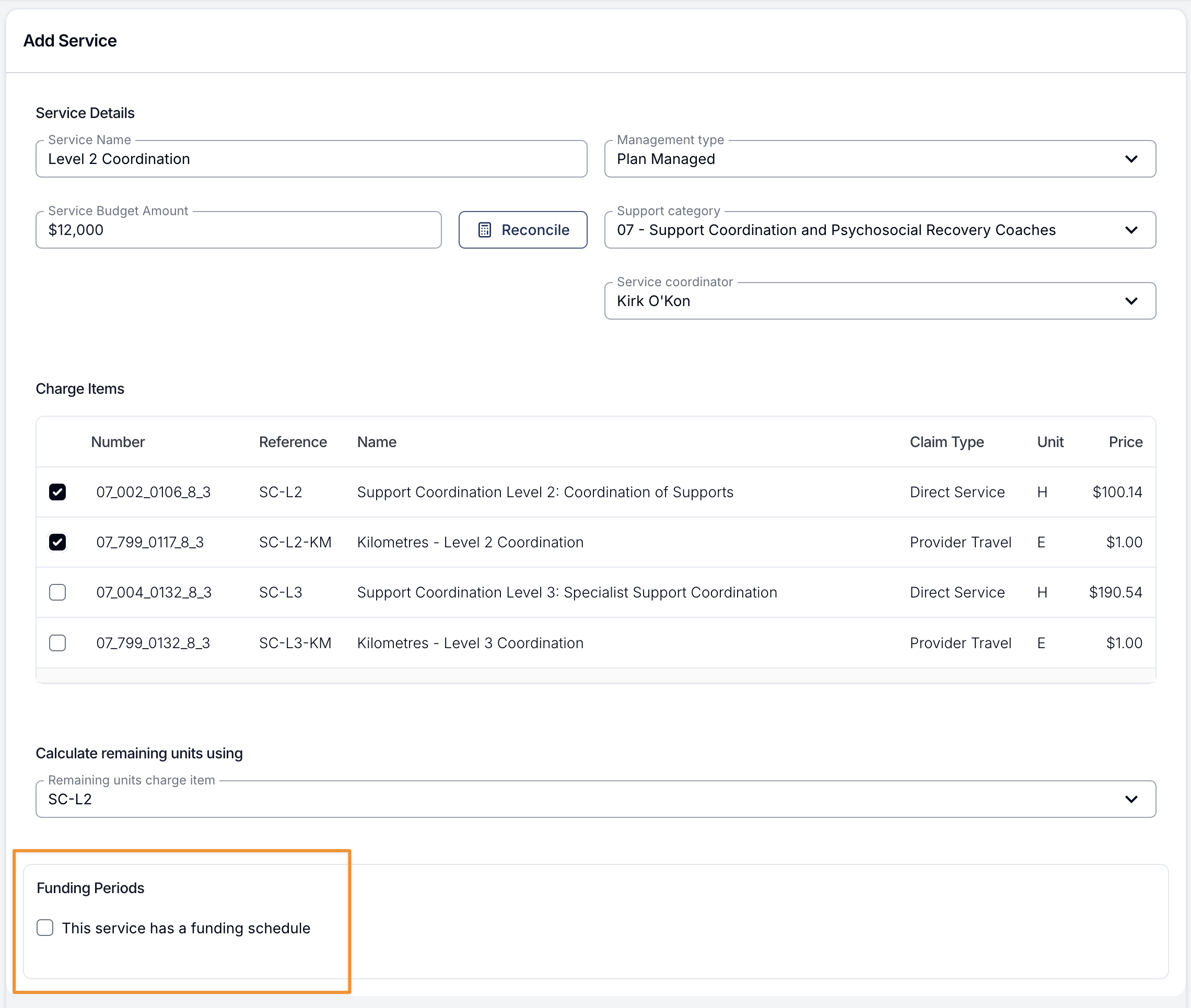
When creating the Service, ensure you click "This service has a funding schedule".
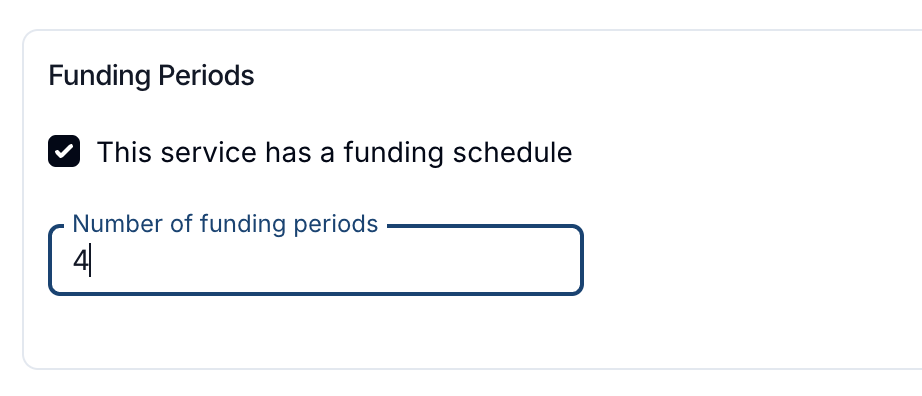
Once you have checked this box, you'll be prompted to add the number of periods within the NDIS plan.
Astalty will create the periods with the default dates and amounts, however you are free to customise these if you need to.
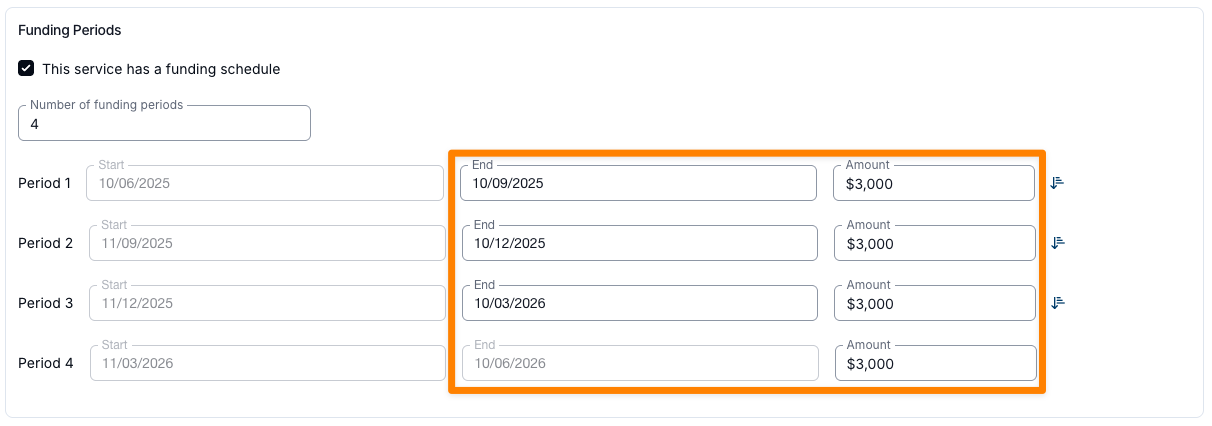
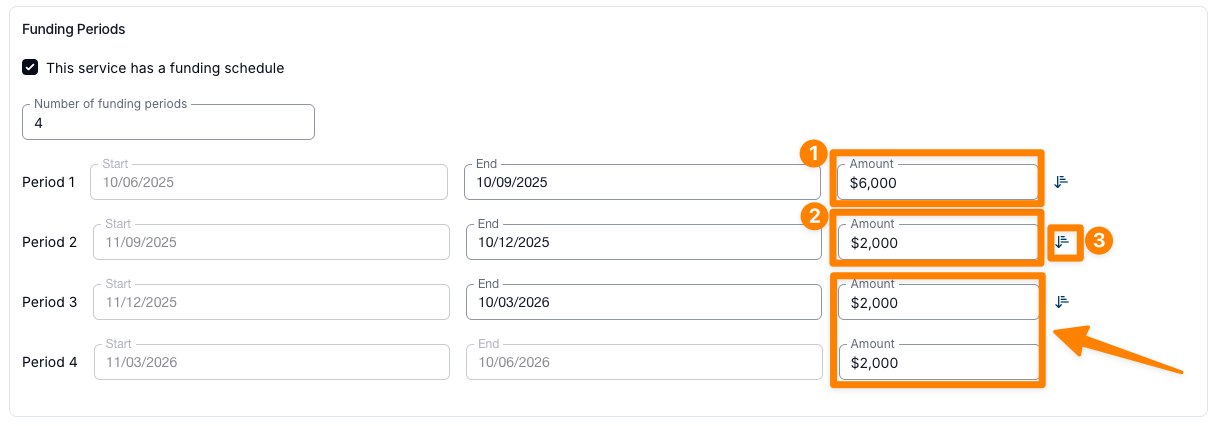
To use the same amount for the remaining Funding Periods, enter it in a period and select the copy icon. Astalty copies the amount to every later period. This is useful when the first period has a different amount from the rest.
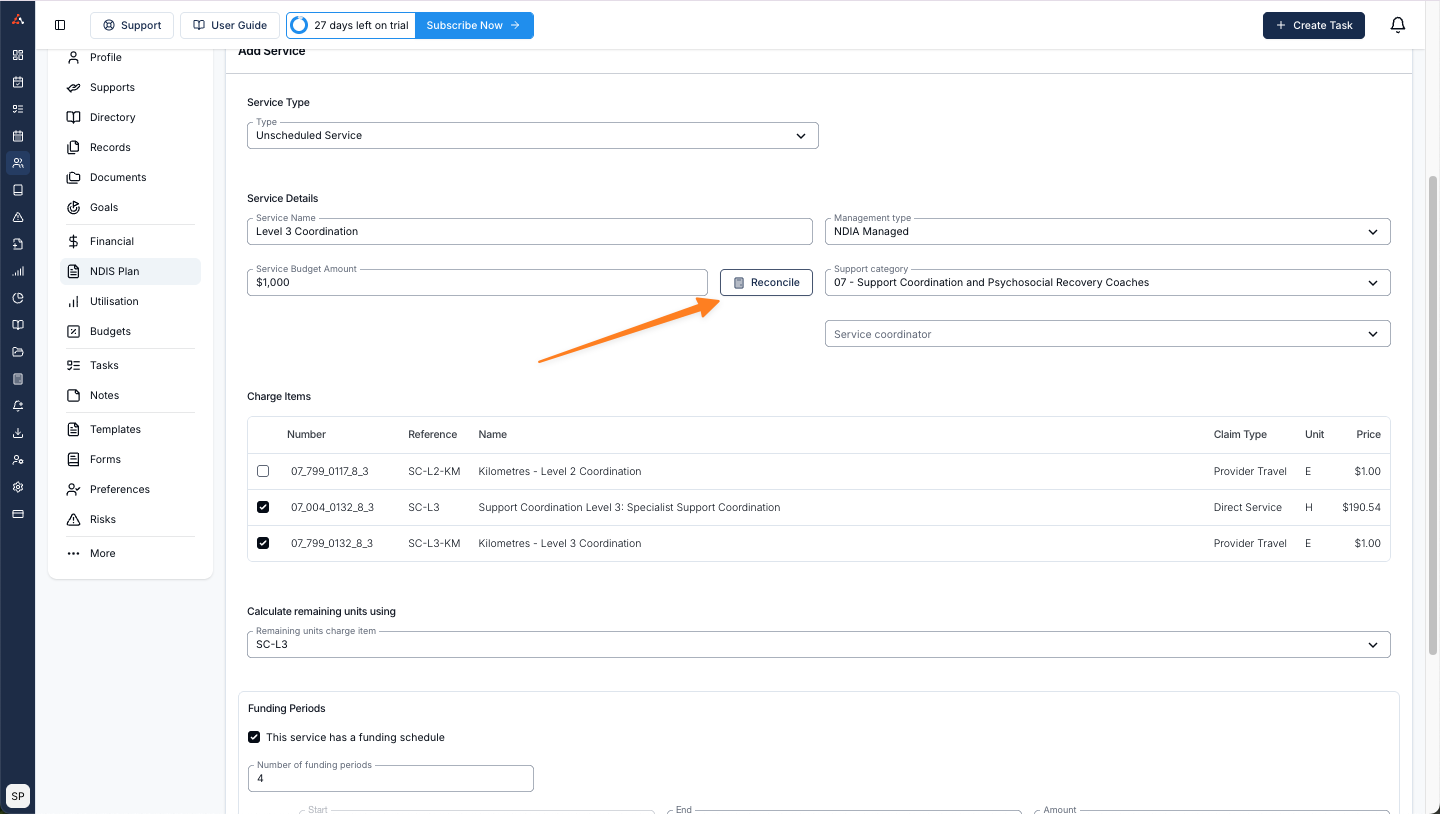
Reconciling Funding Periods to Account for Utilised Funds
To account for utilised funding prior to creating the funding period service within Astalty you can use the 'Reconcile' option within the service. When reconciling a funding period service, one of the most important points to clarify is the reconciliation date.
- The reconciliation date determines which funding period you are reconciling.
- The reconciliation remaining amount reflects the funds that have been released up to that date.
Example
Let's say:
- The total service budget is $1,000.
- The plan runs across four funding periods.
- By funding period three, a total of $750 has been released.
- You have already used $150 of the Participant's funding.
That means:
- The released funds up to period three is $750.
- Remaining funds = $750 - $150 = $600.
- Therefore, you would record $600 remaining in the Participant's budget.
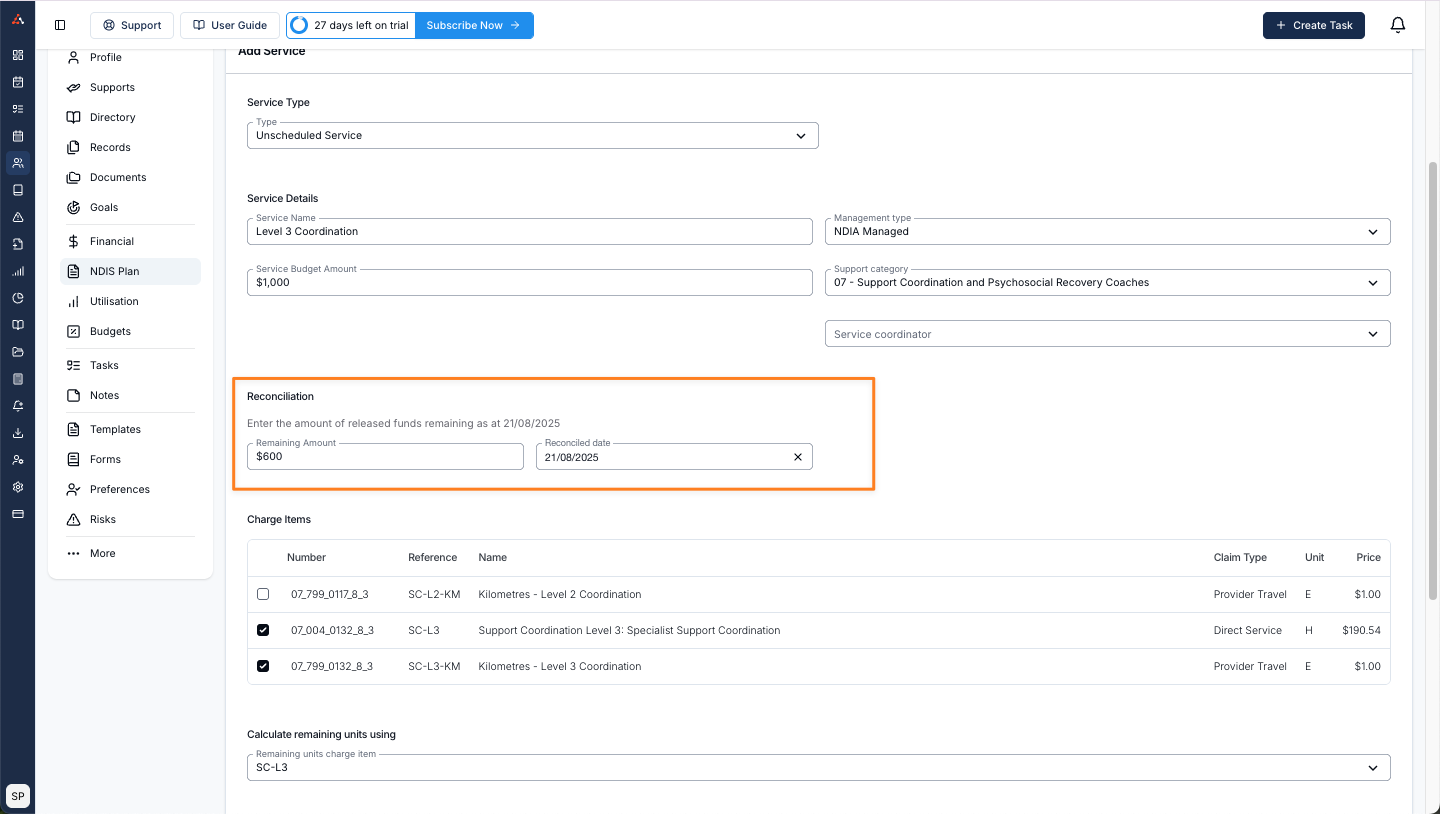
The utilisation updates to reflect the reconciled amount.
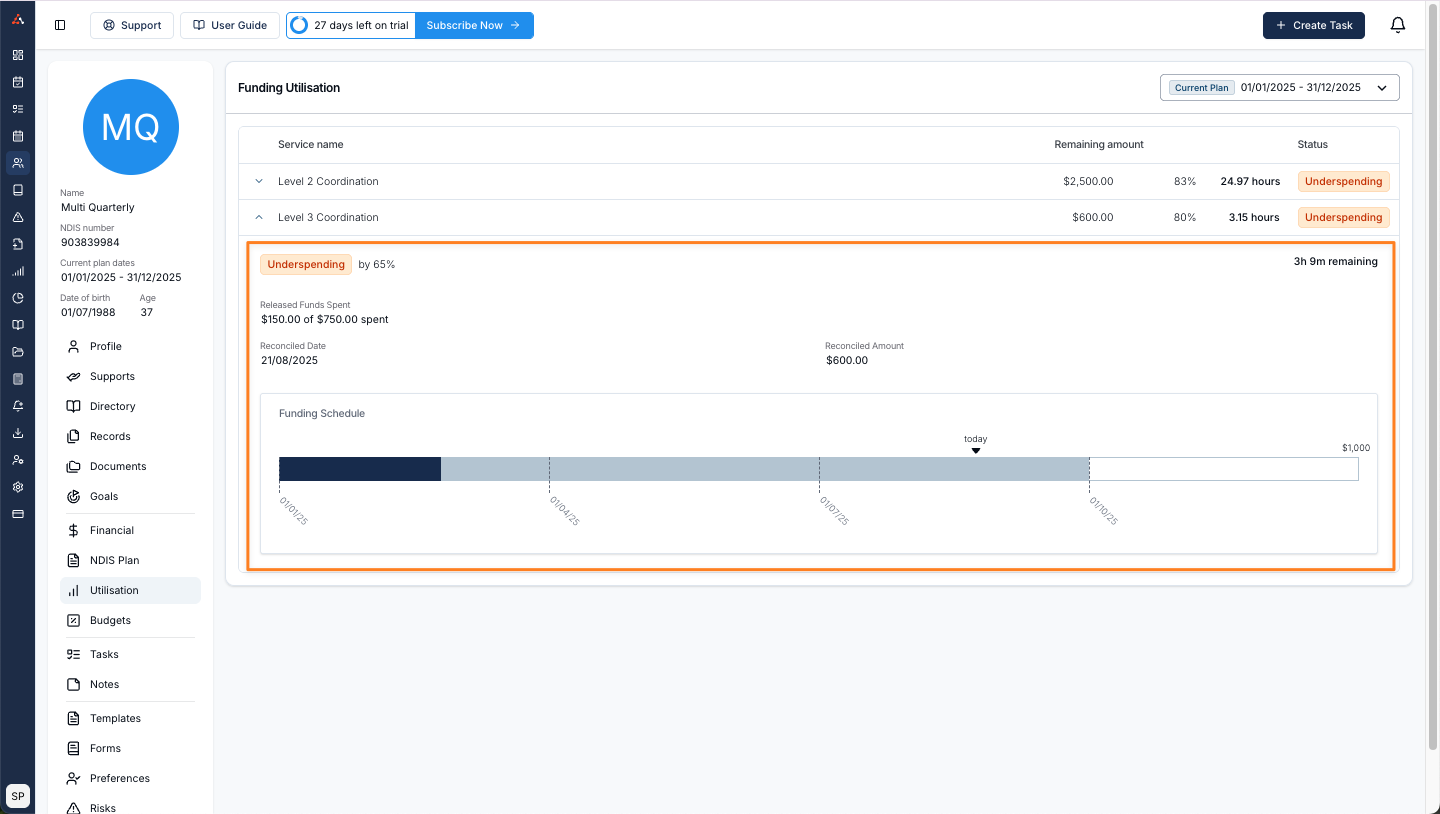
You cannot save a reconciliation amount that exceeds the funding released for that period. Reduce the amount to the available total before saving.
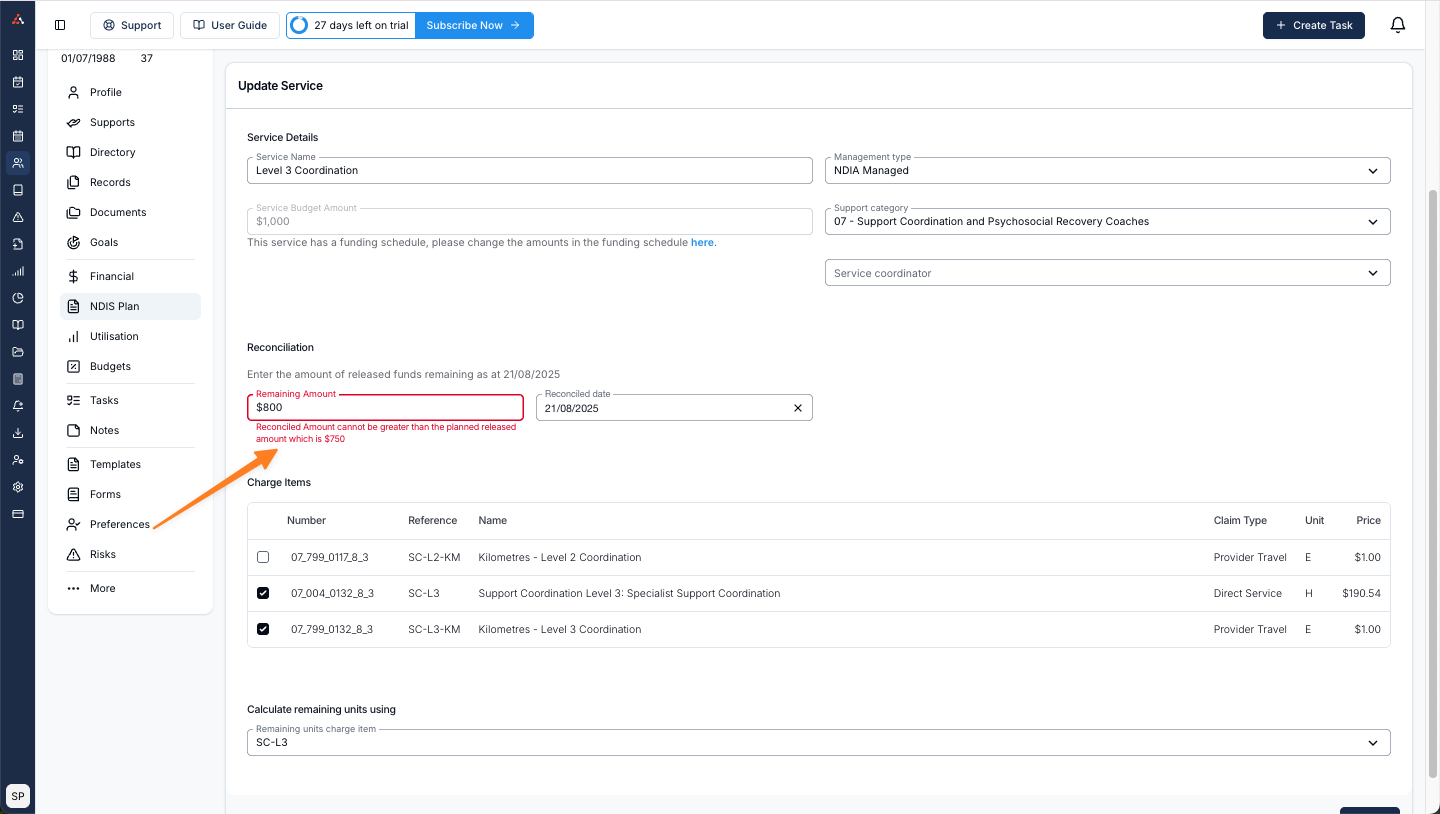
You cannot set a future reconciliation date. Future dates are disabled in the date picker.
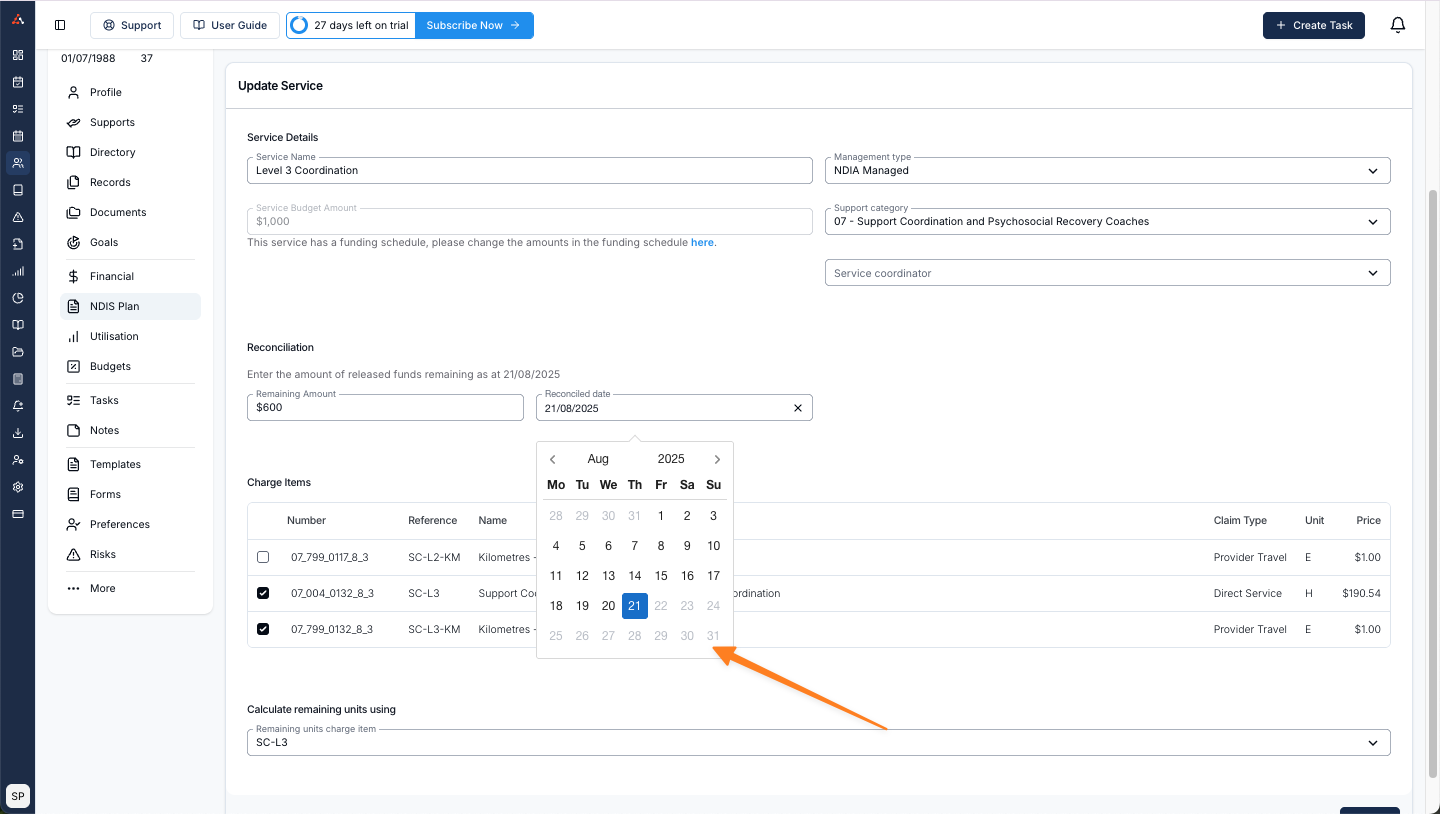
Editing Services with Funding Periods
If you need to adjust the Funding Periods or Service Budget Amount of an existing Service that has a Funding Schedule, these changes need to be made in the dedicated Edit Funding Periods page as they cannot be edited via the Update Service page. The Service Budget Amount is determined by the funded amounts assigned to the individual funding periods.
To edit a Participant's Service where there is a funding schedule assigned, navigate to the NDIS Plan page within their profile and ensure that you are viewing the Plan you want to edit the Service for - when you're ready, select the Service you want to edit.
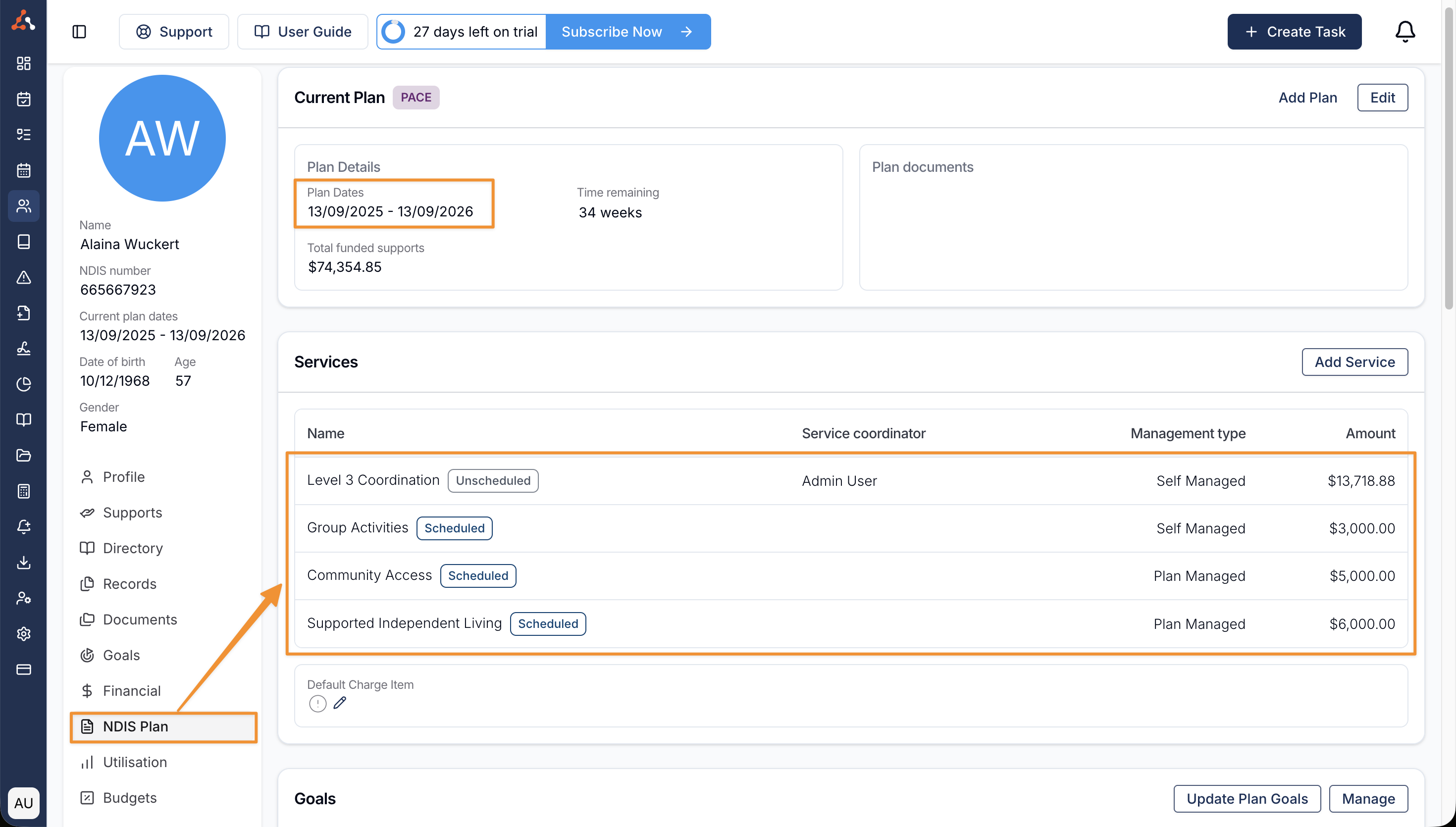
Editing the Funding Periods or Service Budget Amount
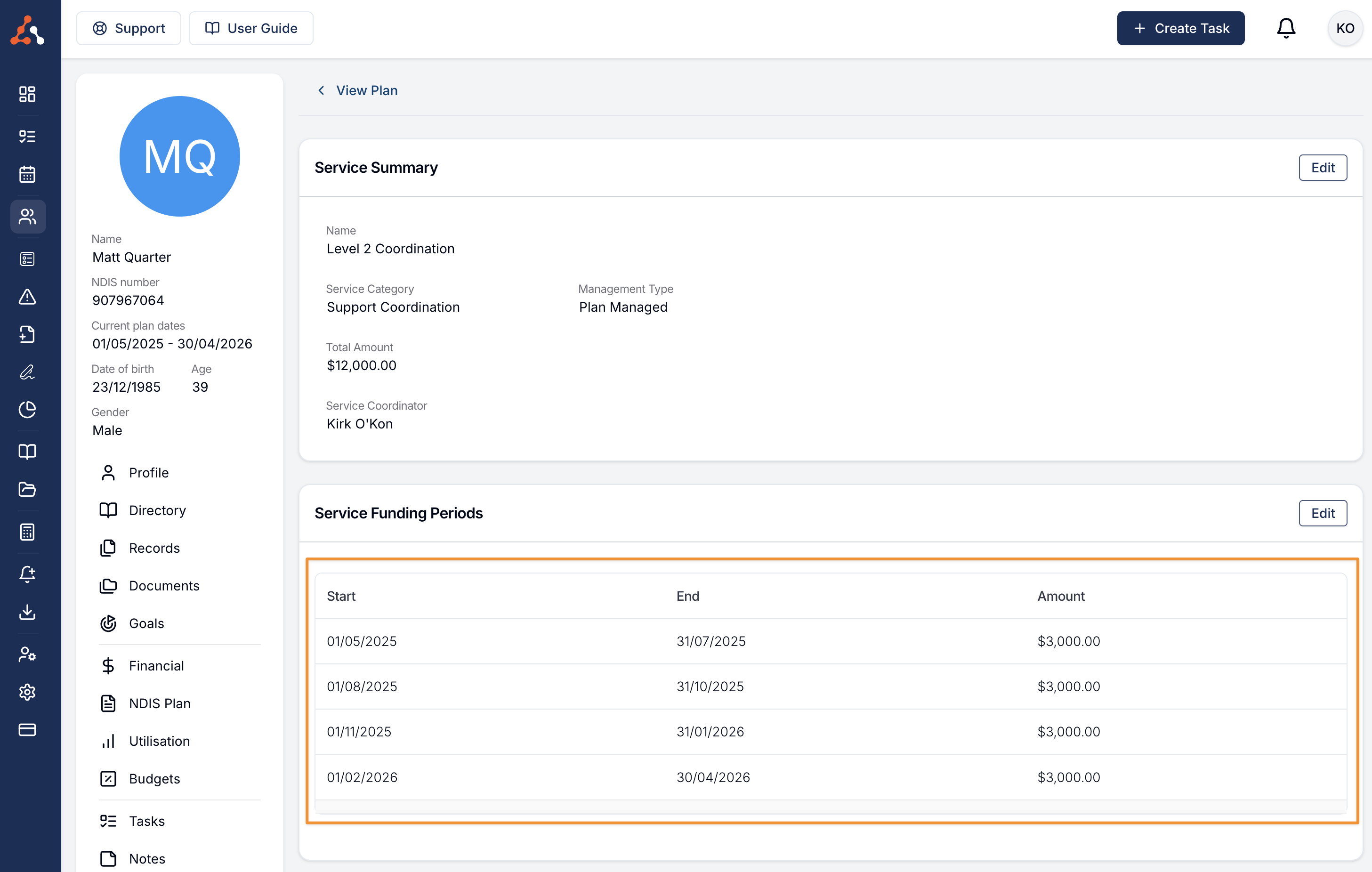
If the changes to the Service relate to the Service Budget Amount or the Funding Periods themselves, then select Edit in the Service Funding Periods.
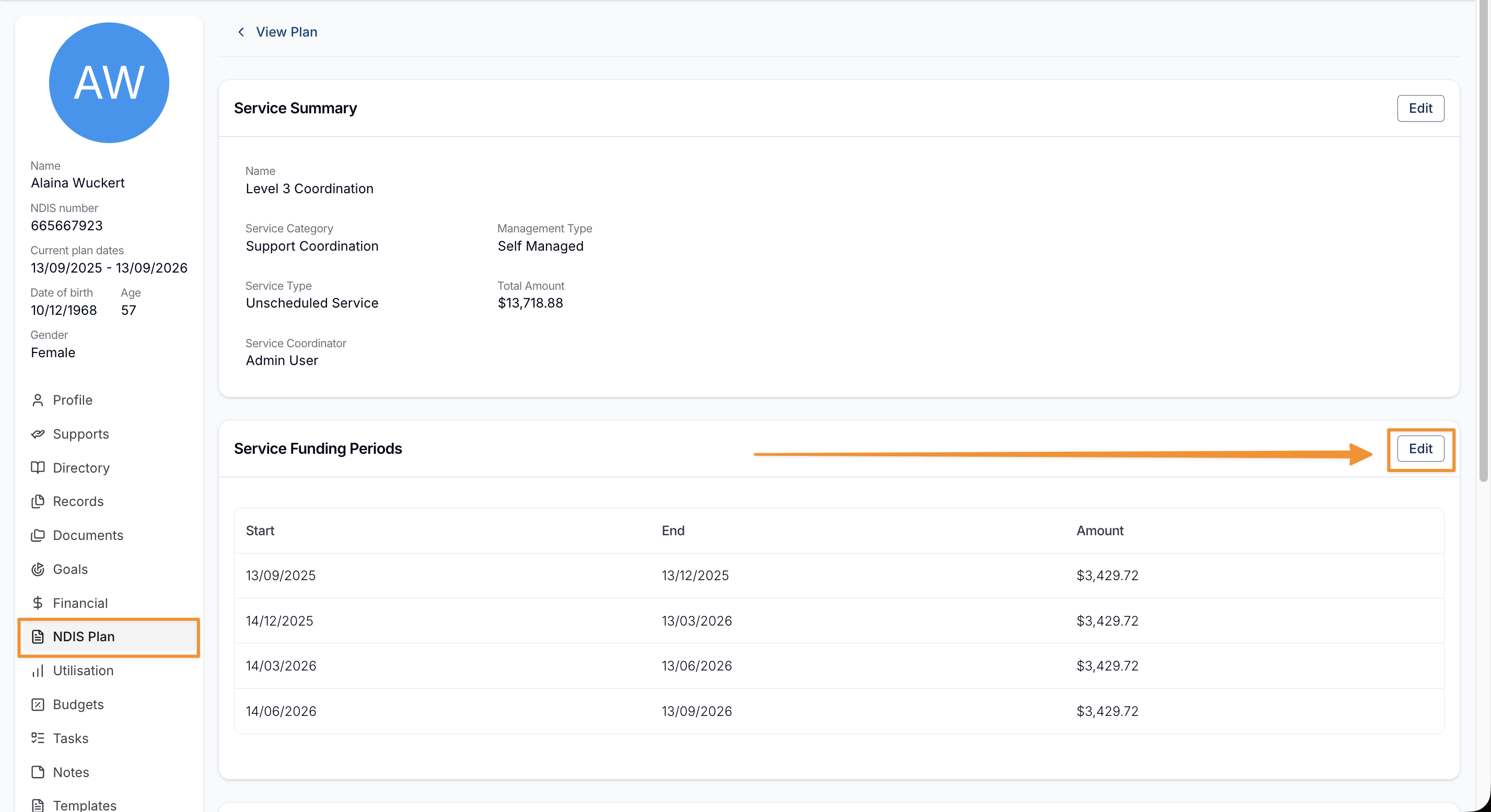
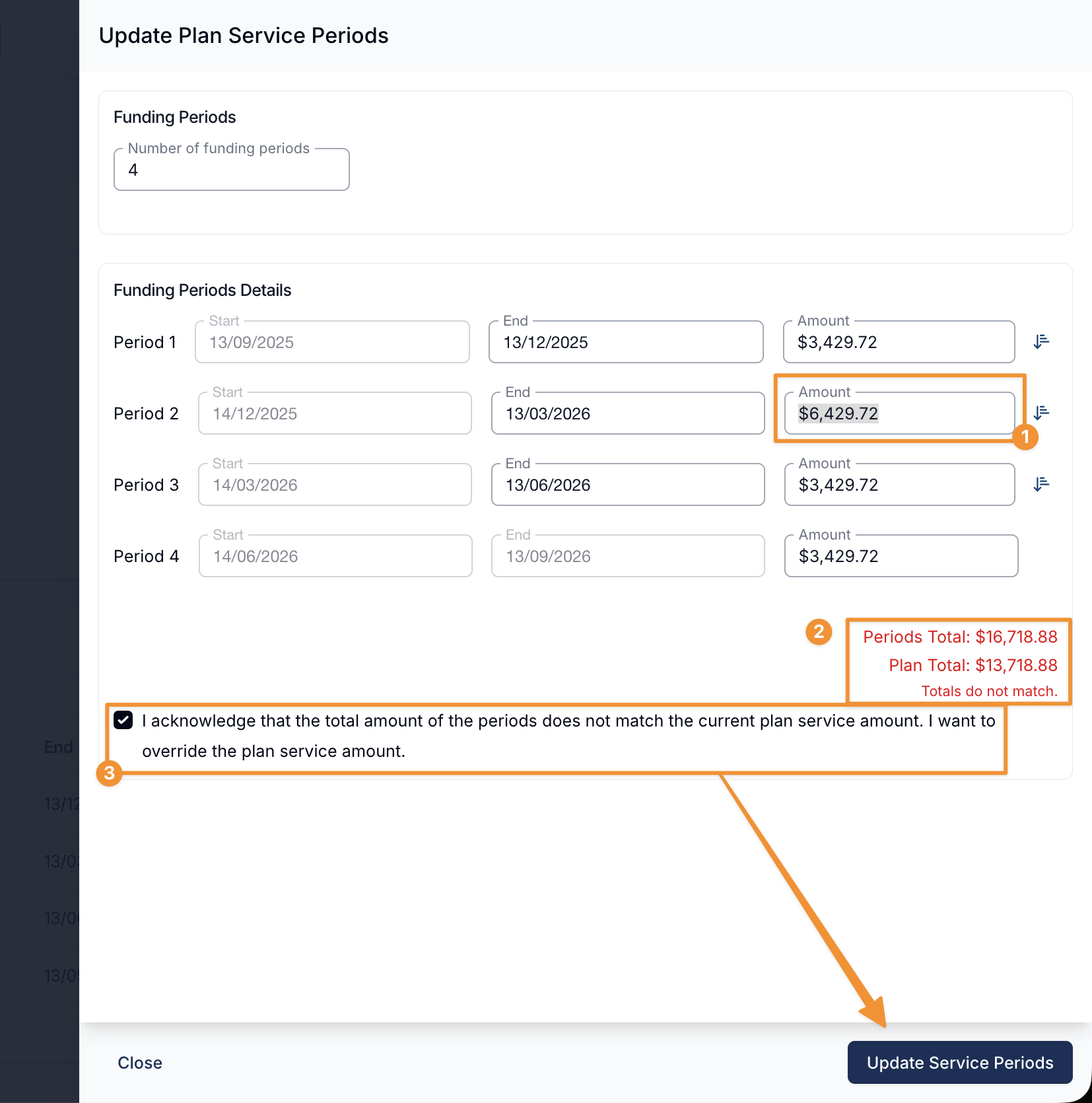
On the "Update Planned Service Periods" page, you can adjust:
- The number of funding periods,
- The dates that each period ends (excluding the last Period - as this is determined by the Plan End Date), and
- The funded Amount per period.
If there are no adjustments to the Plan Total, you'll be able to save your changes to the service periods by selecting Update Service Periods.
If however, the adjustments made to the funded amount per period calculate to a different Plan Total - then Astalty will highlight this difference.
-
If this change to the Plan Total is incorrect, make adjustments to fix the error in your planned period amounts before selecting Update Service Periods.
-
If this change in the Plan Total is correct,
- you will be prompted to acknowledge and confirm that you wish to override the planned service amount.
- Once this option is ticked, you'll be able to update the service periods by selecting Update Service Periods.
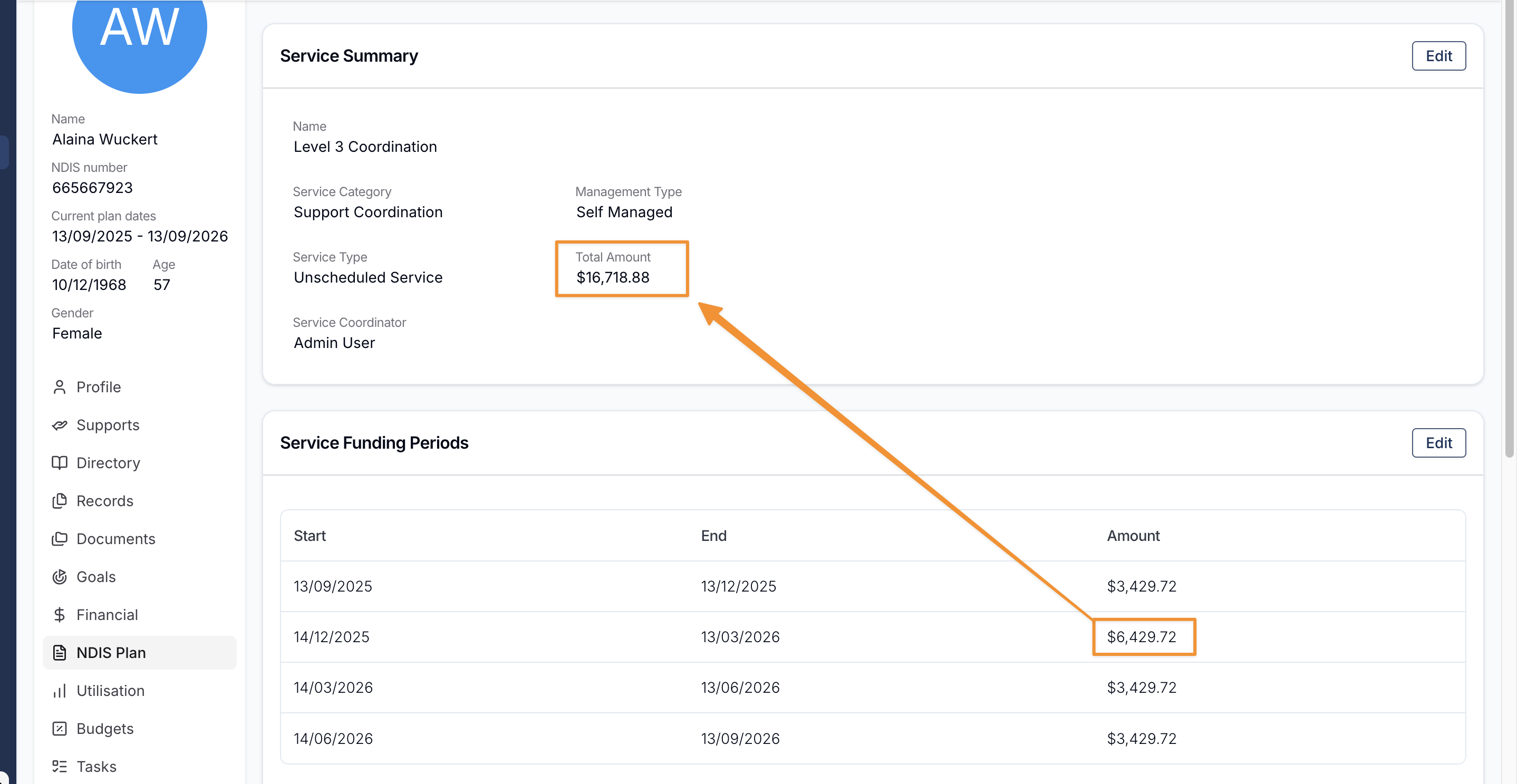
- Once confirmed the Service Budget Amount will update automatically.
If the Total Plan changes, the Total Amount in Service Summary updates to match. To reconcile the service as well, select Edit in Service Summary.
Updating the Remaining fields of a Service with Funding Periods
If the changes to a Service do not relate to the Service Budget Amount or the Funding Periods themselves, select Edit in the Service Summary.
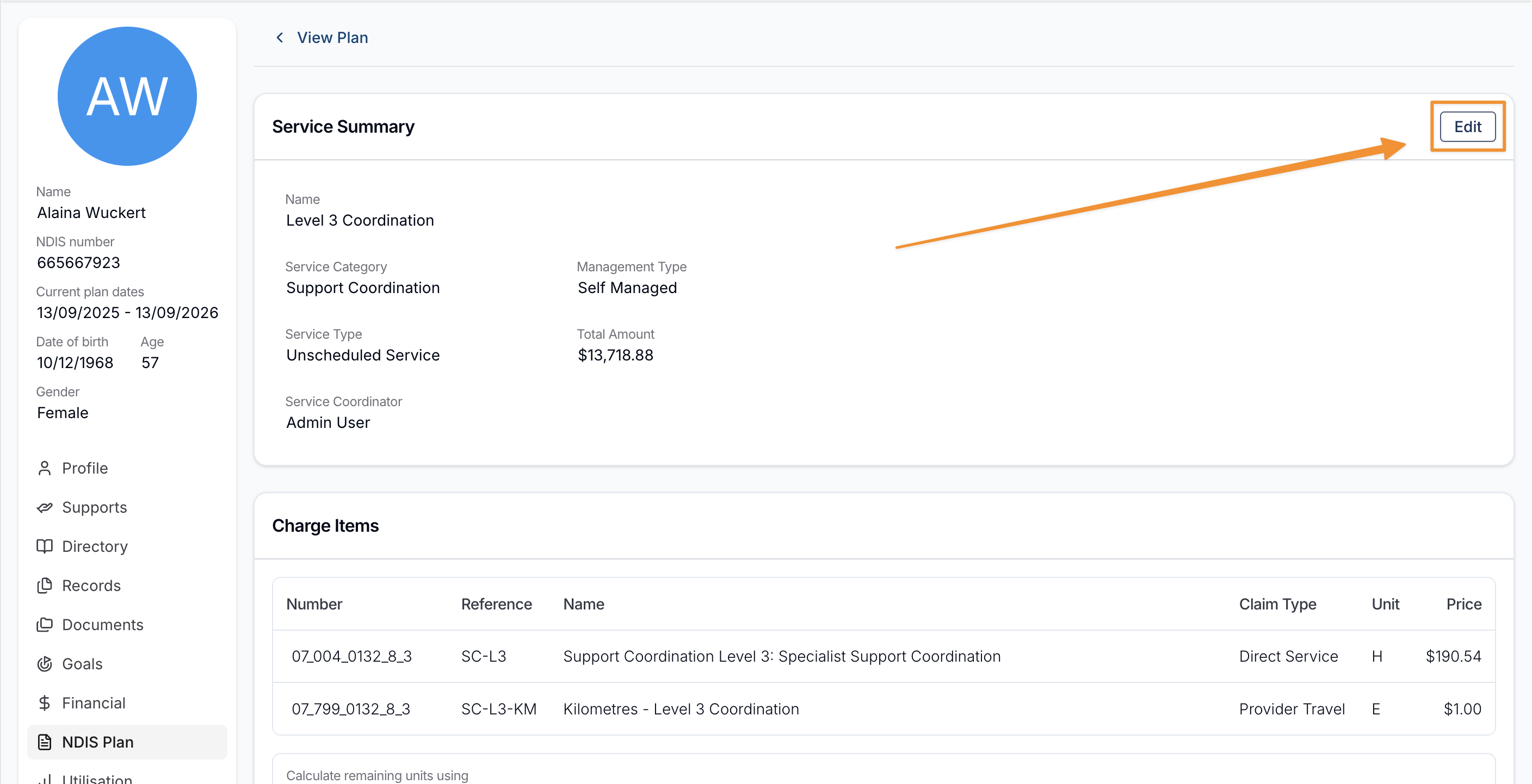
Here you can update the service including:
- Service Name
- Management type
- Reconciliation
- Remaining Amount
- Reconciled Date
- Support Category
- Service Coordinator
- Charge Items Assigned
- Charge Item to Calculate Remaining Units
You can also select Delete Service at the bottom of the page. Deleting a Service cannot be undone.
Viewing Funding Periods
Once the NDIS plan and funding periods have been created by following the steps above, you can review the funding periods at any time within the Service.
Utilisation within Participant's page
Within the Participant's profile, you can click "Utilisation" in the sidebar and you'll notice a new chart which is slightly different than the old chart for existing NDIS plans.
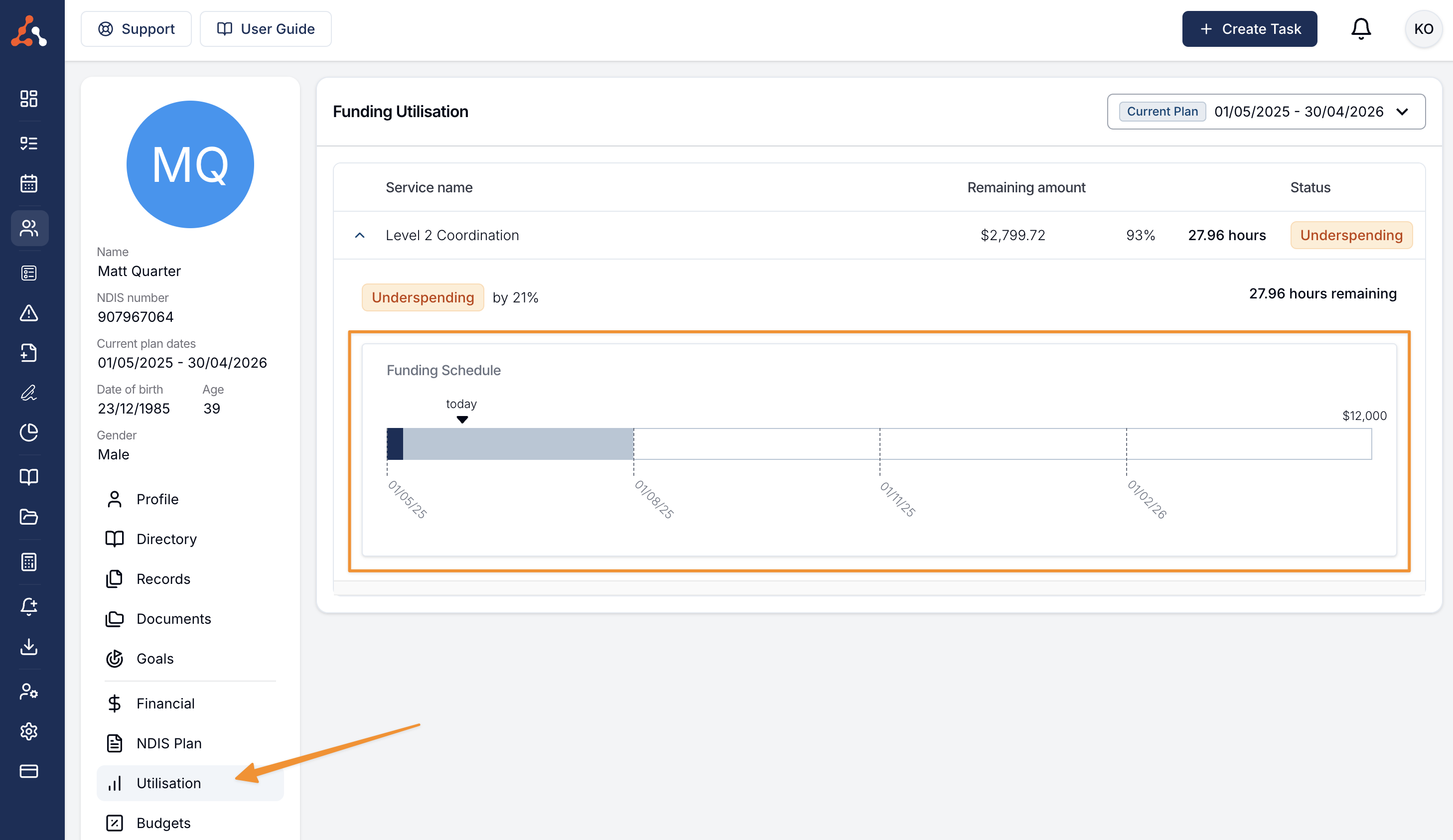
The chart includes:
- the start date for each period under the bar chart
- white sections for unreleased funding from future periods
- light blue sections for released funds that are available
- dark blue sections for funds that have been spent
Utilisation on Tasks and Supports
Tasks and supports show a Funding Utilisation card that measures spent and booked charges against the funding released up to each funding period, and names the period that limits how much more you can book. Hover over it to see the funding schedule chart and how much is left in the current and next periods. See Funding Utilisation.
Utilisation Report
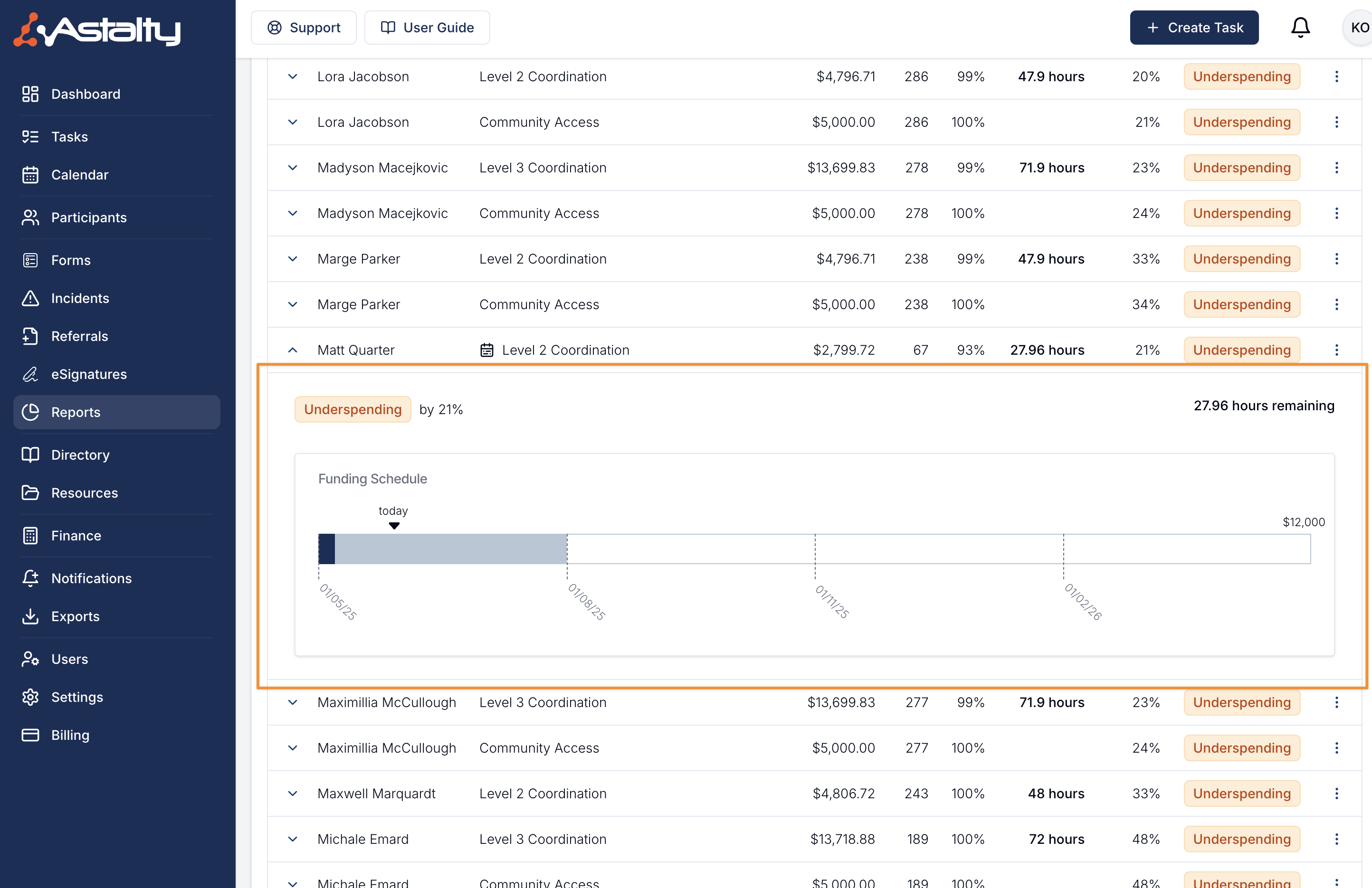
To view the utilisation for all Participants, head to the Utilisation Report page. Within this page, when you click the down arrow to the left of a Participant you will be shown the new Utilisation chart for the funding periods.
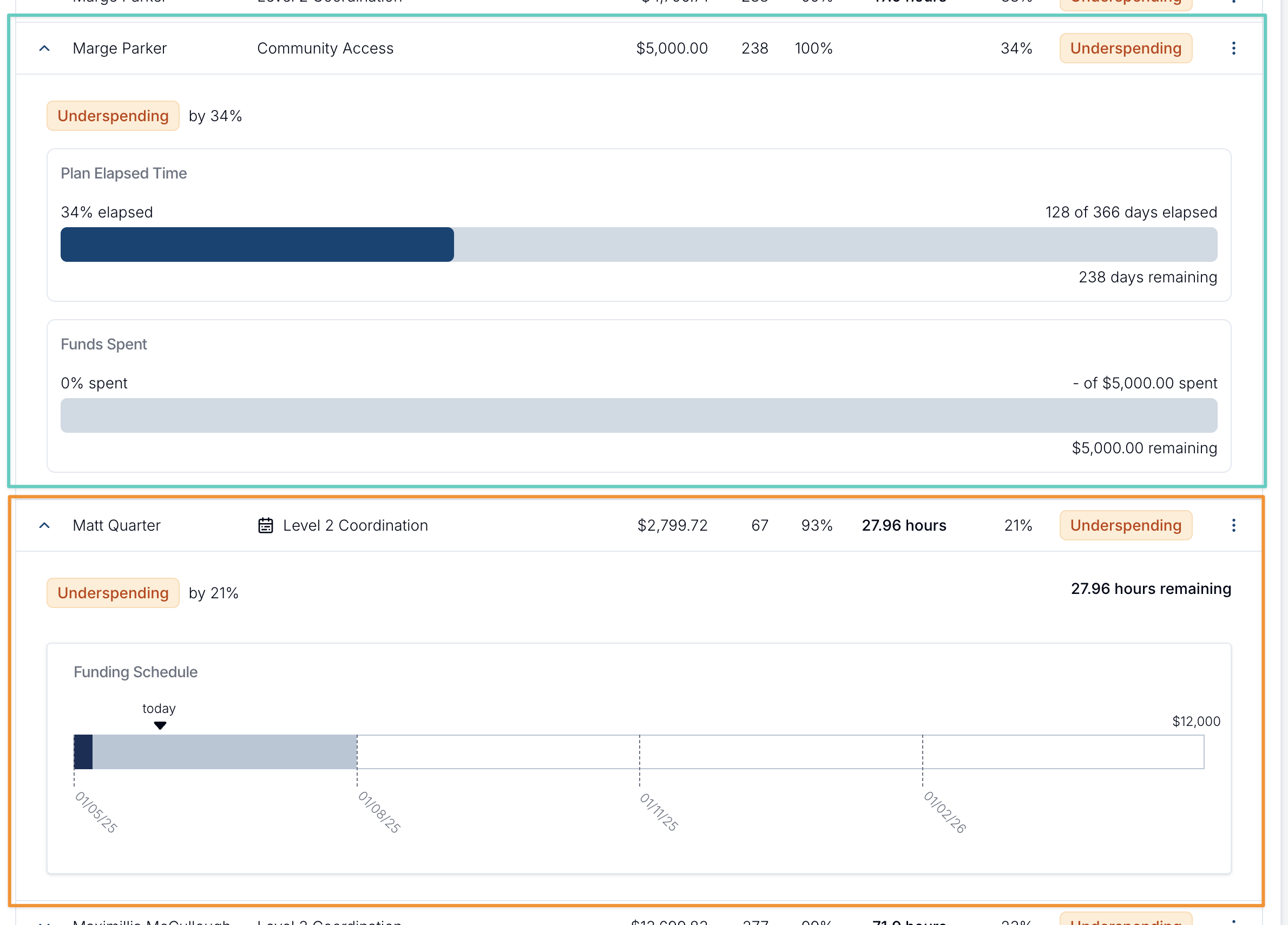
You'll also notice that old plans without funding periods display using the old layout.
FAQs
I've already added an NDIS plan service before funding periods were supported by Astalty - what do I do?
To add a funding schedule to an existing Service, edit the Service and select This service has a funding schedule.
Once you have checked this box, you'll be prompted to add the number of periods within the NDIS plan.
How will Utilisation Notifications work?
Utilisation and Utilisation Variance notifications will continue to work as normal based on the funding period. For example if you have a Utilisation Notification set up to notify you when 80% of funds are spent, you will now be notified when 80% of funds available in any single period have been spent.
Does Astalty handle funds rolling over from previous periods?
Yes - Astalty will automatically take into account unspent funds from previous periods when calculating available funding. Funding from a later period cannot be spent early, so a booking can take one period over even when the plan's total would cover it. See How Funding Periods Affect What Is Left.
I don't understand the new utilisation graph.
Please watch the video walkthrough at the top of this page or email support@astalty.com.au for additional support.