- Participants
- Participant Records
Participant Records
Overview
Use Participant Records to keep structured documents on a Participant's profile, track issue and expiry dates, and show when a required Record is missing. Admins first create the Record Types your organisation needs. Team members can then add Records of those types to Participant profiles.
Setting Up a Participant Record
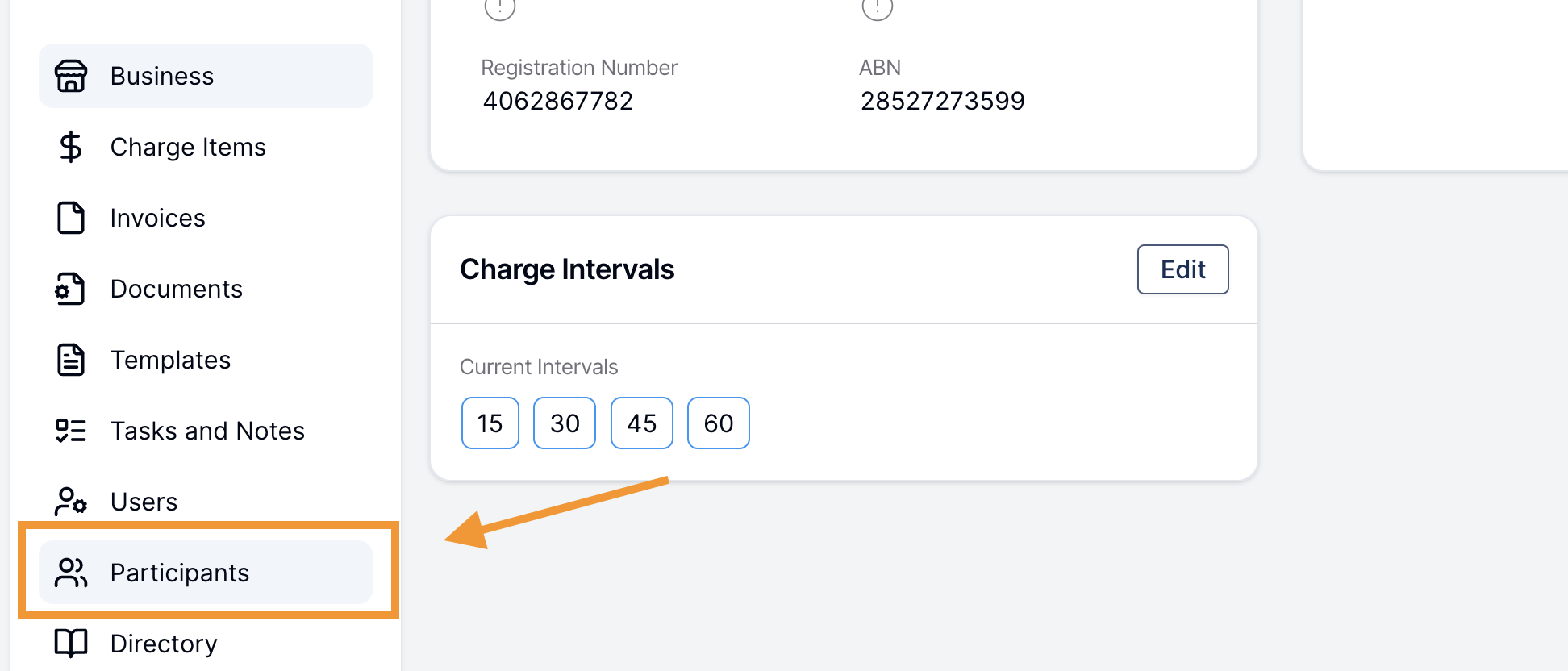
Open Settings > Participants.
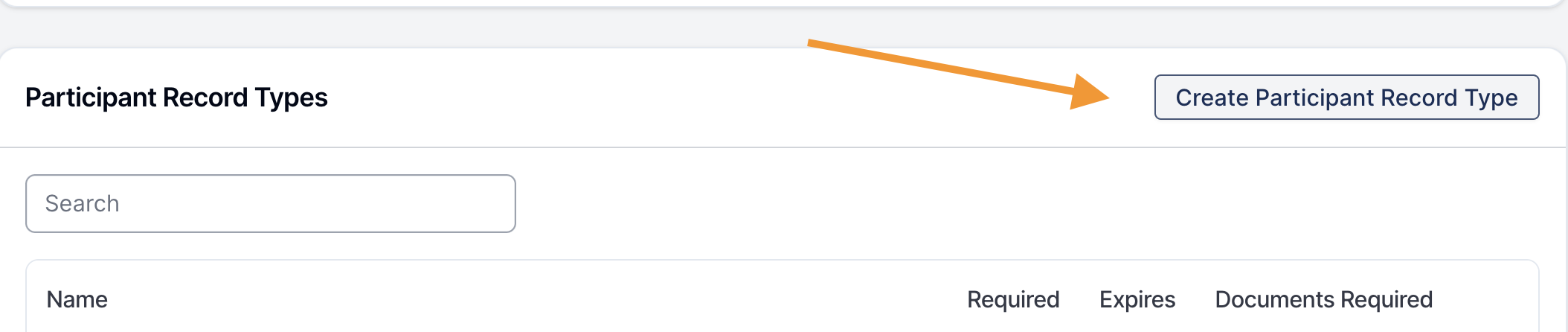
Create a Participant Record Type
Select Create Participant Record Type.
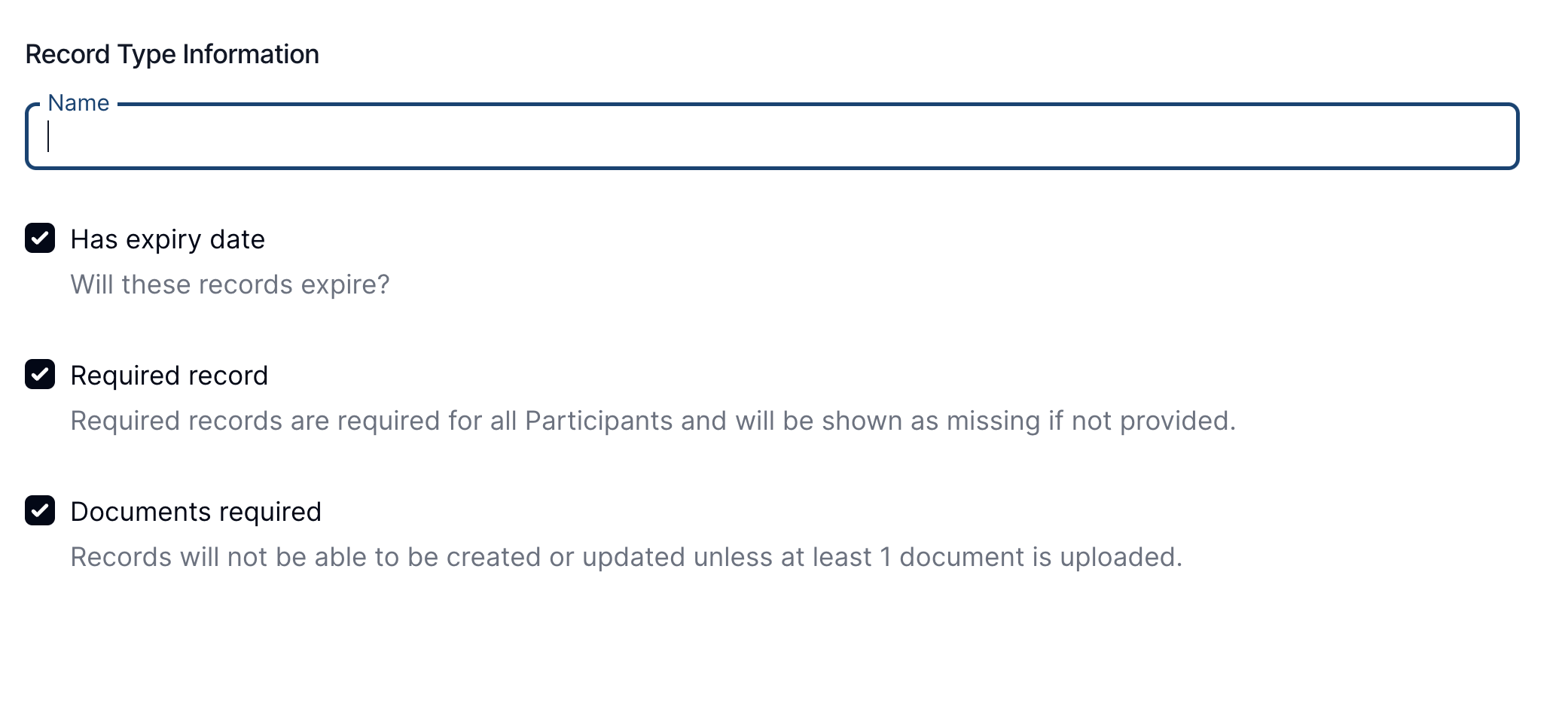
Enter the Record Type name, then choose whether it:
- has an expiry date
- is required
- requires a Document upload
Select Create.
Setting Required Records by Participant Tags
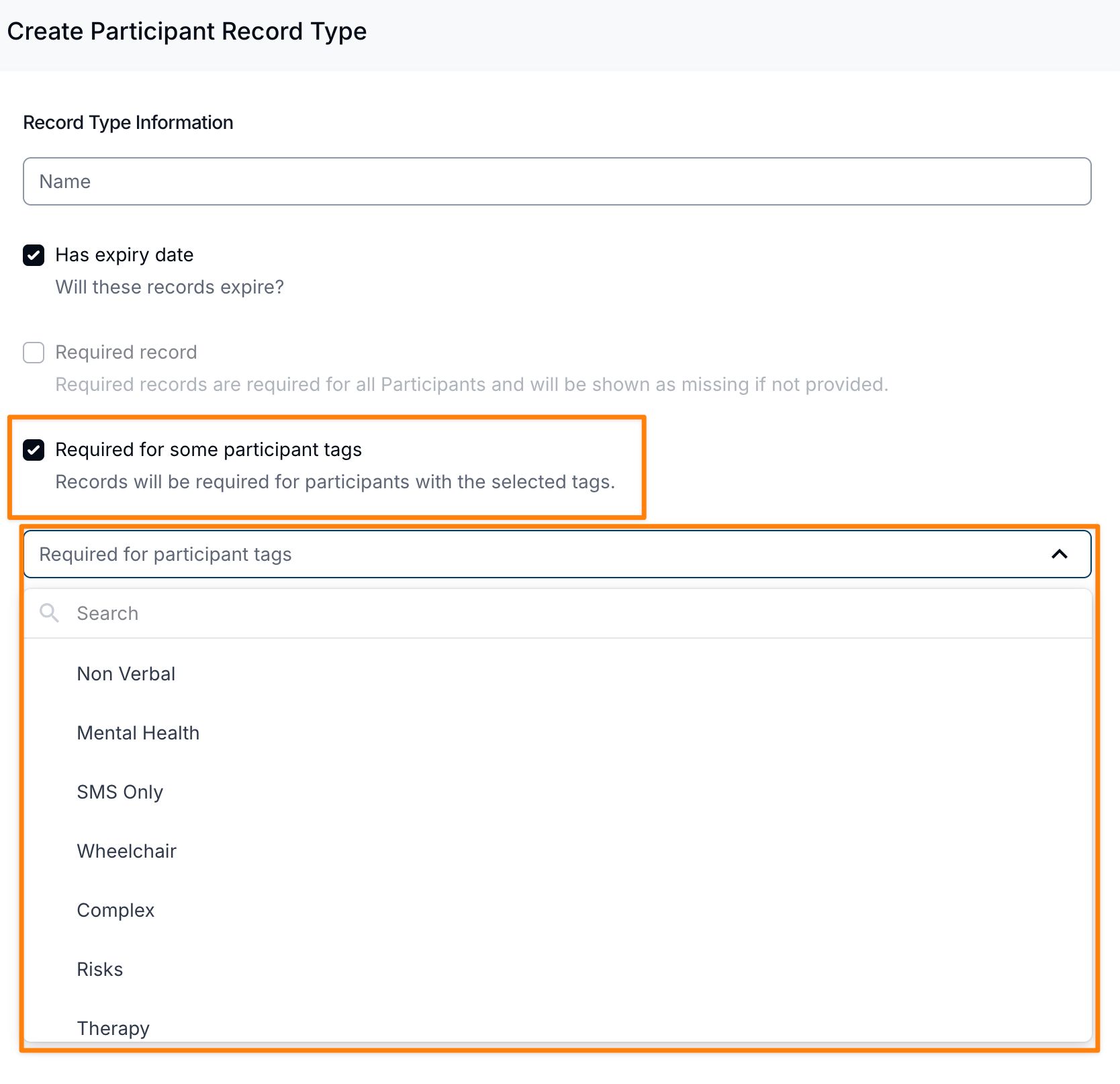
When a Record Type is required, choose whether it applies to all Participants or only to Participants with selected Tags.
Configuring Required Records by Tag
When setting up a Participant Record Type:
- Navigate to Settings and select Participants.
- Click Create Participant Record Type or edit an existing record.
- Locate the Required Record option.
- Choose whether the record should be:
- Required for all Participants, or
- Required only for Participants with selected tags.
- If selecting tags, choose the relevant Participant Tags the requirement should apply to.
- Click Create or Save.
Review and Edit Record Types
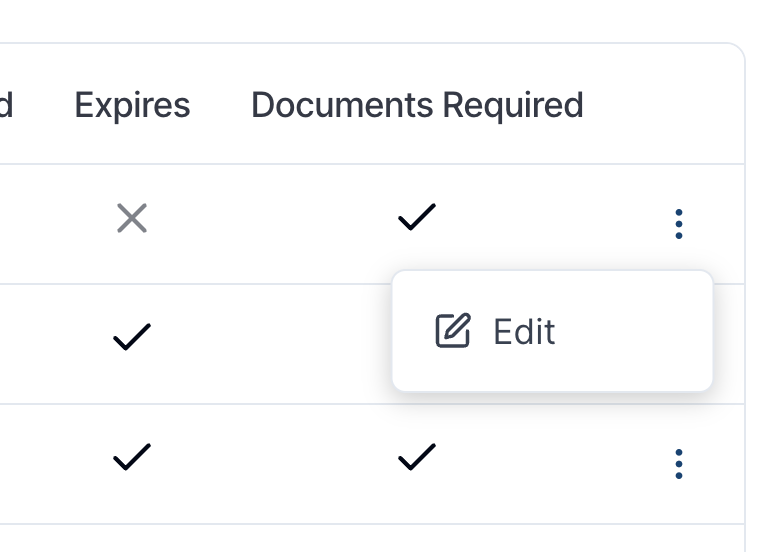
The Record Type list uses a tick or cross to show whether each type is required, has an expiry date and requires Documents. To change a type, open its 3-dot menu and select Edit.
Setting Required Records on a Plan Service
As well as requiring a Record Type across your whole account (or for selected Participant Tags), you can mark a Record Type as required for one specific Service on a Participant's NDIS Plan.
This is useful when a document is only needed because of the Service you're delivering - for example a Behaviour Support Plan that's required for a Support Coordination Service, but not for every Participant on your books.
Unlike the two options above, this isn't configured in Settings. It's set per Participant, per Service.
Marking a Record Type as Required for a Service
- Go to Participants and open the Participant's profile.
- Open the NDIS Plan page, select the Plan, then select the Service.
- On the Records card, click Manage.
- In the Update Required Record Types drawer, tick the Record Types this Service requires.
- Click Update.
The Records card lists the Participant Records that have been attached directly to this Service or marked as required for it.
What "Required" Does on a Service
Marking a Record Type as required for a Service is for tracking and reporting only. It does not stop anyone from working - it won't prevent a Support Worker clocking out or ending a shift, block a note from being completed, or hold up invoicing.
Until a Record of that type is attached to the Service, it shows as Missing in:
- the Service's Records card
- the Participant's Missing Records card on their Records page, with a Service column naming the Service
- the Participant Records Report and its export, as a Missing row
Adding a Record for a Service
A Participant Record can only be attached to a Service at the moment you create it - there's no Service picker on the Add Participant Record drawer, so the Service is taken from wherever you started.
To create a Record that's attached to a Service, use one of these two starting points:
- the Add Record button on the missing Record row in the Service's Records card, or
- the Add Record button on that Service's row in the Participant's Missing Records card.
The general Create Participant Record button on the Participant's Records page doesn't pass a Service, so it always creates a Record that isn't attached to one.
How Service Requirements Work With Profile and Tag Requirements
If the same Record Type is required both at the Participant level (across your account or via a Tag) and on a Service, the relationship only works in one direction:
- A Record added from the Service satisfies both requirements. One Record clears both Missing entries.
- A Record added at the Participant level with no Service attached only clears the Participant-level entry. The Service will still show that Record Type as Missing.
If the same Record Type is required on more than one Service, you do need a separate Record for each one. A Record can only be attached to a single Service, so two Services each requiring a Service Agreement means two Records.
Adding Records to Participant Profiles
Open the Participant's profile, select Records, then select Create Participant Record. Choose the appropriate Record Type.
Fill in additional details such as:
- Issue Date
- Expiry Date (if applicable)
- Reference Number (if applicable)
- Record Description (e.g., Allergy Information)
Documents can be added by dragging and dropping files into the designated area. There is also an option to add existing documents. Videos can be attached here too - see File Types and Size Limits for the formats Astalty accepts.
If the Record settings allow Support Worker Acknowledgement, you can require Support Workers to acknowledge the Record. See Record Acknowledgement.
You can select whether the Record needs to be signed, and can send the request within the Record itself. For more information on this, see the next section.
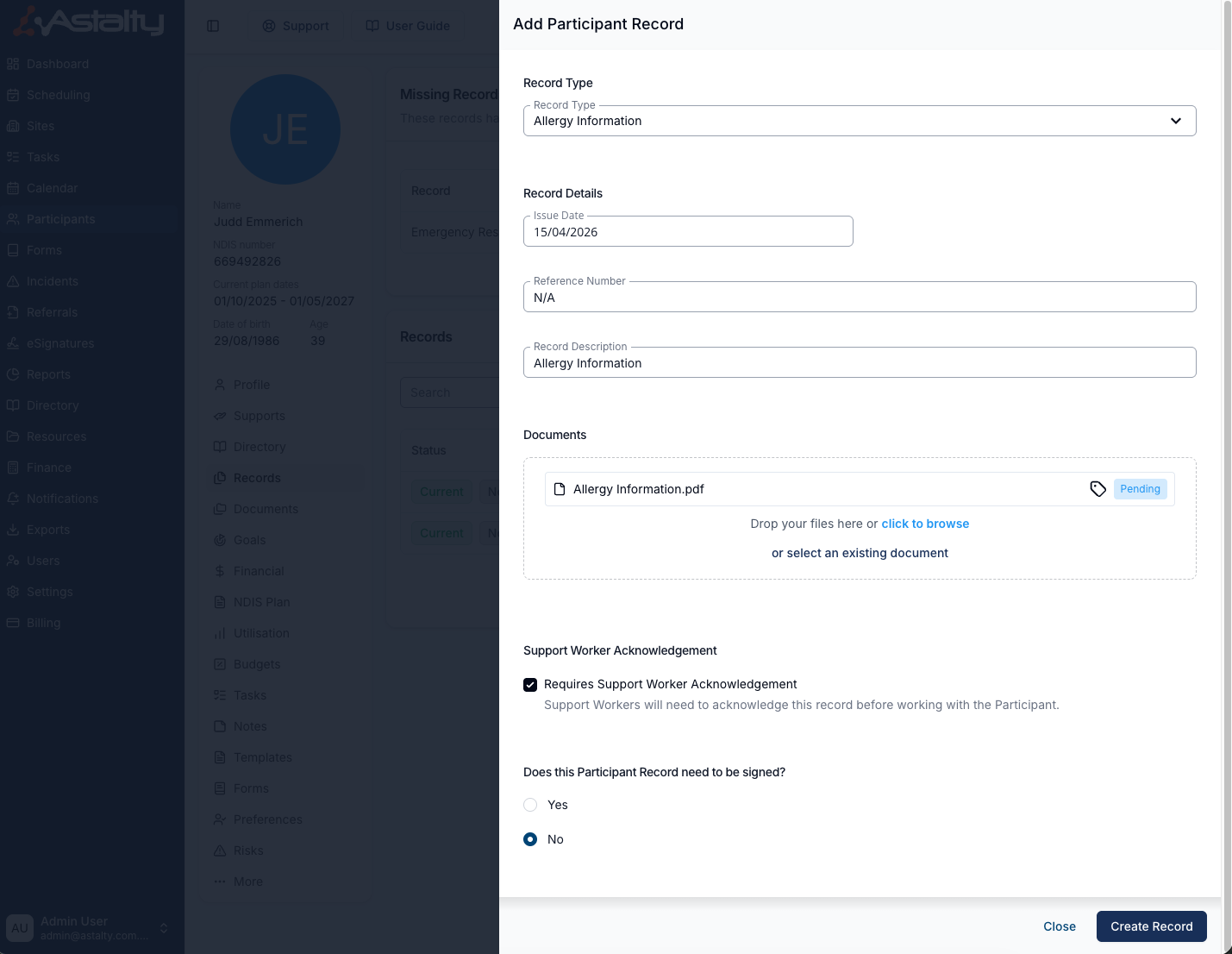
Choose an existing Document when you need to track an expiry date for a file that is already in Astalty.
Select Create Record to save it.
File Types and Size Limits
As well as documents, you can attach video to a Participant Record. Astalty accepts MP4, WebM and MOV video files, alongside the usual PDF, Word, spreadsheet and image formats.
Every file on a Record - video or document - can be up to 500 MB. A larger file is rejected with File exceeds the 500MB size limit and a format Astalty doesn't accept is rejected with Invalid file type, both before the Record is saved.
Attaching a video is worth it where a document can't carry the same information - a demonstration of how a Participant communicates, or a recorded consent conversation - because it sits on the Record with the rest of that Participant's paperwork rather than somewhere separate.
Once the Record is saved, select the video to play it in Astalty, the same way you'd open an attached PDF. Support Workers can play it on their device too, if the Record Type is visible to Support Workers - see Participant Details App View.
Records Containing Video and eSignatures
Only PDF and Word (DOCX) files can be signed, so a video never goes out in an eSignature request. This changes what you see when you create the Record:
- If the only files you attach are videos, the Does this Participant Record need to be signed? question doesn't appear at all - there is nothing on the Record that could be signed.
- Add a PDF or Word document to the same Record and the question appears, because that file can be signed.
- When you send the Record for signing, only its PDF and Word documents are offered. Videos aren't listed.
Sending Participant Records for eSignature
To send the Record for signing, you have two options:
- Send the request immediately after being created
- Send the request later
Choosing the first option opens the eSignature preparation flow immediately. See Requesting Signatures.
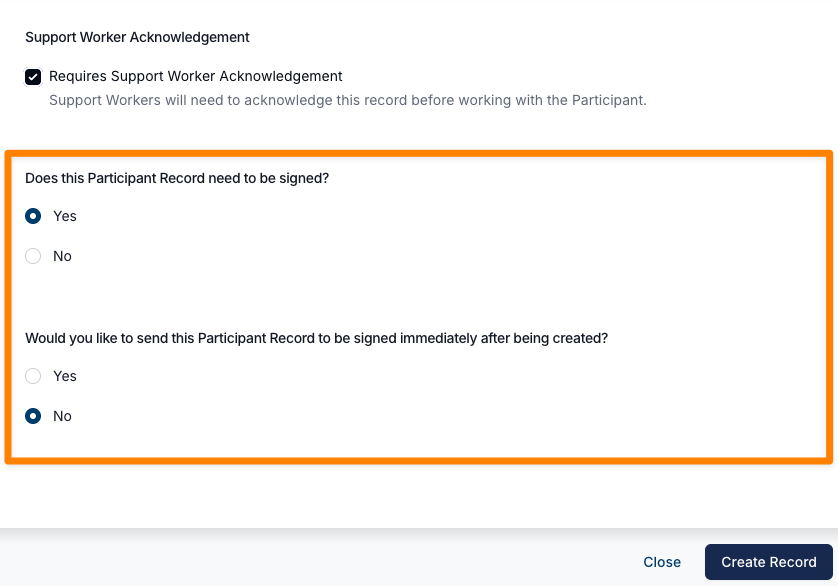
If you choose to send it later, use Sending Multiple Participant Records for eSigning below or follow Requesting Signatures.
Signature Status
Every Participant Record carries a Signature Status. It shows as a chip next to the Record's status on the Participant's Records page, and it's a field in the Signature section of the Edit Participant Record drawer.
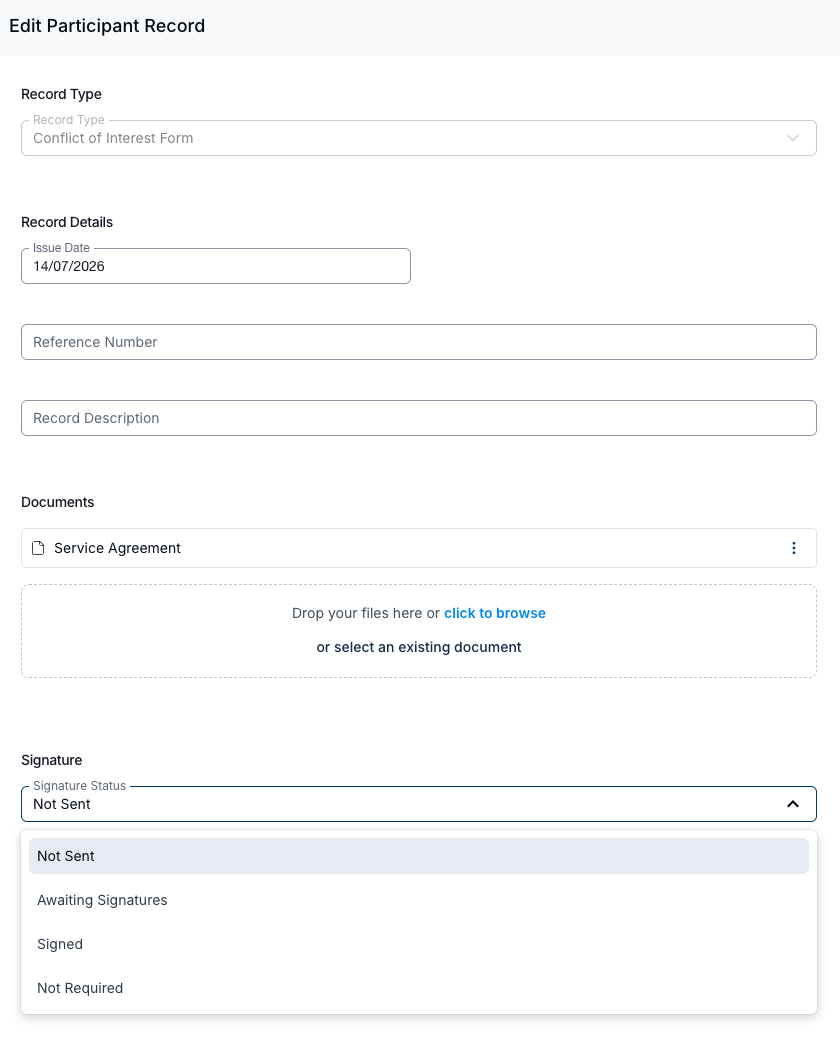
| Status | When it applies |
|---|---|
| Not Sent | The Record can be signed, but no signature request has gone out yet - or every request that did go out was cancelled, declined or expired. |
| Awaiting Signatures | A signature request is out and Astalty is still waiting on at least one signer. |
| Signed | Every signer on a request has signed. A Record stays Signed even if a later request is raised against it, so a completed signature is never lost - unless it's changed back by hand. |
| Not Required | The Record doesn't need a signature. This is also the status Astalty falls back to when the Record Type can't be sent for signing. |
Records set to Not Required don't show a signature chip on the Records page, so the list stays focused on the Records still waiting on someone.
Changing a Fully Signed Record's Status
If only some signers sign through eSignatures and someone else signs on paper, a Record can show Signed while a signature is still outstanding. Once every eSignature signer has signed and no request on the Record is still in progress, Signature Status unlocks and offers Awaiting Signatures alongside Signed, so you can flag that a paper signature hasn't come in yet.
Choosing Awaiting Signatures shows a warning in place of the usual hint:

Set the status back to Signed once the paper signature is in. While the override stands, a repeated completion on the same request, or a change to another request on the Record, no longer flips the status back on its own - only setting it to Signed by hand clears it. The Record's details show a muted Set manually note under Signature Status as a reminder.
When a Record Type Can't Be Sent for Signing
A Participant Record can only be sent for signature when Documents required is ticked on its Record Type. A Record Type that doesn't require documents has no document to sign in the first place, so Astalty leaves the signing option out and tells you why, rather than offering something that could never be completed.
On these Records, the Signature Status dropdown offers only the status the Record already has plus Not Required, and a short note underneath names the Record Type and explains that it doesn't require documents. Send for Signing isn't available on them either, and they aren't offered when you send multiple Records in one eSignature request.
Viewing Participant Records
In the record screen, you can view each Participant Record with details such as its status (current, expired or archived), whether it has been sent for signing, the record name, and the expiry date on the far right-hand side.
Handy Hint: You can check the status of all documents across the organisation and or based on a staff member's caseload via the reports section.
Archiving a Record
When a Record is no longer relevant - for example a Service Agreement that has been replaced by a newer one - you can archive it rather than delete it. Archiving keeps the Record and its documents in Astalty for your audit trail, but takes the Record out of your day-to-day compliance tracking.
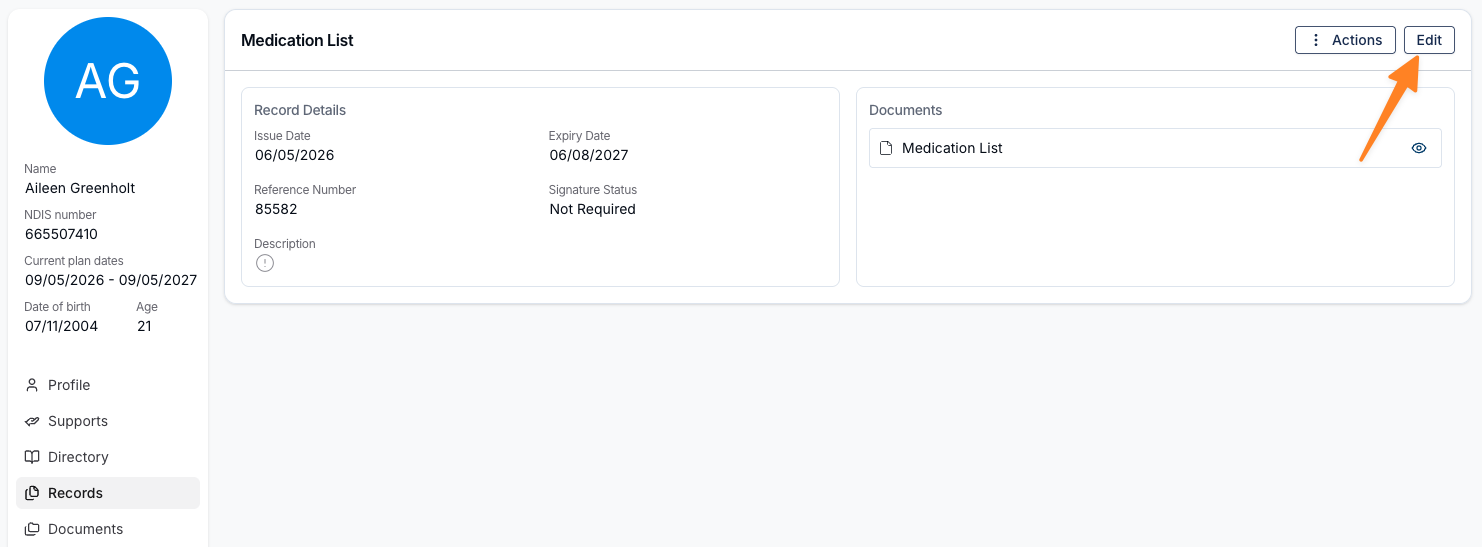
To archive a Record, open it from the Participant's Records page and click Edit.
At the bottom of the Edit Participant Record screen, click Archive. You'll be asked to confirm, and if the Record is still active and hasn't expired yet, Astalty will point that out before you go ahead.
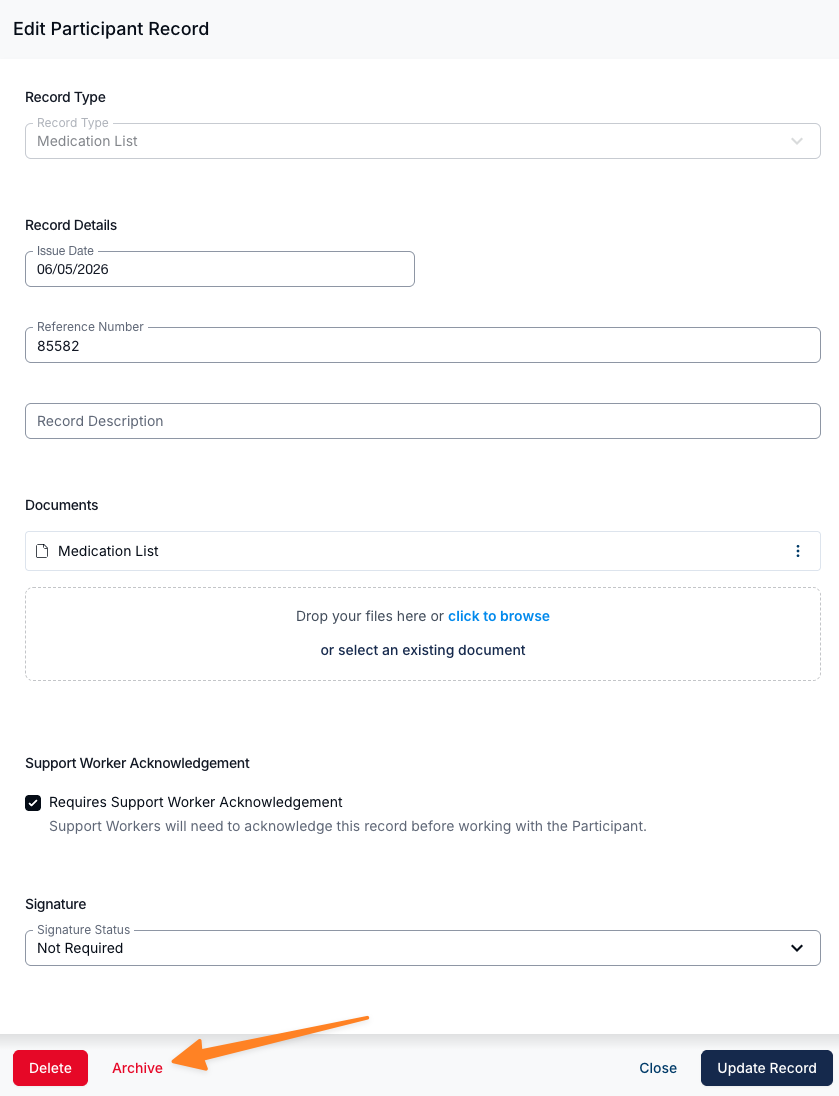
To restore an archived Record, open it, select Edit, then select Unarchive.
What Happens When You Archive a Record
The Record's status changes to Archived. It stays on the Participant's Records page rather than disappearing, so you keep the history - and you can use the Status filter to show only Active or only Archived Records.
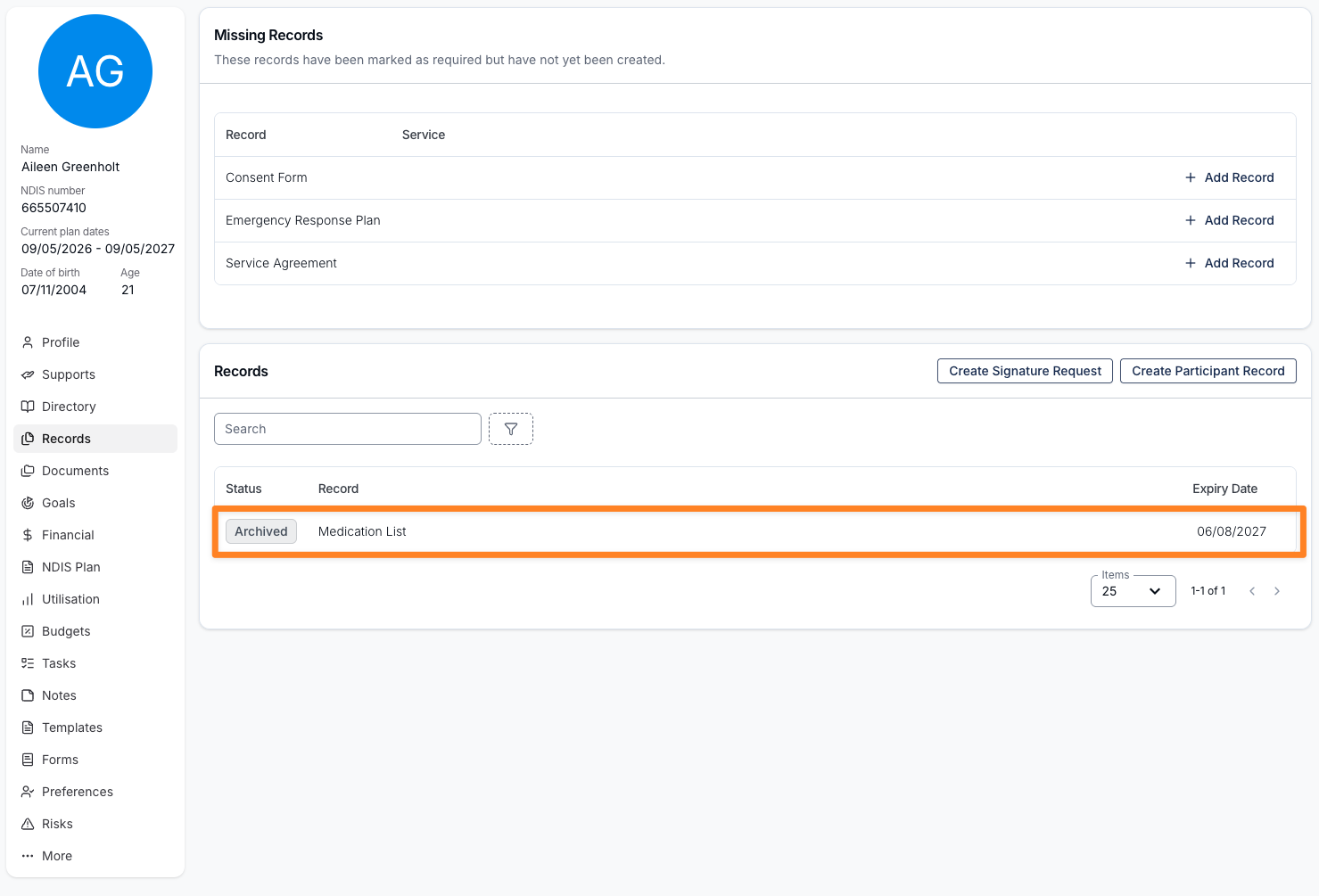
Astalty treats an archived Record as no longer in force, which means:
- It no longer satisfies a required Record. If the Record Type is required for that Participant, it will reappear under Missing Records until a new Record is created.
- It won't trigger Participant Record Notifications for upcoming or overdue expiry.
- It won't appear in outstanding Record Acknowledgements for Support Workers.
- Its active attached documents are archived too, but they are not deleted. When the Record is unarchived, Astalty restores the documents that were archived at the same time as the Record. A document that had already been archived separately stays archived.
- It still appears in the Participant Records Report with an Archived status, so use the report's Status filter if you want to leave archived Records out.
Sending Participant Records
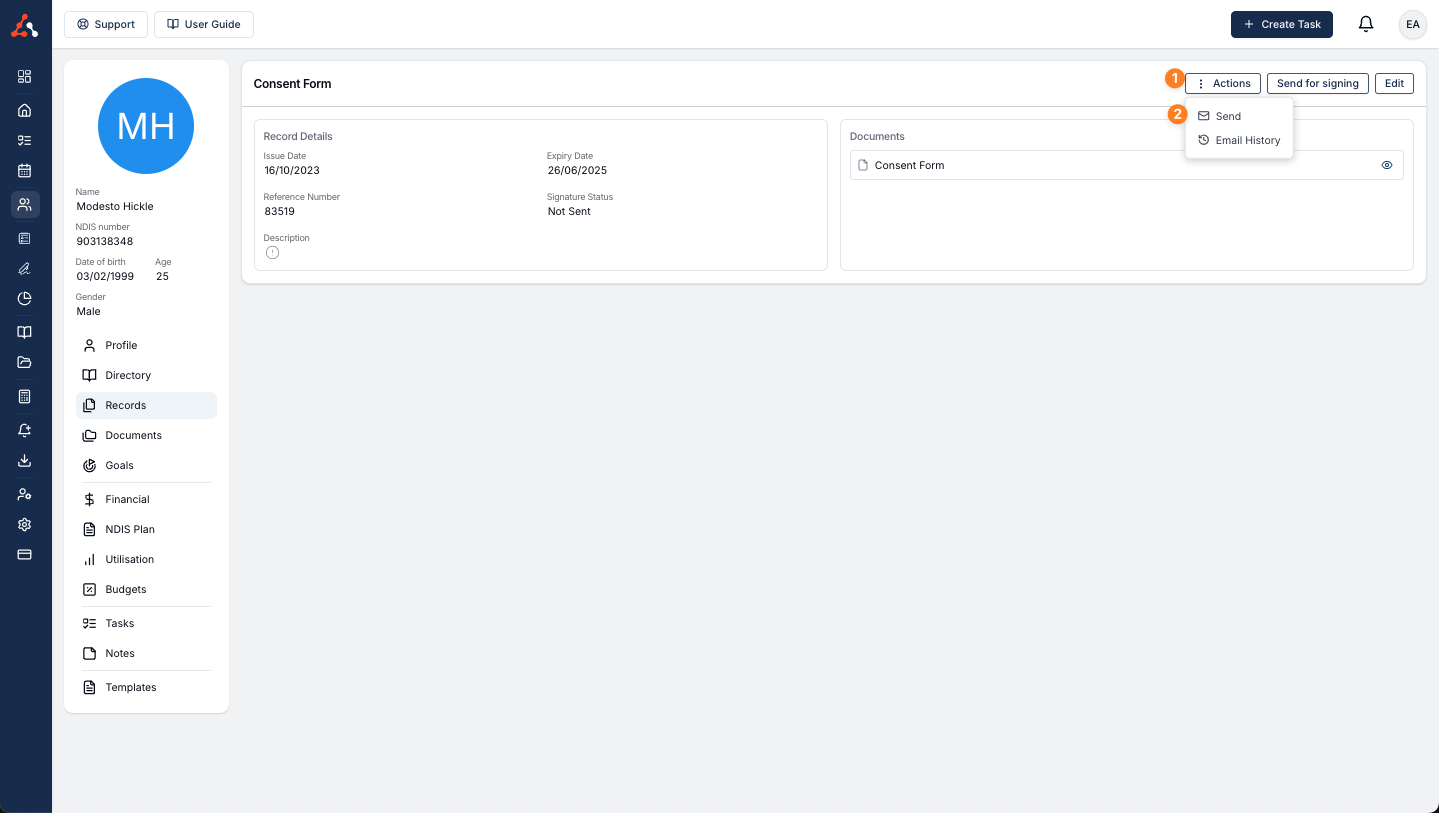
You can send records from within the Record by selecting the 'Actions' button and then select the 'Email' option. You will then have to enter the email address for the recipient.
Sending Multiple Participant Records for eSigning
You may wish to send multiple Participant Records at once, such as a Service Agreement and Consent Form. We've created a helpful video guide that walks through this process.
Record Sending Log
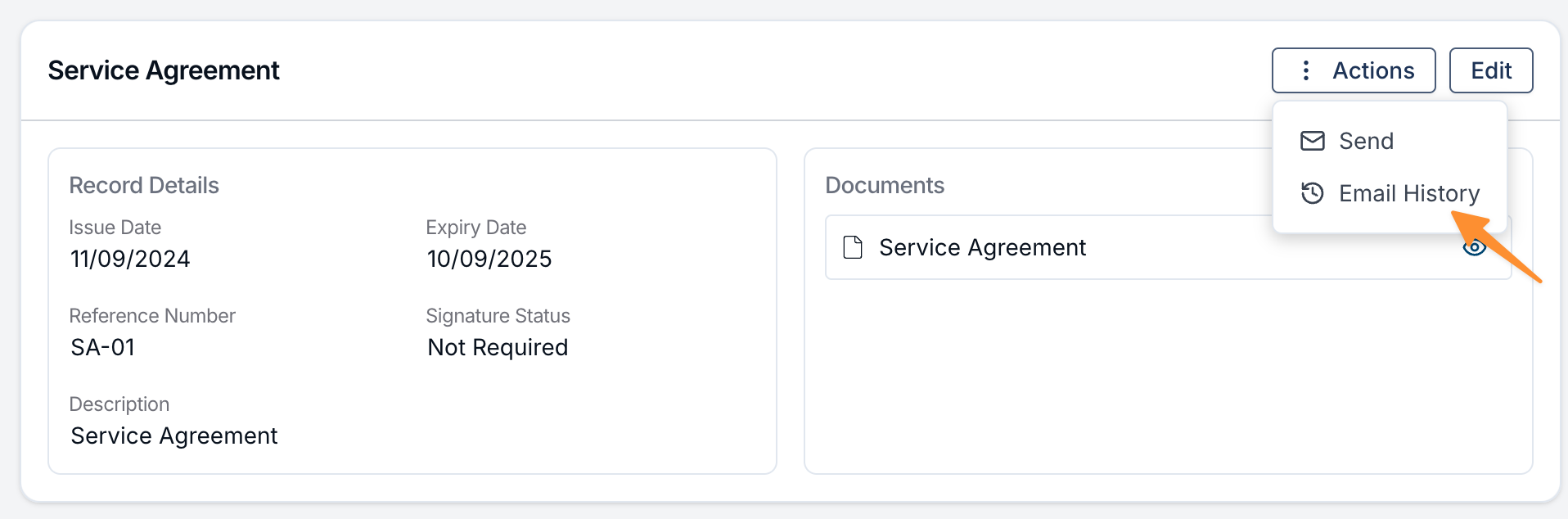
You can now view the history of sent records from within the relevant records. This will help with identifying which documents have been sent.
Deleting Documents from Records
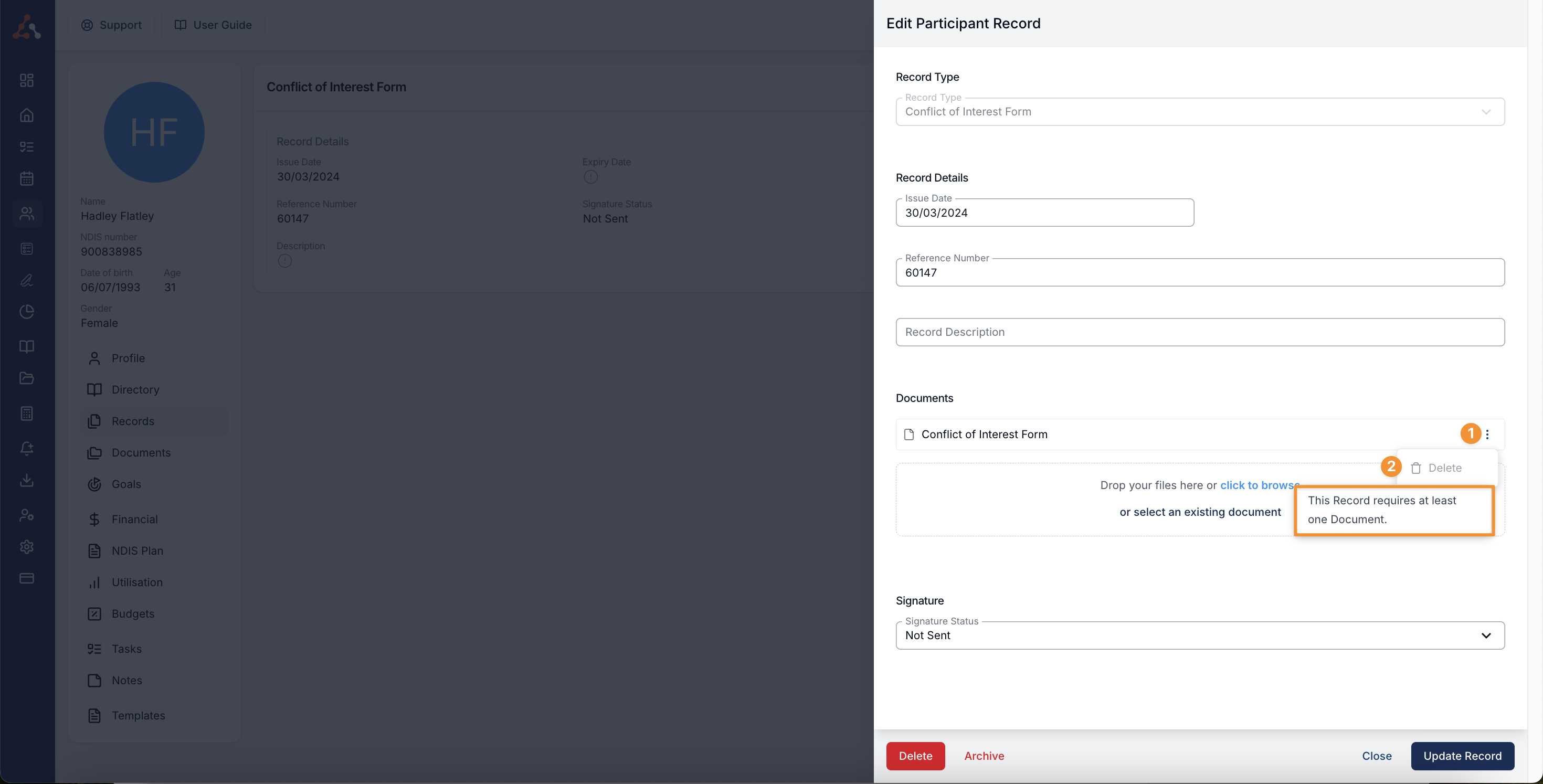
Open Edit Participant Record, then use the Document's action menu to delete it. Deleting the Document here also deletes it from the Participant's Documents page.
If the Record Type requires documents, Astalty prevents you from deleting the final Document. Record Types that do not require documents can be saved without an attached Document.
Deleting the entire Record is also blocked while it has pending signature requests. Resolve or cancel the listed requests, then try again.