- Administration
- Settings
- Participants Settings
Participants Settings
Managing Participant Information and Tags
Participant Settings shows the controls enabled for your account and User permissions.
Information Items
Information Items are custom sections on Participant profiles. They can hold rich-text details, default content, and, on Professional accounts, Documents. They can be required for everyone or only for selected Participant Tags. See Information Items.
How to Create an Information Item:
Select Create Information Item, enter its Name, configure requirements and visibility, add optional Default Content, then select Create. The default Admin role can manage Information Items; Managers and Team Members can view them by default.
Participant Record Types
Participant Record Types define the Records your organisation tracks, including expiry, required status, document requirements, and mobile visibility. This is a Premium feature. See Participant Record Types.
Participant Tags
Participant Tags are a Professional feature. Create Tags in Participant Settings, then assign them to individual Participants. Tags support list filtering and can make selected Information Items or Participant Record Types required.
How to Create a Participant Tag:
Select Create Tag, enter a Name, choose a Colour, and select Create. Creating a Tag does not assign it to every Participant.
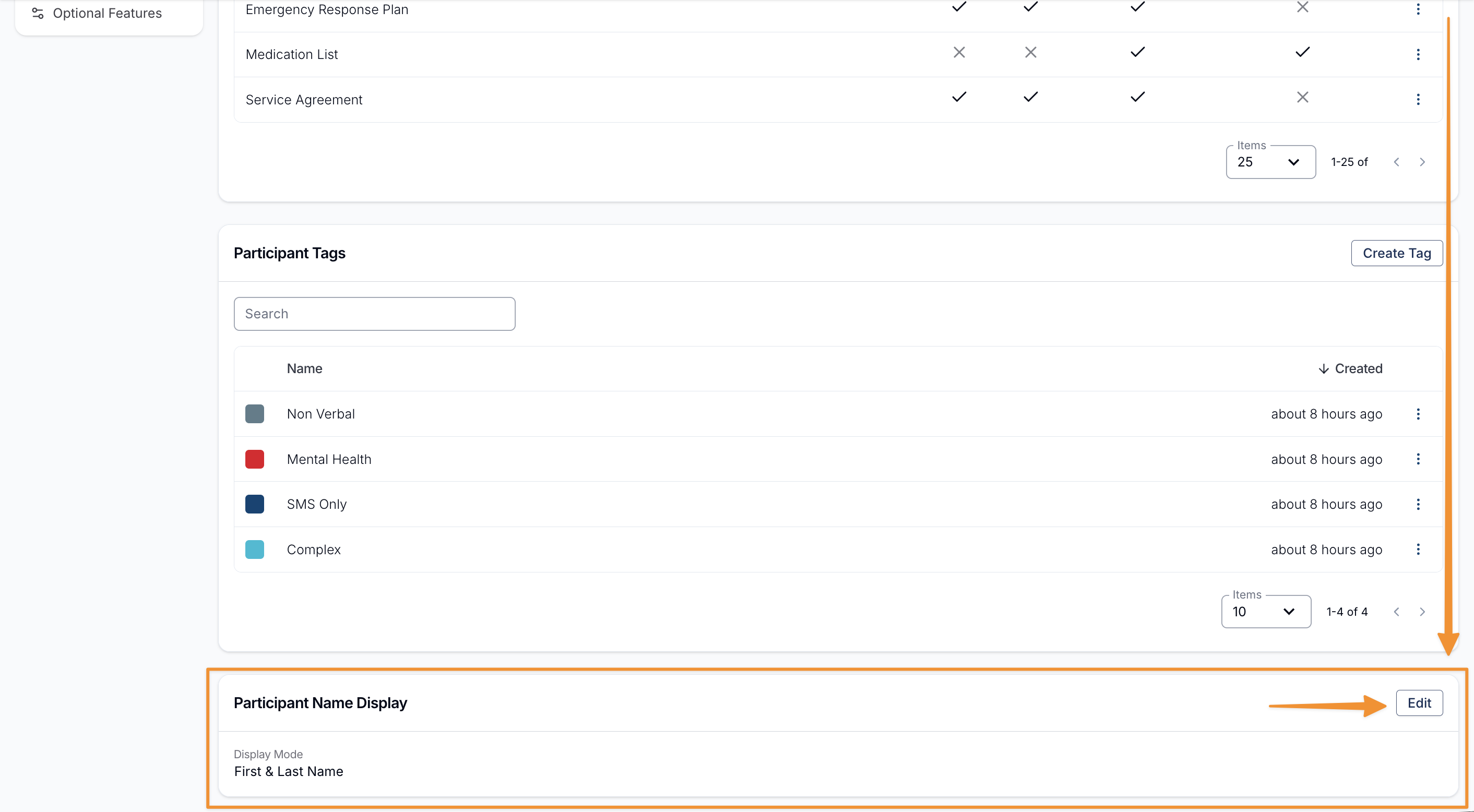
Participant Name Display
When this setting is enabled for the account, Participant Name Display controls the display name used in supported listings and selectors. Editing requires Settings update access. Updating the provider setting also updates the stored display mode on Participants.
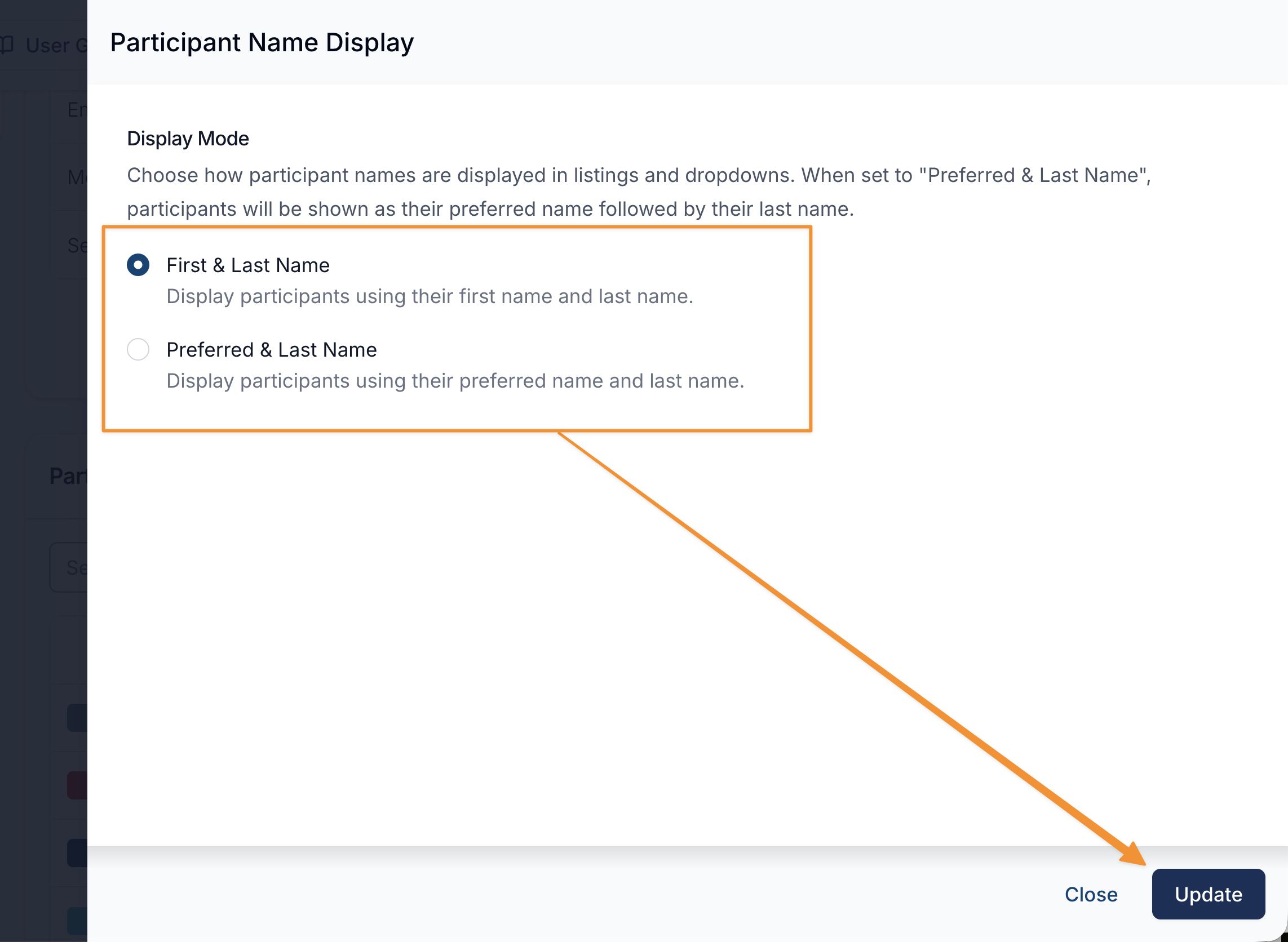
Display Mode Options
First & Last Name
Shows the Participant's First Name and Last Name.
Preferred & Last Name
Shows Preferred Name and Last Name. When Preferred Name is blank, Astalty falls back to First Name.
This setting controls supported display-name surfaces. It does not change the stored First Name, Preferred Name, or Last Name values.