User Groups
User Groups allow you to define how your business is structured and the groups of users that make up your business. Astalty keeps several predefined reserved groups up to date for you: four that follow a user's role, plus one that covers everyone.
User Groups can be managed in the Users settings page.
When to Use User Groups
User Groups can select recipients for supported automated notifications and group conversations in Chat.
They can also scope required User Records, qualification requirements, and supported note or task visibility rules. Membership in a User Group does not by itself grant access to a page or record.
Reserved User Groups
All Users
The All Users group contains everyone in your organisation: Admins, Managers, Team Members and Support Workers. Users are added to it automatically and cannot be removed by hand, so it is the group to pick when you mean everyone.
Auditors are the one exception. They are left out of All Users and are not added to any reserved group.
Most notifications cannot be sent to Support Workers as a group, so the All Users and Support Worker groups are not offered as recipients. You can select them for organisation-wide Birthday, Team Member Birthday and Staff Milestone notifications. You can also notify an individual Support Worker directly by selecting them under Users.
User Groups for Roles
Admin
The Admin user group will be automatically assigned whenever a user is given the Admin role.
Manager
The Manager user group will be automatically assigned whenever a user is given the Manager role.
Team Member
The Team Member user group covers users with the Team Member role only. Admins and Managers are not included. Each of those roles has its own group.
Support Worker
The Support Worker user group will be automatically assigned whenever a user is invited as a Support Worker.
User Groups for Teams
If you are utilising Teams in Astalty a reserved User Group will be created for each team. When you assign a user to a team, they will also be part of the matching User Group.
Creating User Groups
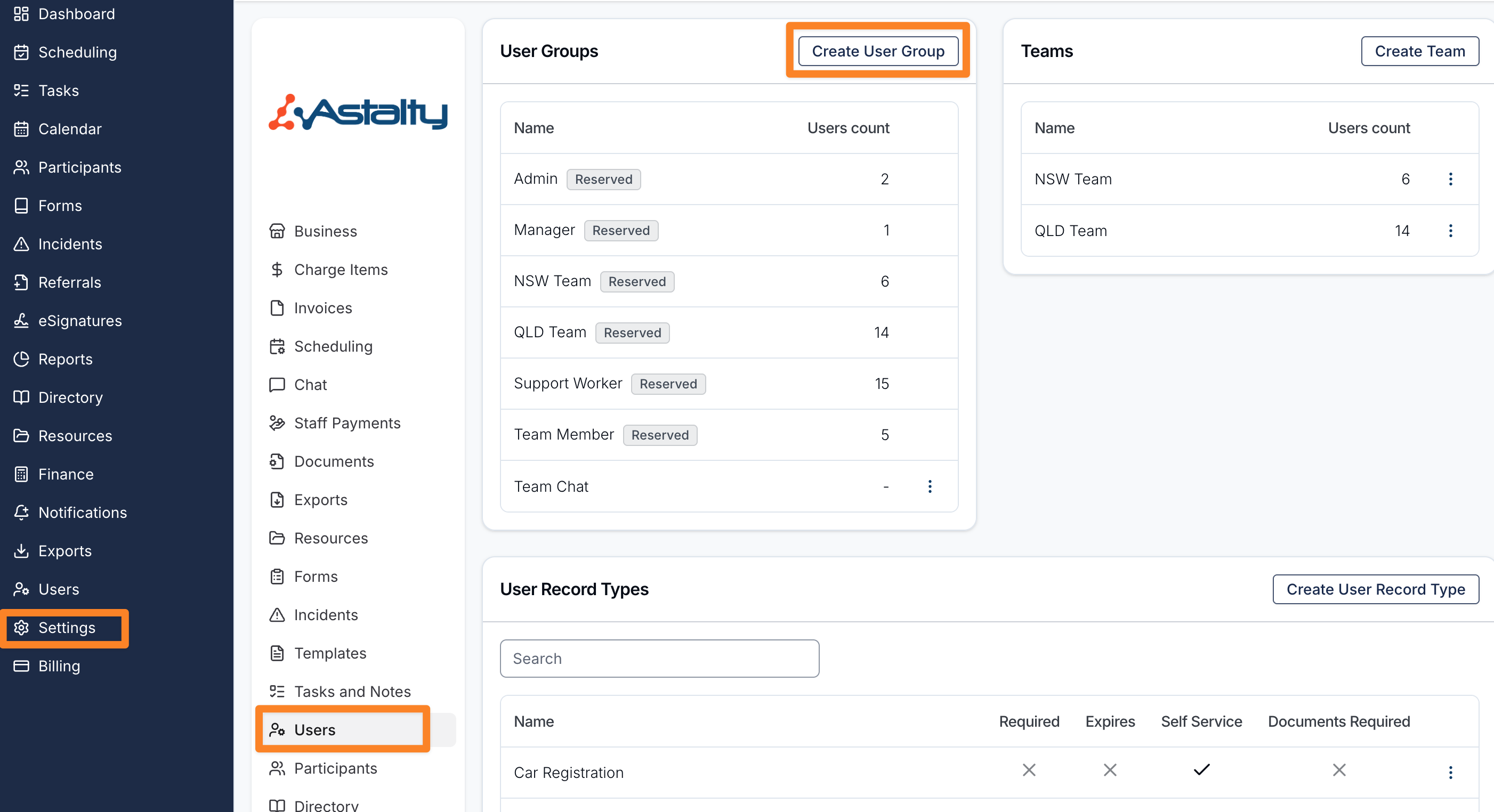
To create a User Group, navigate to the Users settings page.
Select Create User Group and enter the name of the group. You cannot use a name that is already in use or a name reserved by Astalty, such as All Users.
Updating User Groups
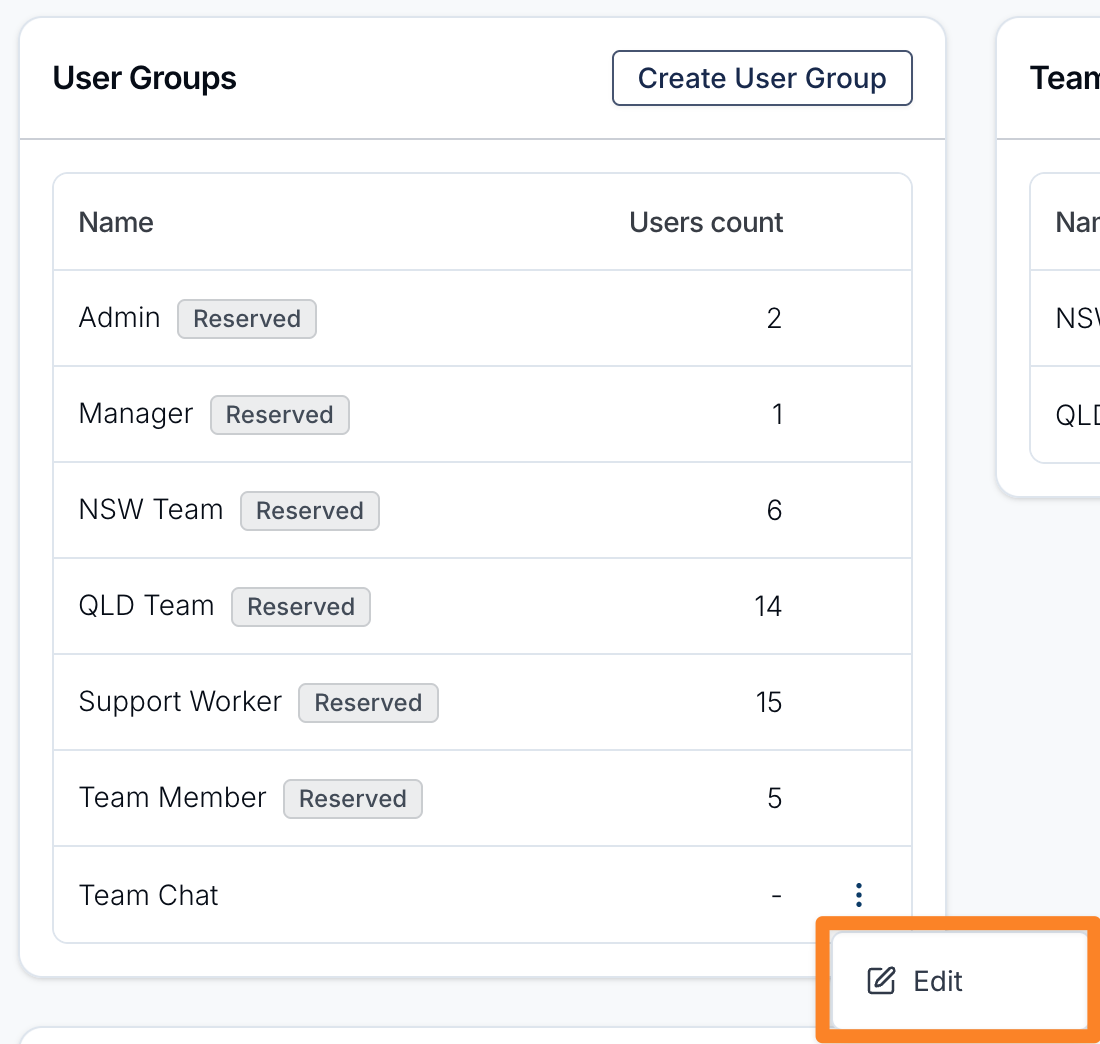
To update a User Group navigate to the Users settings page.
Click the 3 dots next to the User Group and click Edit. From there you can rename the group and change its Members, then click Update to save both at once.
Adding a User to a User Group
Membership can be edited from either the group itself or the user's profile.
From the User Group
Quicker when you are adding or removing several people.
- Navigate to the Users settings page.
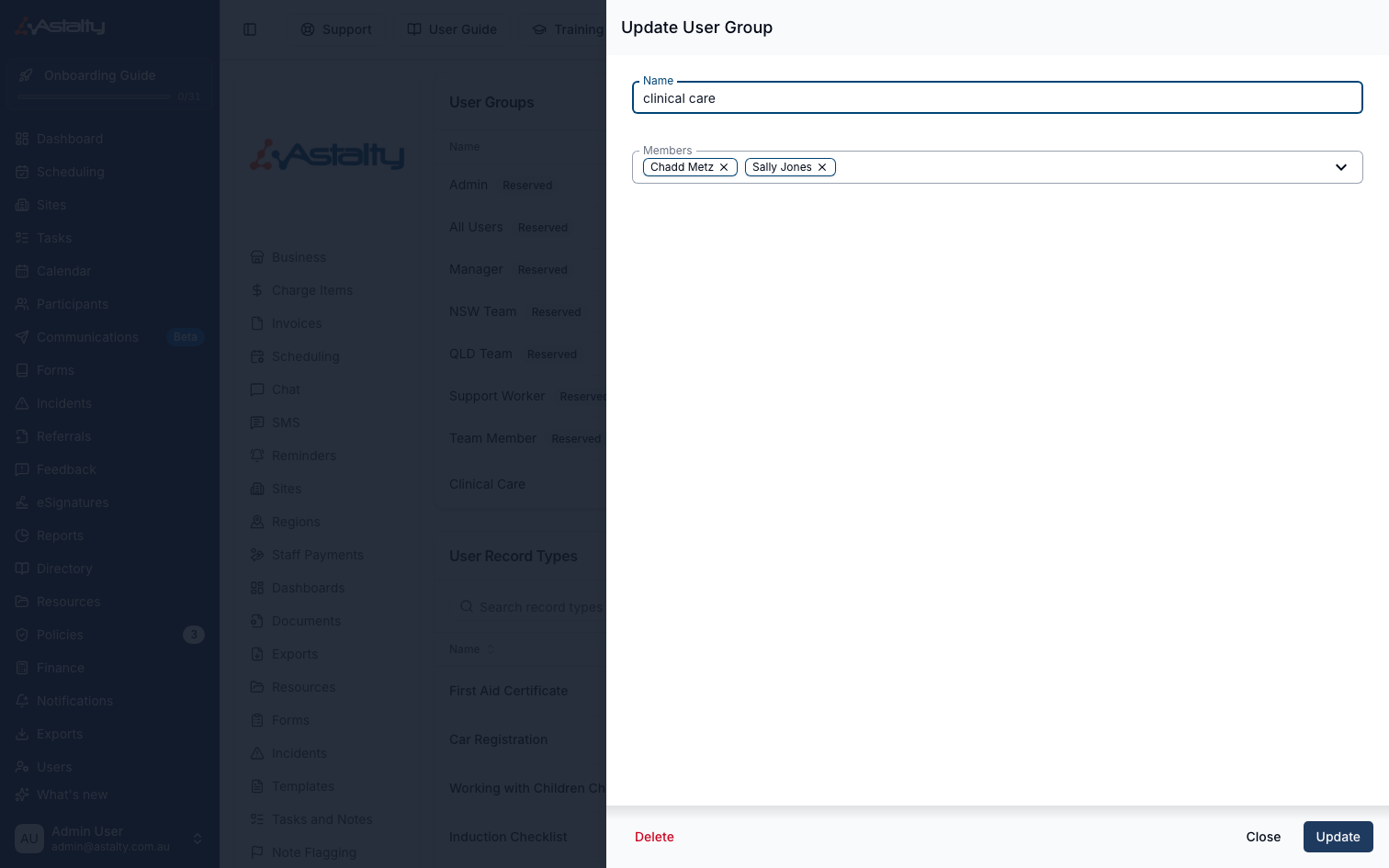
- Click the 3 dots next to the User Group and click Edit.
- Search the Members field and select each user you want in the group. Each member shows as a chip. Select the x on one to remove that user from the group.
- Click Update.
From the User's Profile
Quicker when you are putting one person into several groups.
- From the left-hand menu, navigate to Users.
- Select the user you want to add to a group.
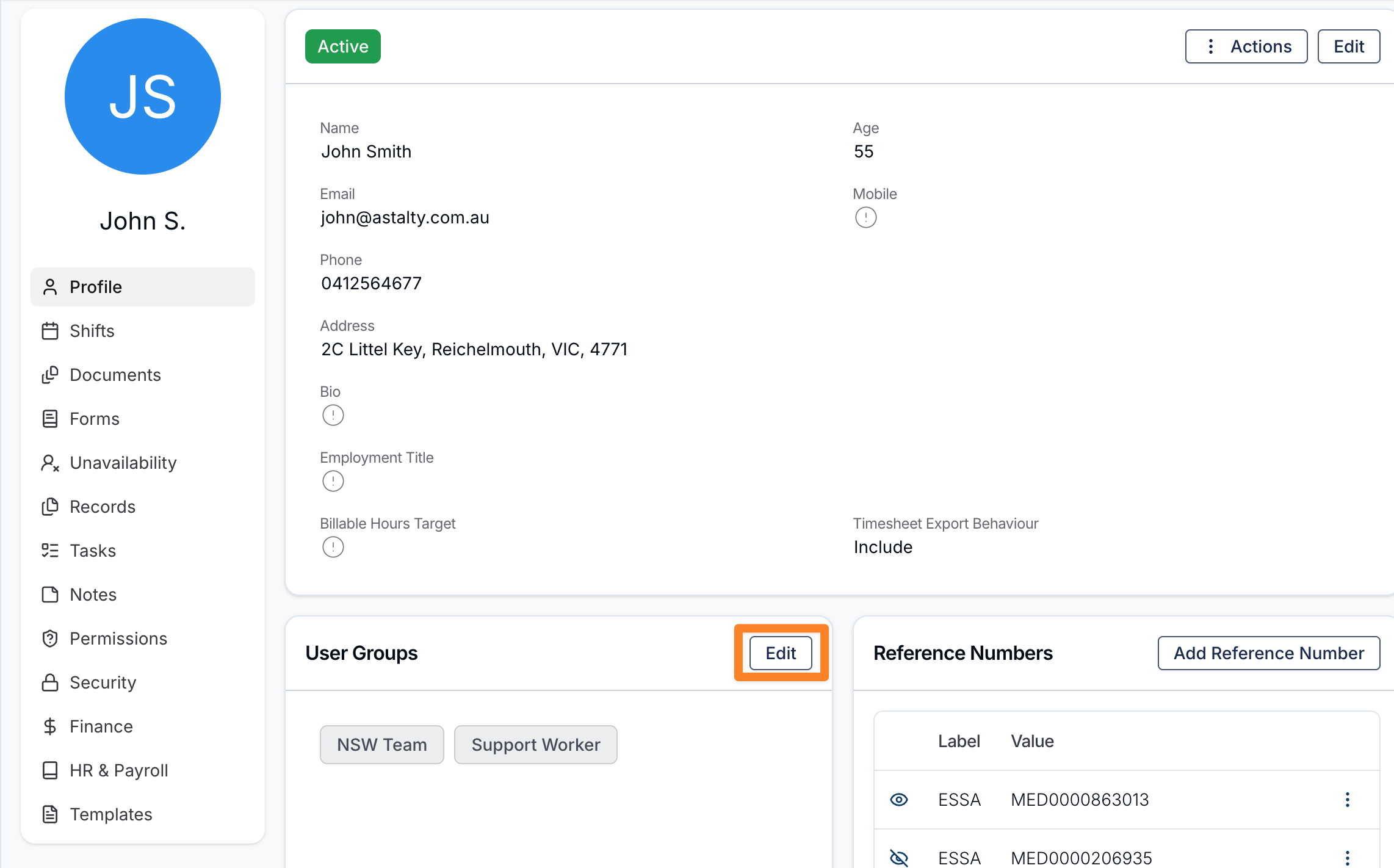
- On their profile, scroll down to the User Groups section.
- Click Edit.
- Tick the checkbox next to the group you want to add the user to. You can select multiple groups at once.
- Click Update User to save the changes.
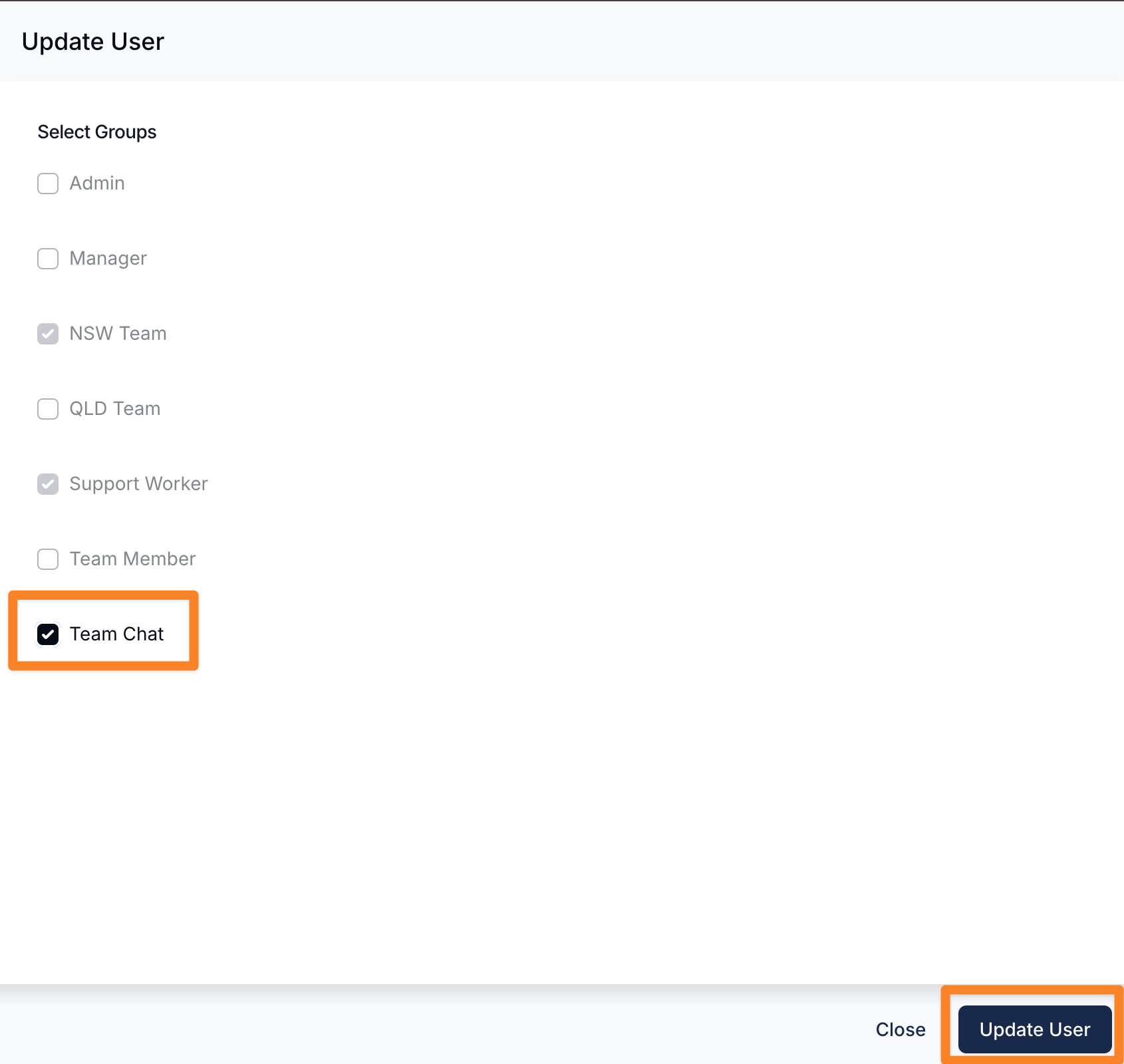
The user is now a member of the group and is included in notifications or Chat channels configured for that group.
Deleting User Groups
To delete a User Group, navigate to the Users settings page.
Open the menu beside the User Group and select Edit. In the edit drawer, select Delete, enter the User Group name to confirm, then permanently delete it.
Deleting a custom User Group removes its membership links and deletes qualification requirements assigned to that group. Review workflows that refer to the group before deleting it.
If a User Group is marked as reserved, it cannot be edited or deleted.