- Administration
- Settings
- Tasks & Notes
Tasks & Notes
Tasks & Notes Settings Overview
The Tasks & Notes settings page contains:
- Charge Intervals
- Assignment Notifications
- Note Template Settings

Charge Intervals
Charge Intervals are set from the Tasks & Notes settings page. Using the left-hand side menu, click Settings, then select Tasks & Notes and edit the Charge Intervals panel.

Charge intervals control the +N duration buttons shown on Tasks. They add the selected number of minutes to a Task's duration. They do not round time or change billing rules.
Astalty provides 6-minute and 15-minute presets. Add any other duration your team uses regularly, such as 240 minutes for a standard meeting. The new interval then appears as a duration button on Tasks.
Assignment Notifications
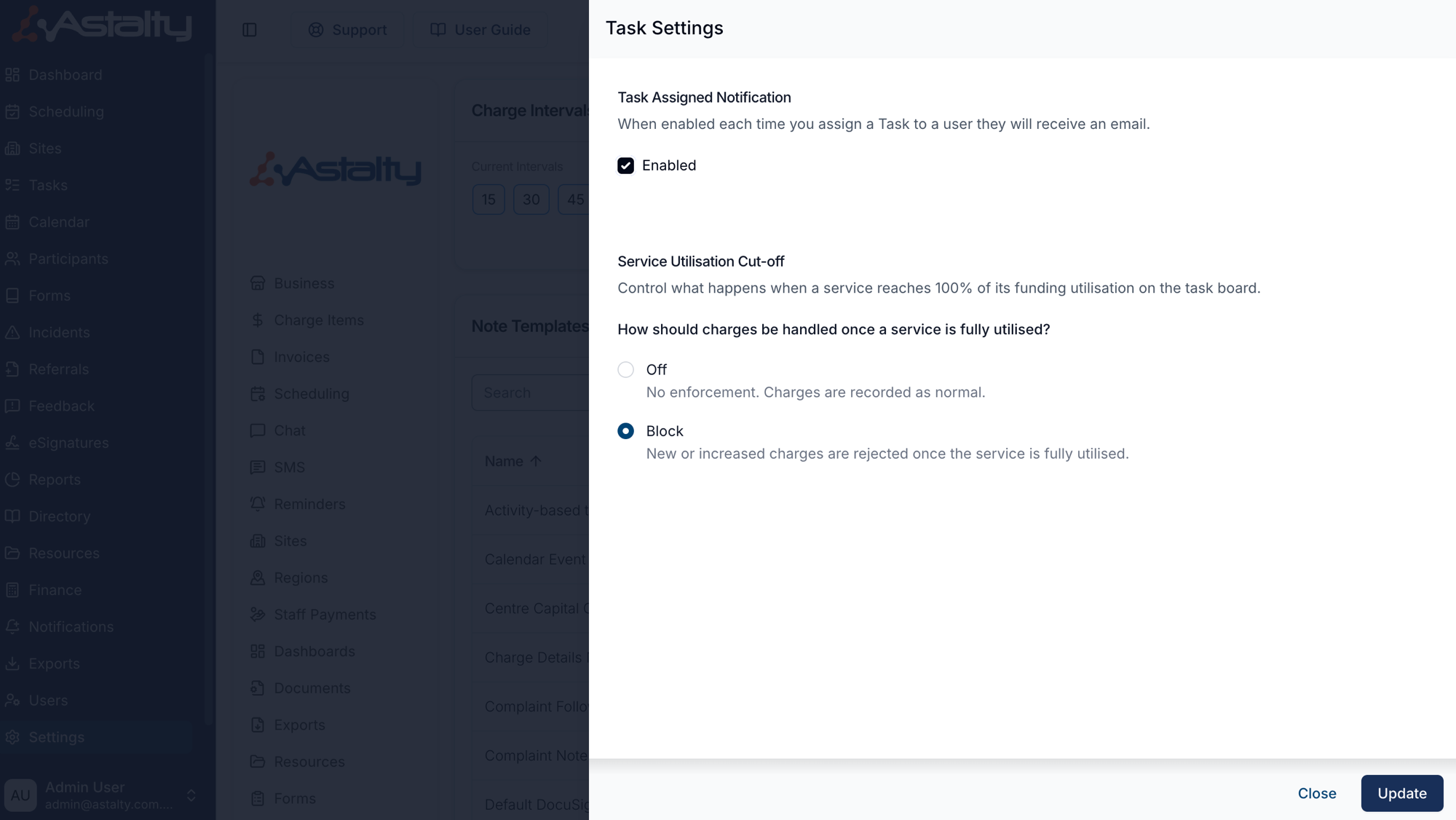
Send an email to the assignee controls the email for three events: assigning or reassigning a task to someone else, creating a calendar event for them, and moving one of their calendar events to a new time. The owner always gets a notification in Astalty for these; turning this off only stops the email.
Open Settings > Tasks and Notes, then edit Task Settings.

Clear Send an email to the assignee, then click Update to stop these emails.

A calendar event only notifies its owner when someone else creates it or moves it to a new time - not for other changes, such as renaming it or changing its colour, location or description. Creating or moving your own event never sends a notification, and a repeating series sends one notification for the whole series, not one per occurrence. See Managing Calendar Events on Behalf of Other Users.
Service Utilisation Cut-off
The Task Settings also include the Service Utilisation Cut-off - an option that stops new or increased Task charges from being recorded against a service once its funding is fully utilised. For how to turn it on and how it behaves, see Service Utilisation Cut-off.
Note Template Settings
From Note Templates, you can:
- create a Note Template;
- choose where the template appears with a usage type;
- edit existing templates; and
- search for a template.
See Note Templates.