- Participants
- NDIS Plan
NDIS Plan
Overview
To manage NDIS plans for a Participant navigate to their NDIS Plan page within their profile. This page will look slightly different depending on whether or not the Participant has a current NDIS Plan. If you are creating the first NDIS Plan for a Participant, this page will look like the screenshot below.
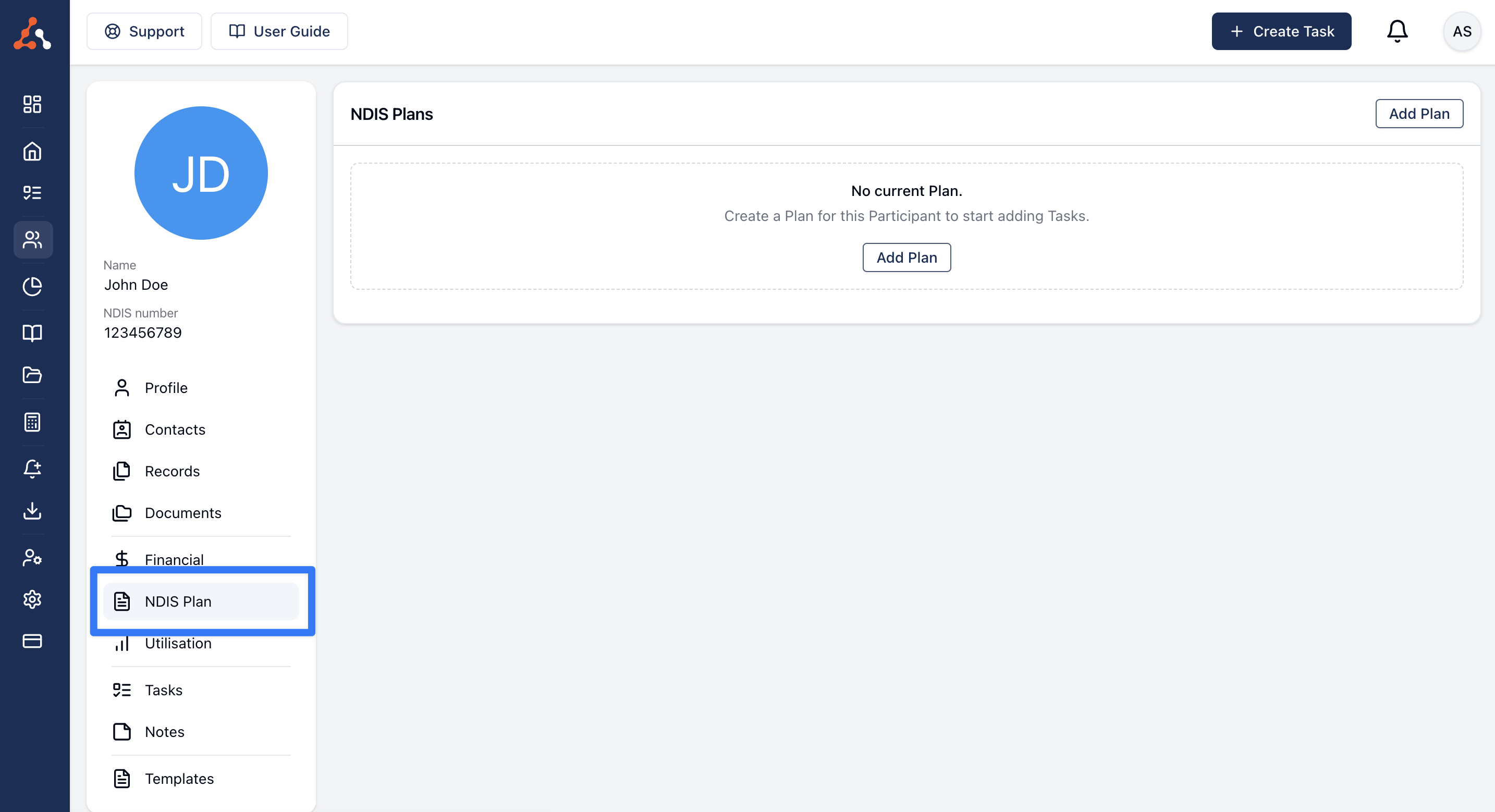
Creating the first NDIS Plan
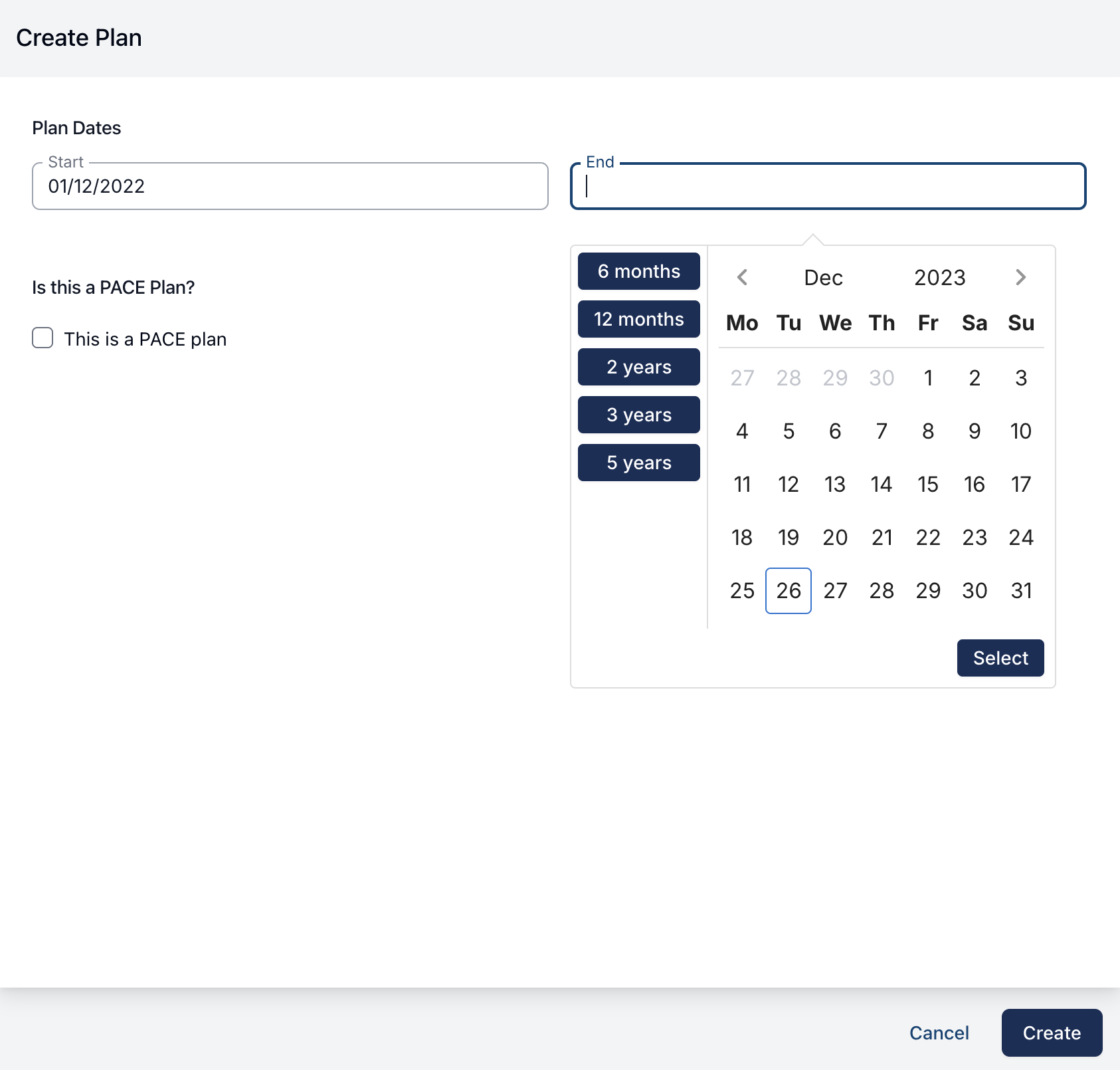
To add a new NDIS Plan, click the Add Plan button. This will open the Create Plan form where you will need to enter;
- Start date (required)
- End date (required)
- Whether or not this is a PACE plan - this is unticked by default (optional)
- By telling Astalty that the plan is a PACE plan, Astalty can show you the correct budgets when adding Services and Implementations
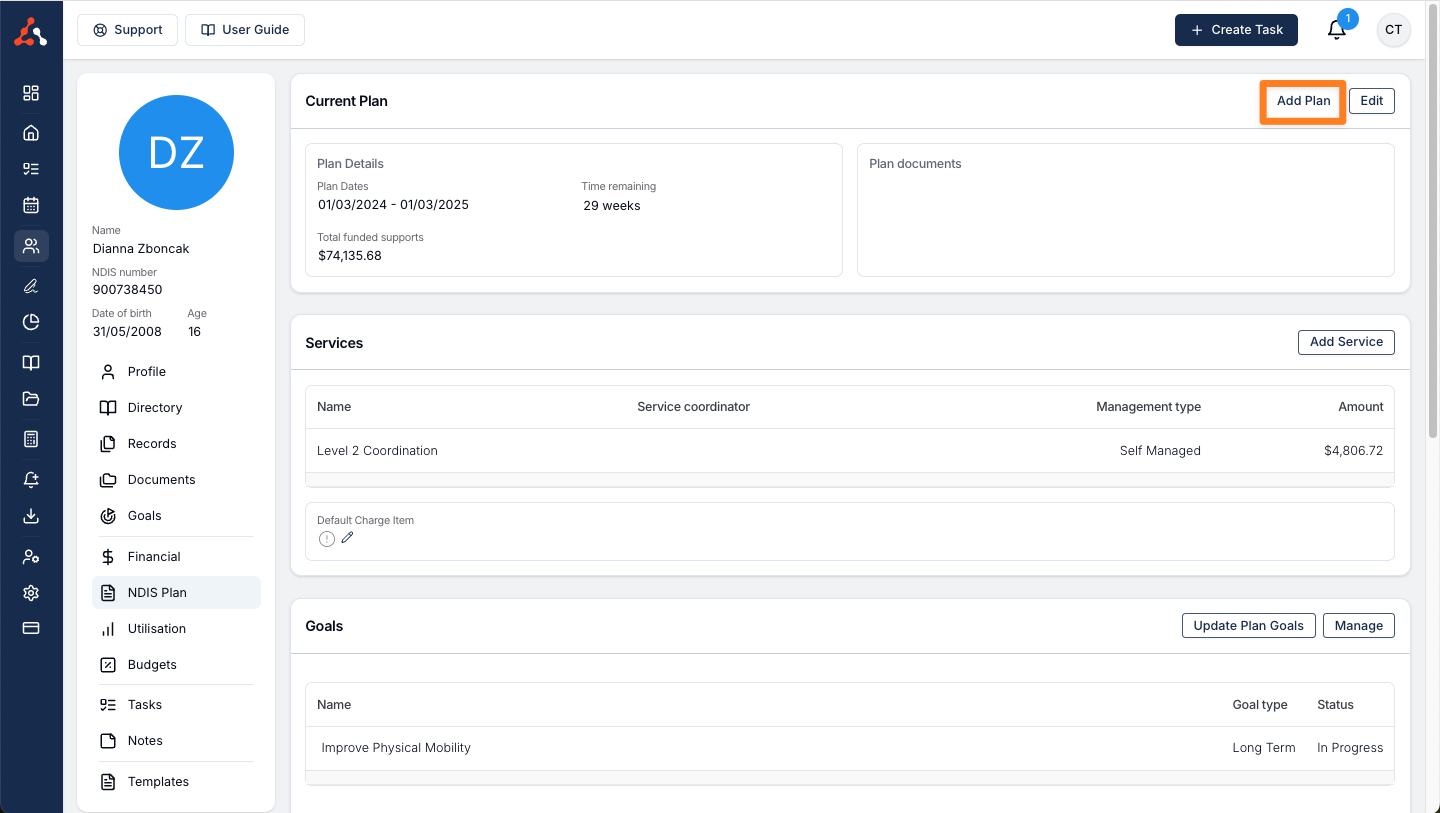
Creating additional NDIS Plans
Once a Participant has finished their current plan and receives a new plan, do not delete the NDIS Plan already in Astalty. Instead, you can simply add the new plan. To do this, select 'Add Plan' within the current plan table.
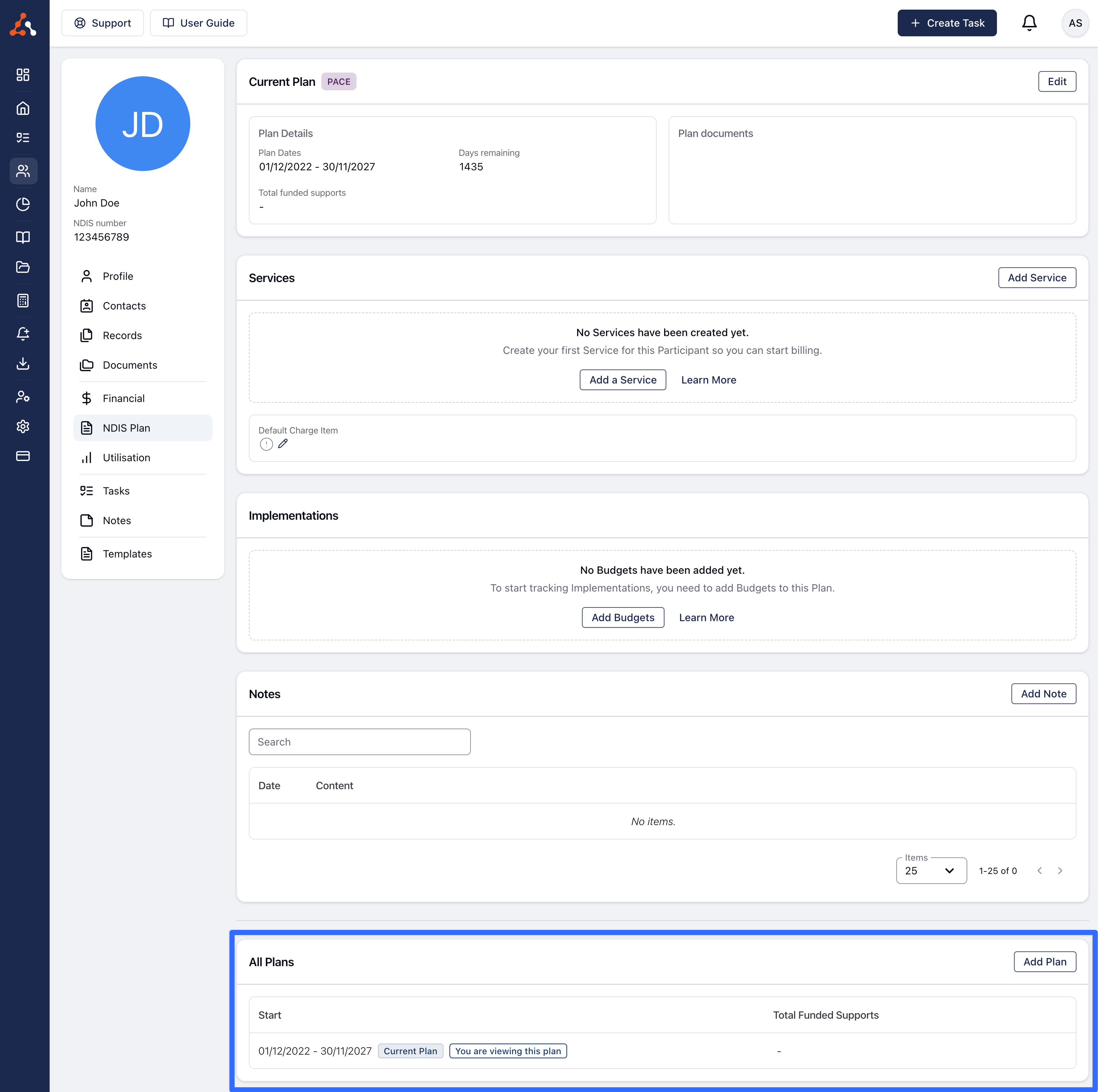
Or navigate to the NDIS Plan page and scroll to the bottom where you will find the Add Plan button and you can following steps for creating a plan outlined above.
How to edit the NDIS Plan
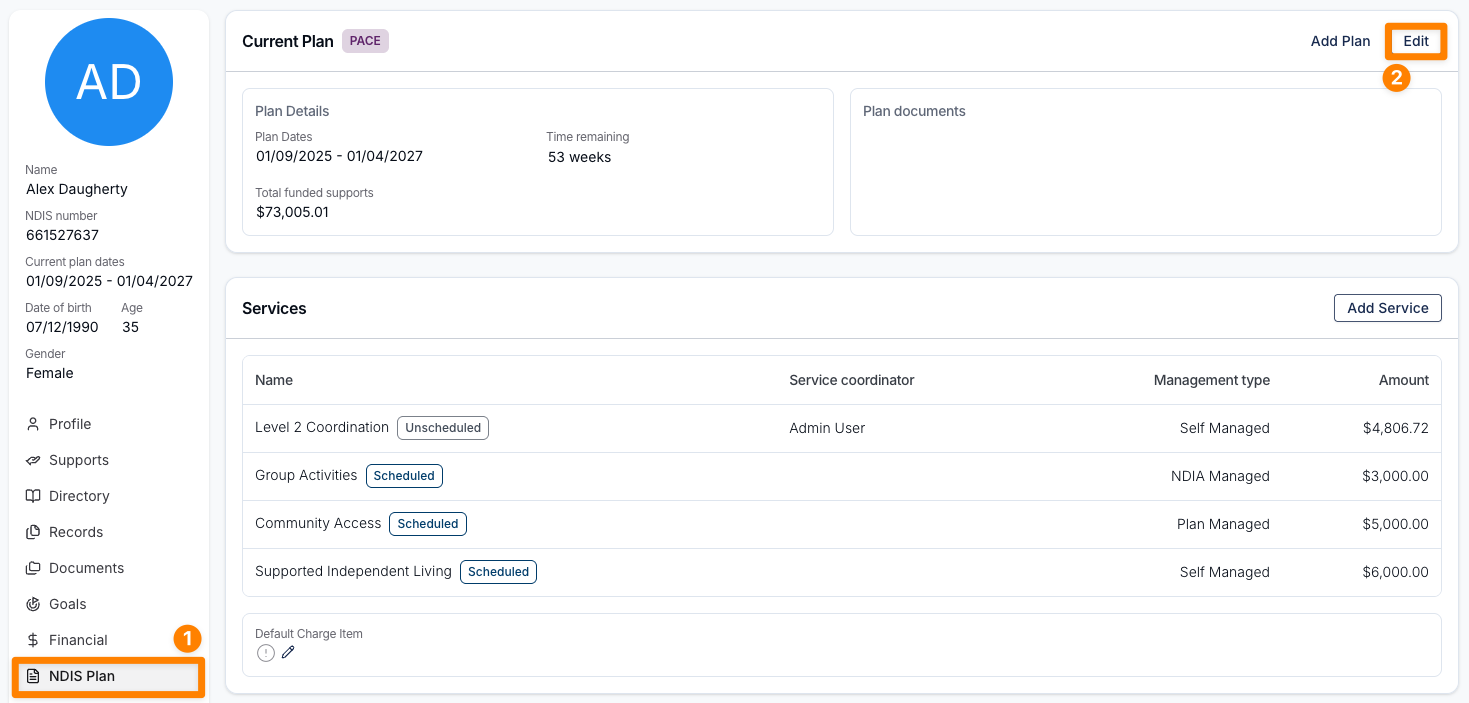
You can edit an NDIS Plan by clicking the ‘Edit’ button in the top right corner of the NDIS Plan page within a Participant’s profile.
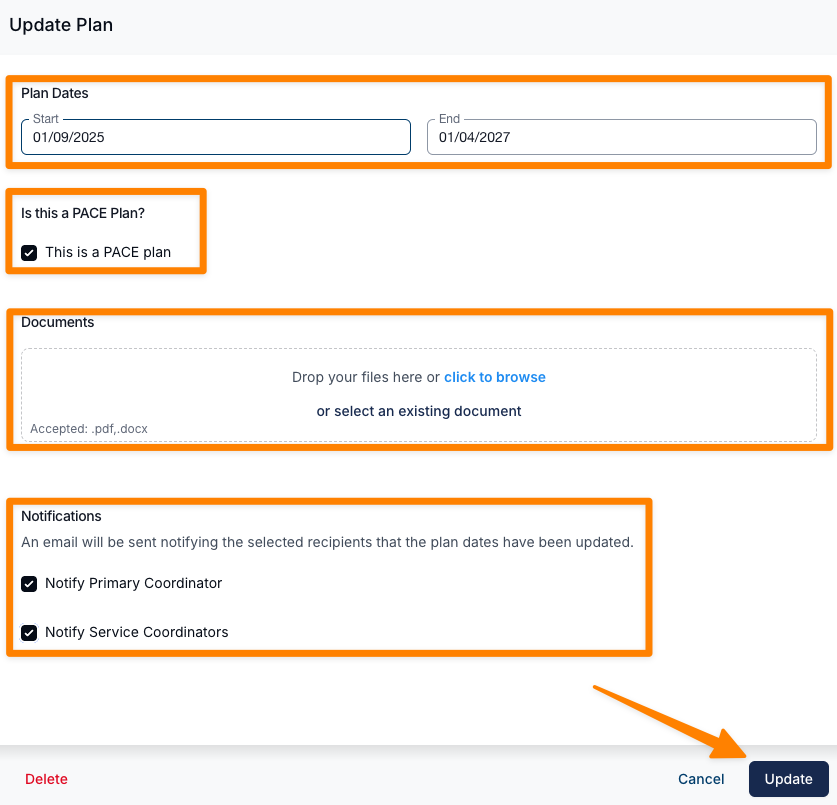
Within the edit window, you can update the plan start and end dates, indicate whether the plan is a PACE plan, and add supporting documents by either uploading new files or selecting from existing documents already stored in the Participant’s profile.
You can choose to notify the Primary Coordinator or Service Coordinators when you change the Plan start or end date. Saving only a PACE setting or Document change does not send these notifications.
Once all updates have been made, click Update to save your changes.
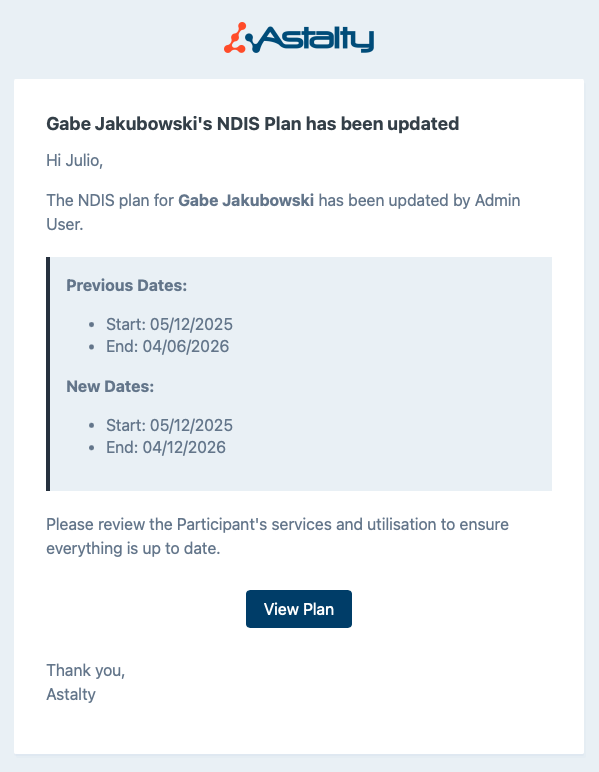
Coordinators will receive an email notifying them of the updates made to the Participant's NDIS Plan details. They will also have the option to quickly navigate to the Participant's NDIS Plan via the View Plan button in the email.
Changing Plan dates can also affect existing data. Before you save, Astalty warns when:
- Services with funding schedules need their first or last period adjusted. Periods outside the new dates are removed and their amounts are merged into the nearest remaining period.
- Uninvoiced charges will fall outside the Plan dates and cannot be invoiced until another Plan covers them.
- Charges will stop counting towards this Plan's Service Utilisation.
No charges are deleted. Review any affected funding schedules after updating the dates.
Adding Documents to a Plan
Both the Create Plan and Update Plan forms have a Documents section, so you can keep a copy of the plan itself against the plan record. Drag your files into the outlined area or click click to browse to pick them from your computer — you can attach up to 10 files at a time. If the file is already stored on the Participant's profile, click or select an existing document instead of uploading a second copy.
Accepted File Types
You don't need to convert the plan into a PDF or Word document first — if the plan arrived as a photo or as an email, you can attach it as it is. The accepted file types are listed underneath the upload area:
- Documents — .pdf, .doc, .docx
- Photos — .png, .jpg, .jpeg, .heic, .heif
- Saved emails — .eml, .msg
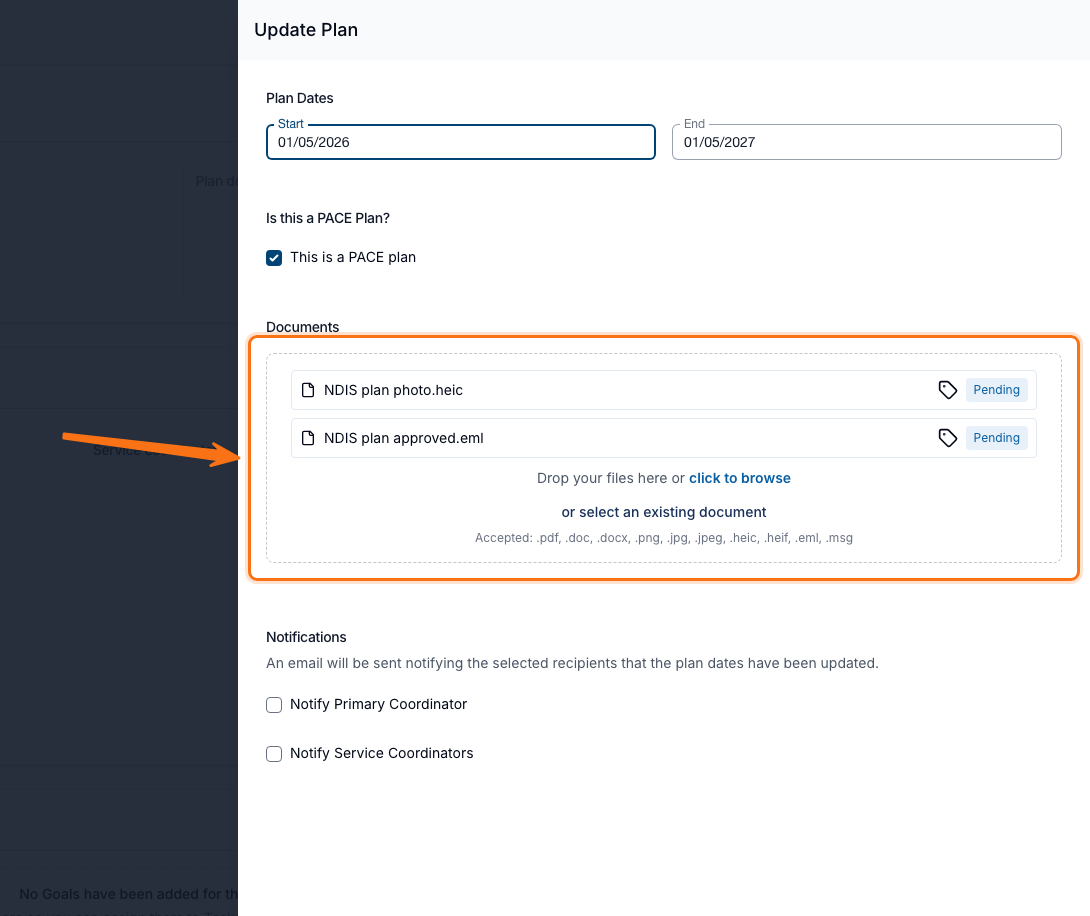
Anything you attach here also appears on the Participant's Documents page, where you can rename it, add Categories, send it, or archive it.
Overlapping Plans
Astalty does not allow NDIS plans to overlap - if you try to add a plan with dates that overlap another plan, you will see an error message.
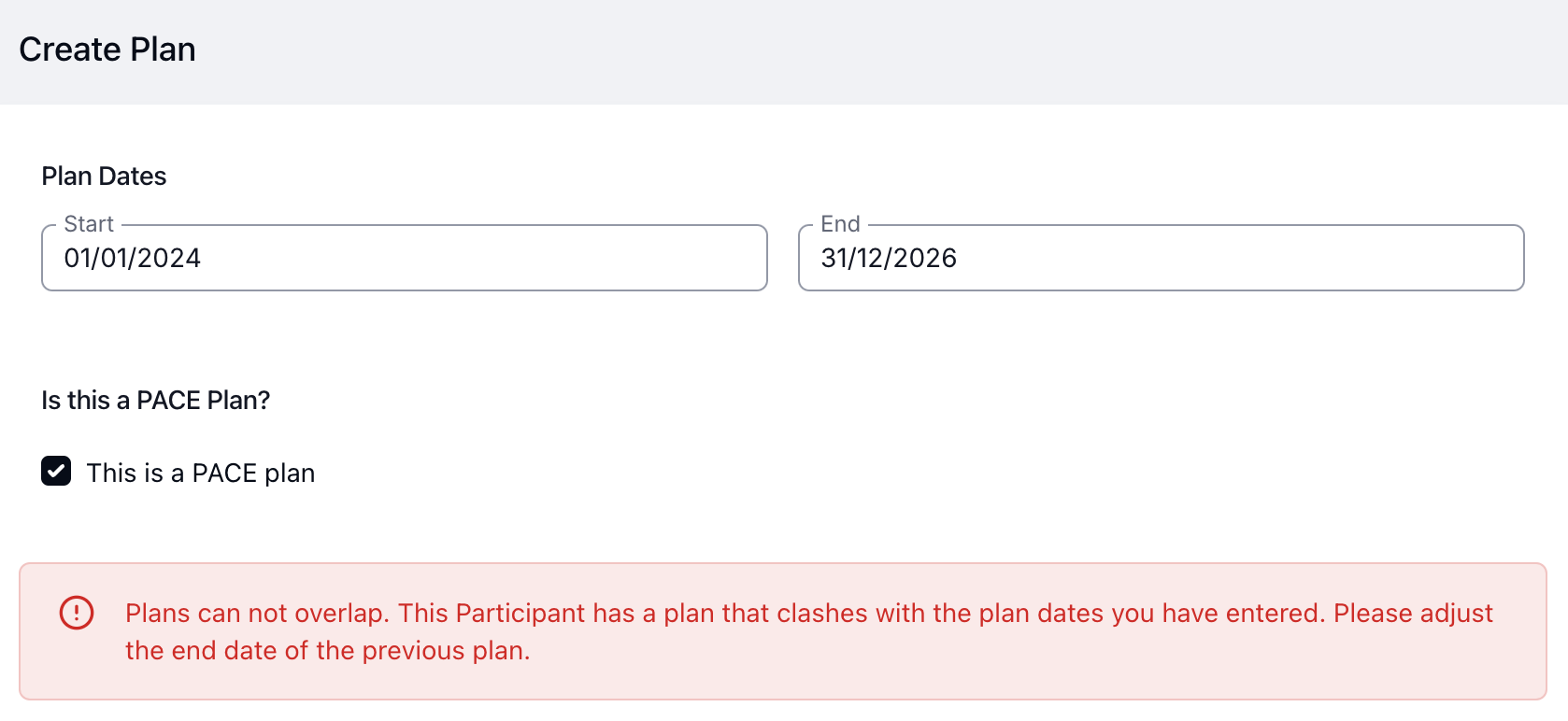
In this example, the new plan starts on the 1/1/2024 - so the current or previous plan must be editing to ensure it finishes at least 1 day prior. In this case it would be 31/12/2023.
Services
Generally once an NDIS plan has been created, the first thing you will want to do is add the Services you will be delivering under this plan. Please head to the Services page to learn more about this. Within services you can outline funding periods for the services you are providing for your Participants NDIS plan.
Budgets & Implementations
Astalty has powerful implementation tracking features making it easy for you to ensure your Participant's plans are being utilised and implemented. Head to the Implementations page to learn more about how to make the most of this great functionality.
Toggling Service Permissions
Did you know that you can toggle Team Member user access to editing the NDIS Plan and Services section? You can learn more about this via our user guide article here.