- Insights
- Shift Variance Report
Shift Variance Report
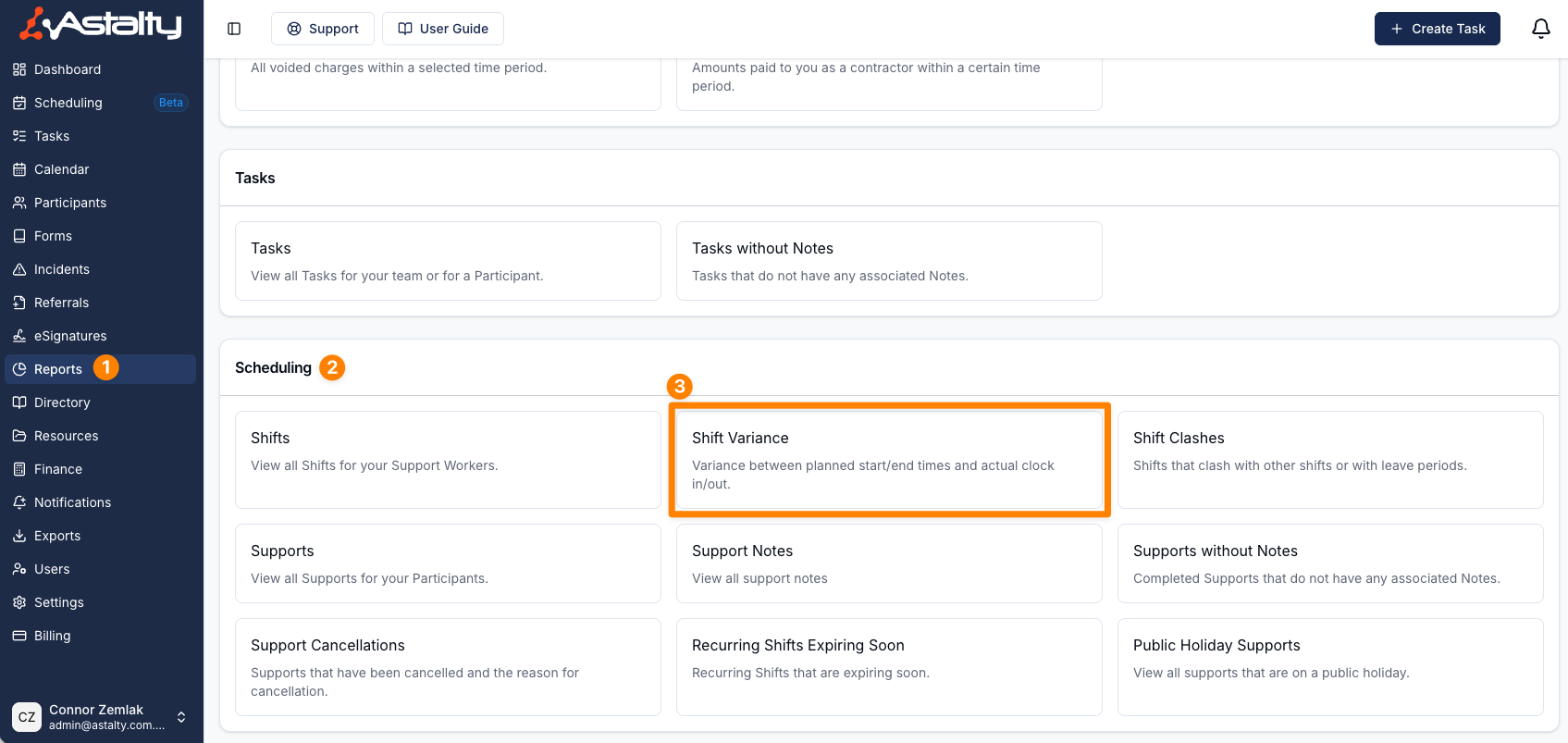
Open Reports > Scheduling > Shift Variance.
Overview
The report compares scheduled shift times with the Support Worker's clock-in and clock-out times. Use it to find late starts, early finishes and shifts that ran longer than rostered.
To compare scheduled times with the times approved for billing instead, use the Shift Approvals Variance Report.
By default, only Admins can open this report. A Manager can open it once Can access Scheduling is turned on for them. See Roles & Permissions.
Filters
- Date - matched against each shift's scheduled start time. Defaults to the current week (Monday to Sunday) and includes the whole of the end date. Use the Last and This presets to jump between periods.
- Search - matches the Support Worker's name.
Understanding the Results
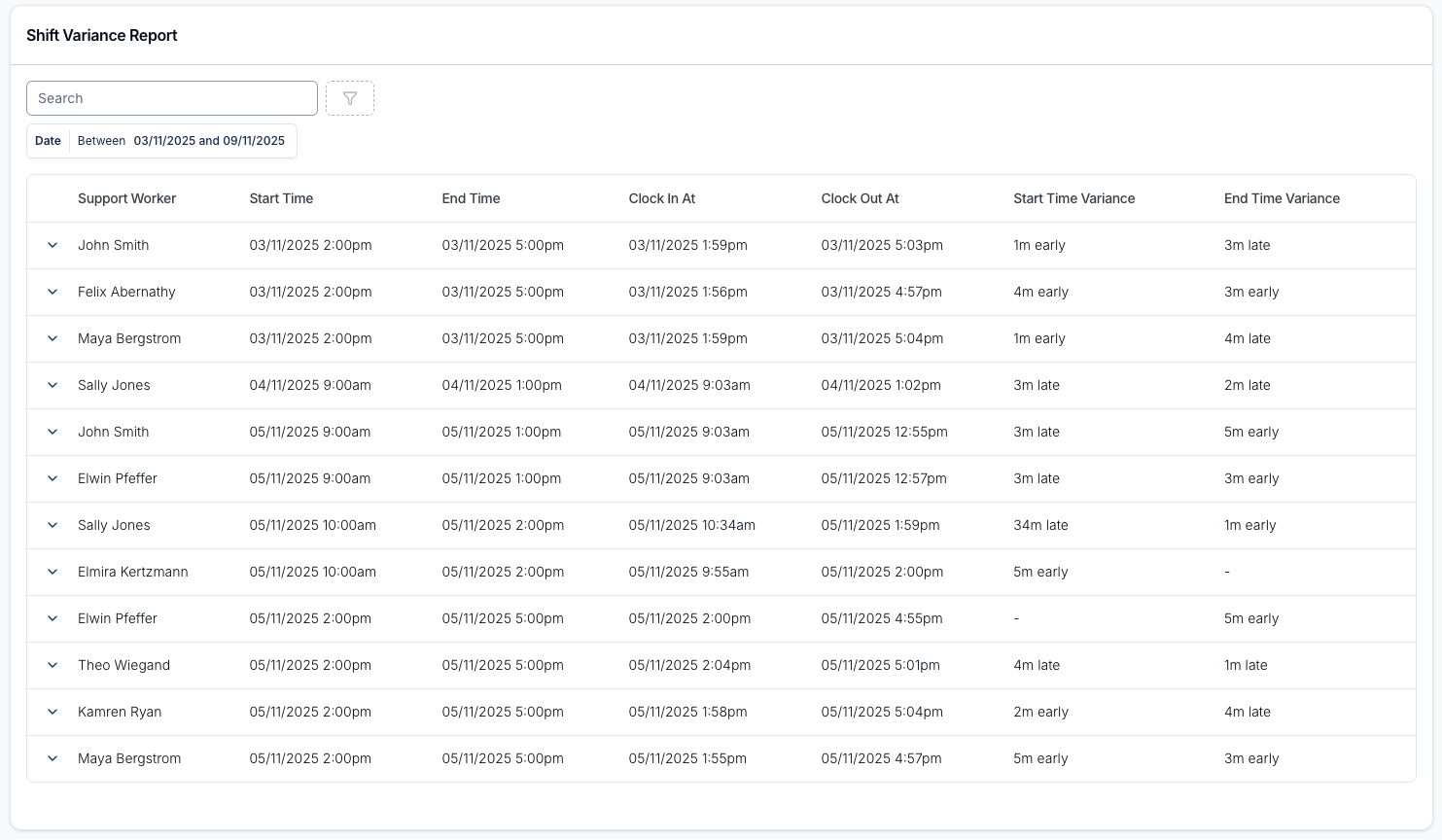
A shift appears only once it has both a clock-in and a clock-out, so shifts that haven't been worked, or that are still in progress, are left out. Every matching shift loads on one page, sorted by scheduled start time. Select a column heading to sort by any time or variance column.
| Column | What it shows |
|---|---|
| Support Worker | The worker who clocked in and out. |
| Start Time / End Time | The scheduled start and end. |
| Clock In At / Clock Out At | When the worker actually clocked in and out. |
| Start Time Variance | How far the clock-in was from the scheduled start, labelled late or early, for example 15m late. A dash means the worker clocked in exactly on time. |
| End Time Variance | How far the clock-out was from the scheduled end, labelled late or early. A late clock-out means the shift ran over. |
Above the table, up to four averages are shown across the listed shifts: Average Early Start, Average Late Start, Average Early End and Average Late End. Each average only counts the shifts that were early or late in that way, and is hidden when there are none.
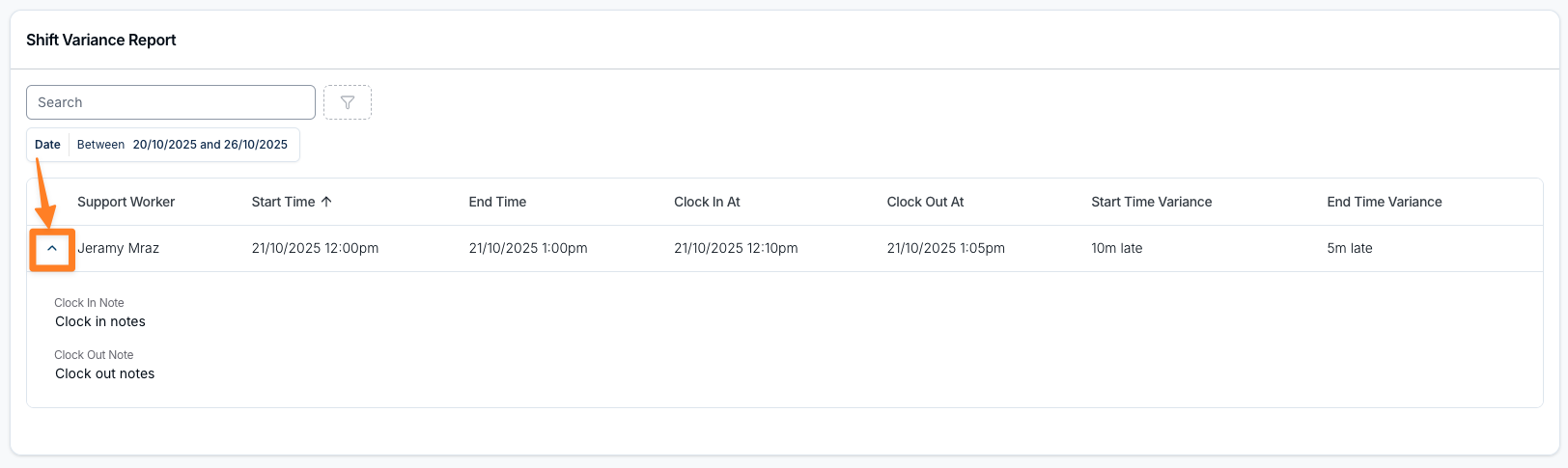
To view reasons for lateness, select the arrow on a row. Any Clock In Note or Clock Out Note the worker added is shown. Select the row itself to open the shift.