- Insights
- Flagged Notes Report
Flagged Notes Report
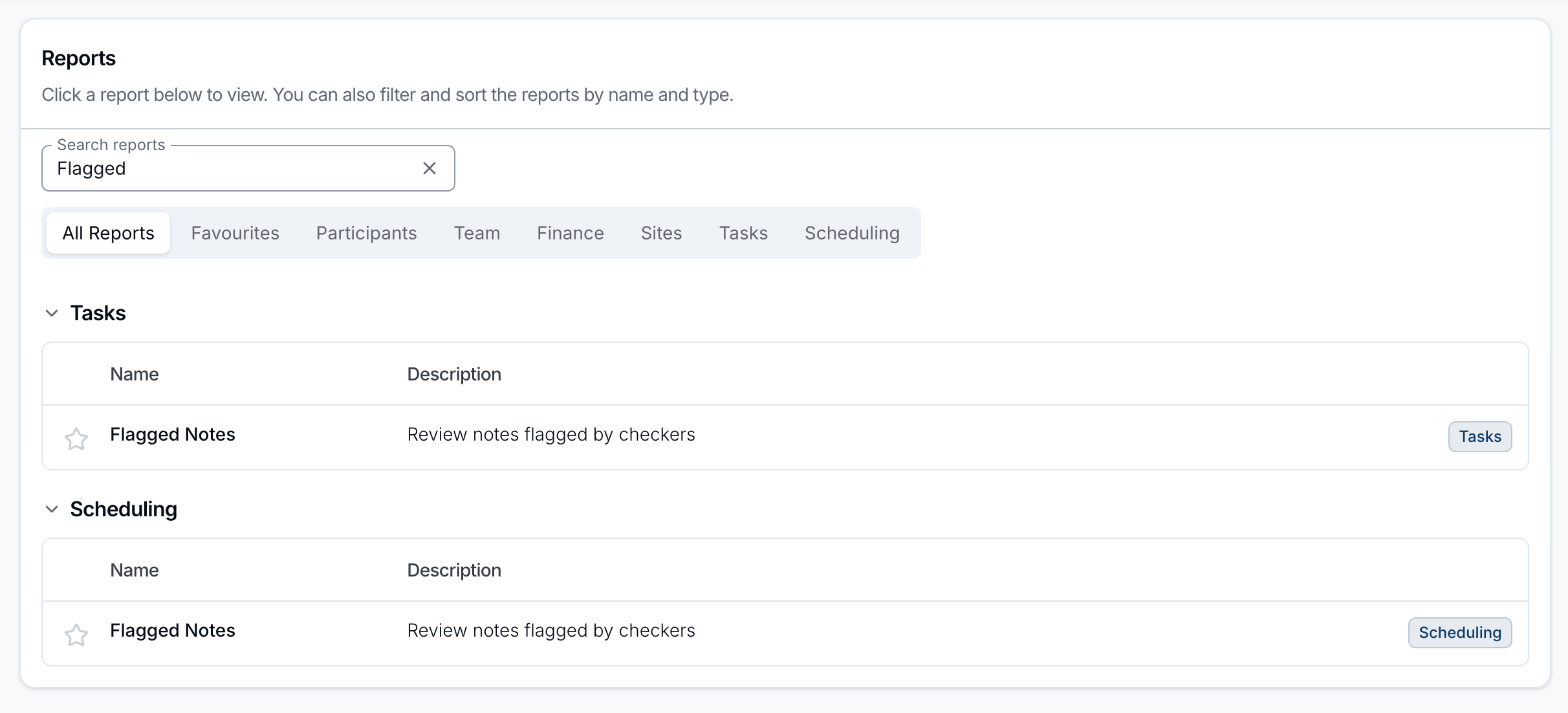
The Flagged Notes report appears under two headings on the Reports page, both showing the same flagged notes:
- Reports → Scheduling → Flagged Notes
- Reports → Tasks → Flagged Notes
Report Overview
The Flagged Notes report brings together notes that have been flagged by checkers so they can be reviewed and followed up. Each row explains why a note was flagged and tracks its progress through to resolution. To set up the checkers that flag these notes, see Note Flagging.
Report columns
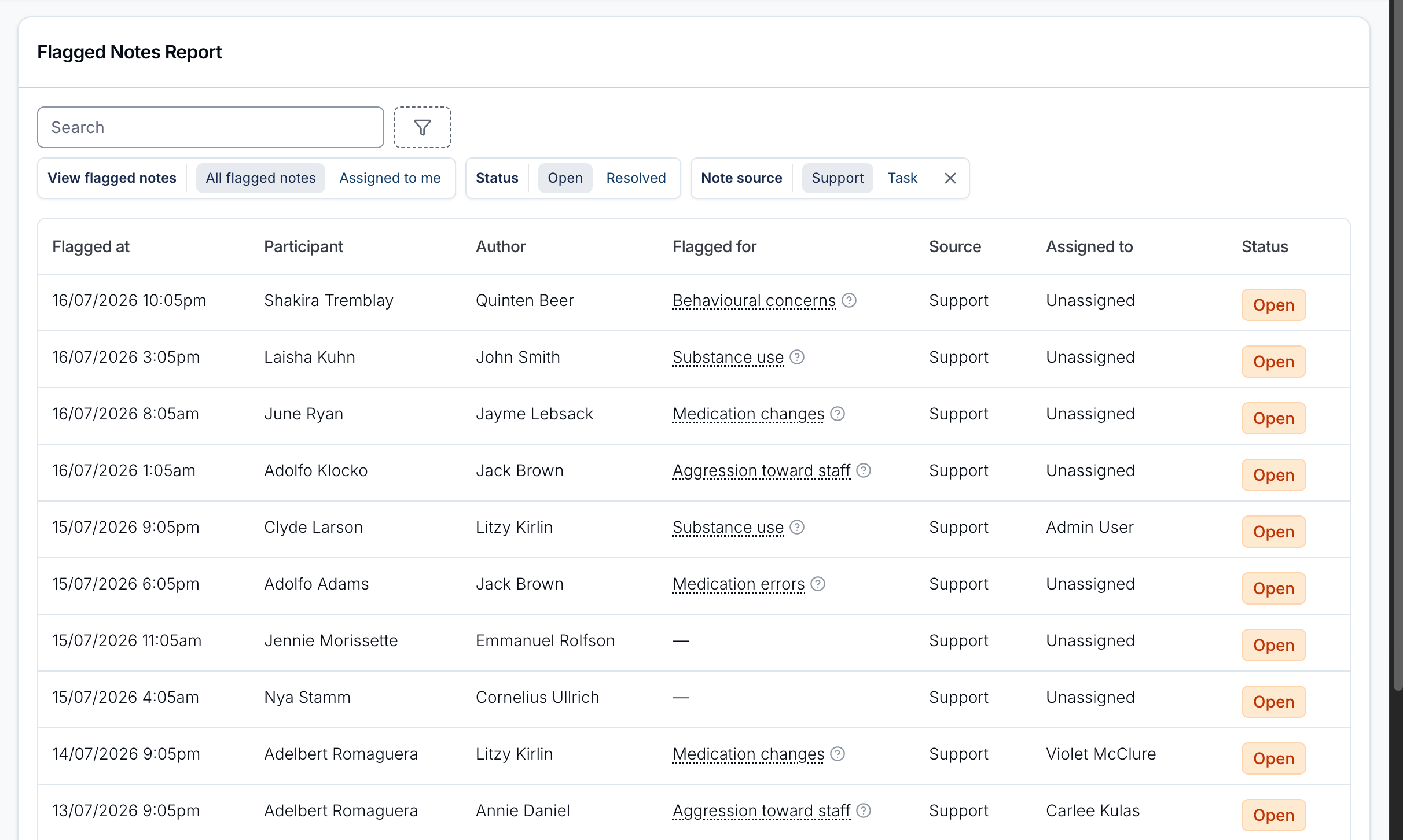
- Flagged at - when the note was flagged.
- Participant - the Participant the note relates to.
- Author - the person who wrote the note.
- Flagged for - the reason the note was flagged, with the flag's type beneath it. Hover the ? next to the reason to see the checker and the matched word, phrase, or condition.
- Source - what the note is attached to, such as a Support or a Task.
- Assigned to - who is responsible for following up the flag, or Unassigned.
- Status - whether the flag is Open or Resolved.
Flag types
Every flag carries a type that says why it was raised, so a completeness queue can be worked separately from a safeguarding one:
- Needs review - the note contains something a checker was watching for, such as a behaviour of concern or a medication issue.
- Incomplete - the note is missing content a checker expected, such as an oversight or sign-off section that was never added.
Which type a flag gets follows from the checker that raised it, and is set when the checker is created. See Note Flagging for how the two kinds of checker are set up.
Reviewing a flagged note
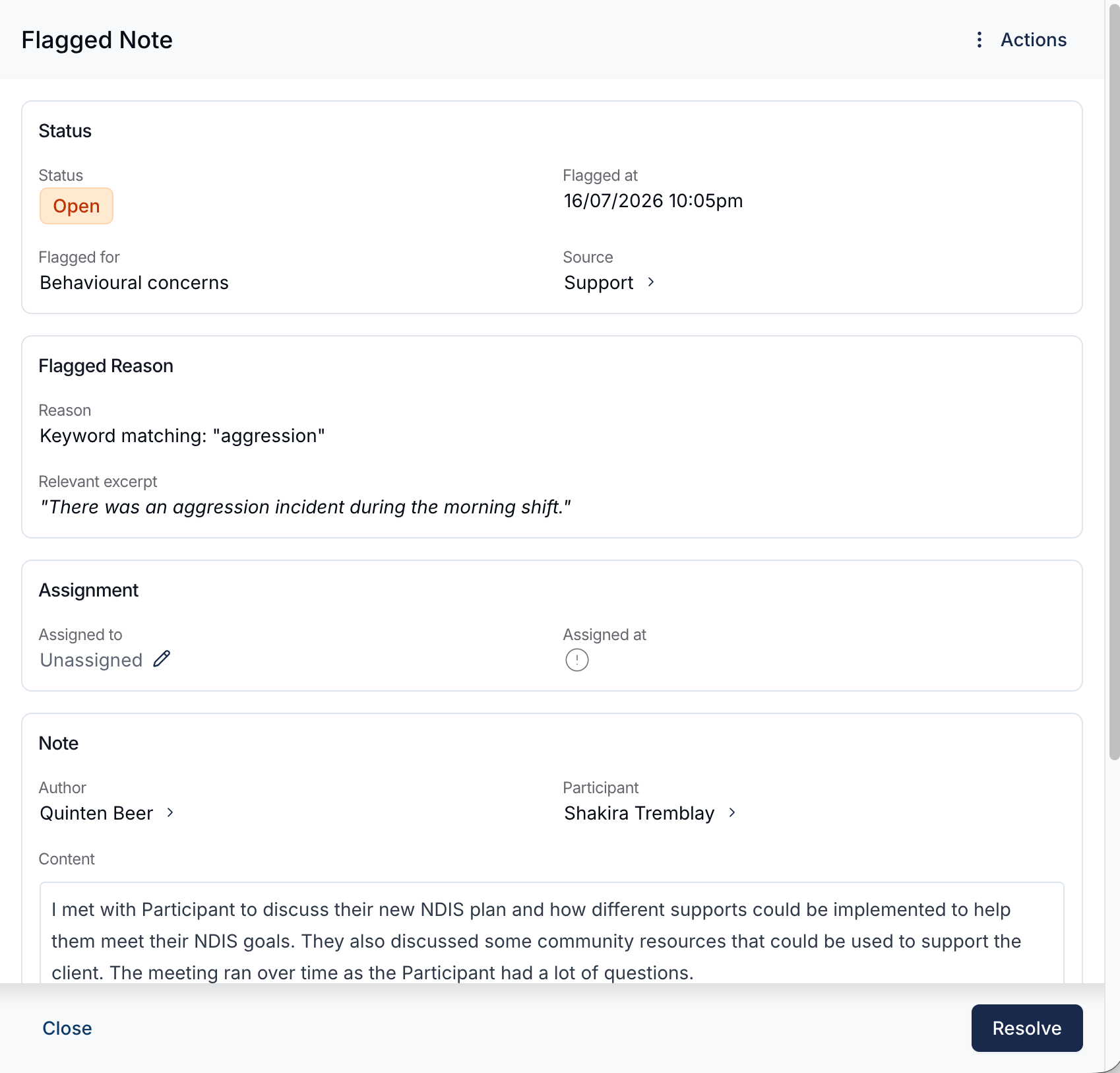
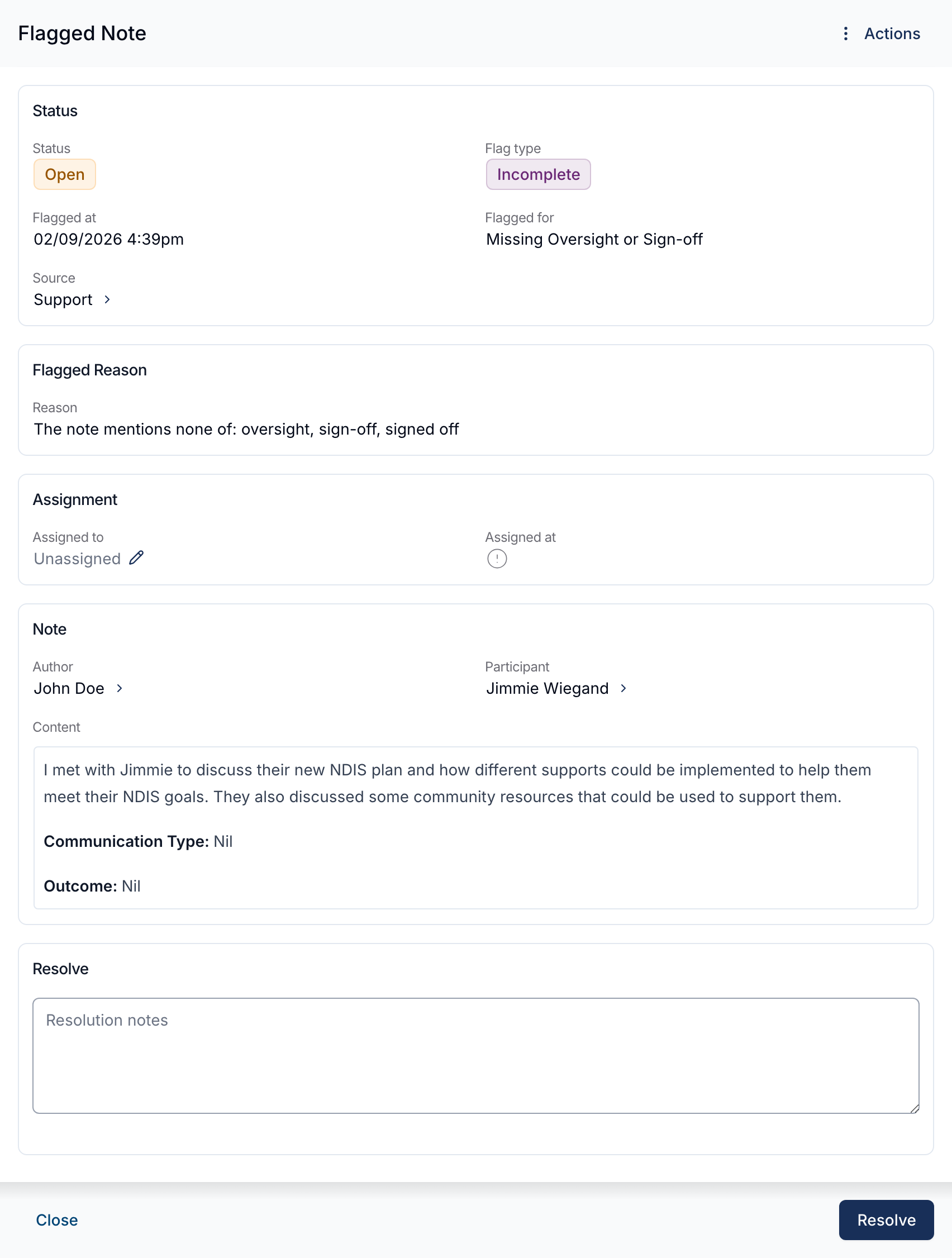
Click any row to open the Flagged Note panel and work through the flag. It brings everything you need into one place:
- Status — the current status (Open or Resolved), the Flag type, when it was flagged, what it was flagged for, and the source.
- Flagged Reason — how the note was matched and, where the flag is for content the note contains, the relevant excerpt. An Incomplete flag names the phrases it looked for instead, since there is no excerpt to show for content that isn't there.
- Assignment — who the flag is assigned to and when. Select the pencil next to Assigned to to change who's following it up.
- Note — the author, the Participant, and the full note content.
Use the Actions menu in the top right for further options, and select Resolve once the flag has been dealt with. A resolved flag can be reopened from the same panel.
Flags That Resolve Themselves
An Incomplete flag follows the note it was raised on. Once the expected content is added the flag resolves without anyone closing it, and Resolved by reads Resolved automatically rather than naming a person. If the content is later removed, the flag reopens.
Every other flag stays Open until somebody reviews the note and resolves it.
Filtering
Use the Search box to find flagged notes by keyword, and the quick filter chips above the table to narrow the list:
- View flagged notes — switch between All flagged notes and those Assigned to me.
- Status — show Open or Resolved flags.
- Note source — limit to notes flagged from a Support or a Task.
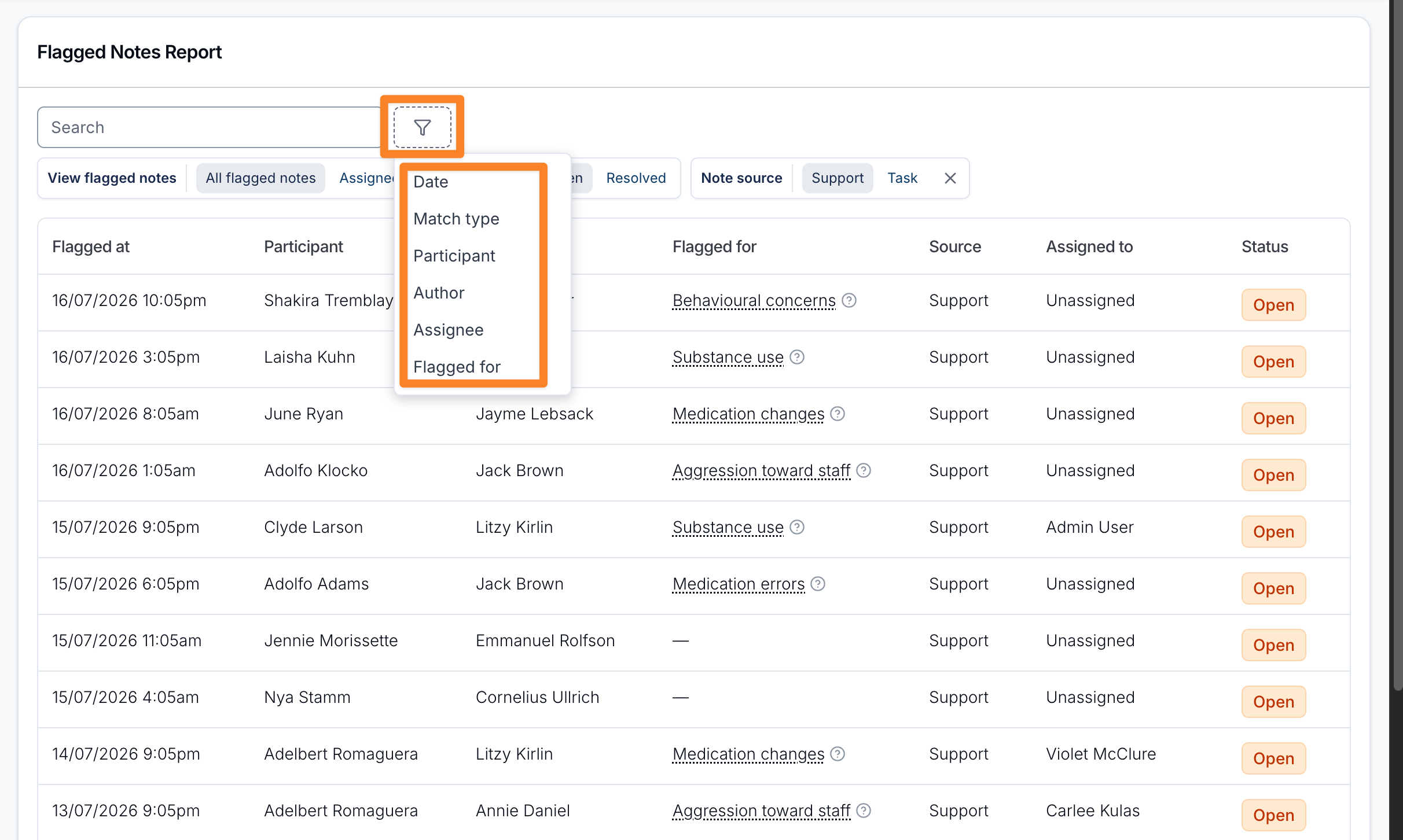
Select the filter icon next to the search box for additional filters:
- Date - the date the note was flagged.
- Match type - how the note matched a checker.
- Flag type - show only Needs review or only Incomplete flags.
- Participant - the Participant the note relates to.
- Author — the person who wrote the note.
- Assignee — who the flag is assigned to.
- Flagged for — the reason the note was flagged.