- Scheduling
- Support Types
Support Types
The Support Type describes what kind of support is being delivered. You choose it on the Create Shift Event form when you add a 1:1 Shift or a Group Shift, and you can change it later when editing the support.
Every Support Type is available to all organisations — there is nothing to turn on, and no setup required before you can use one.
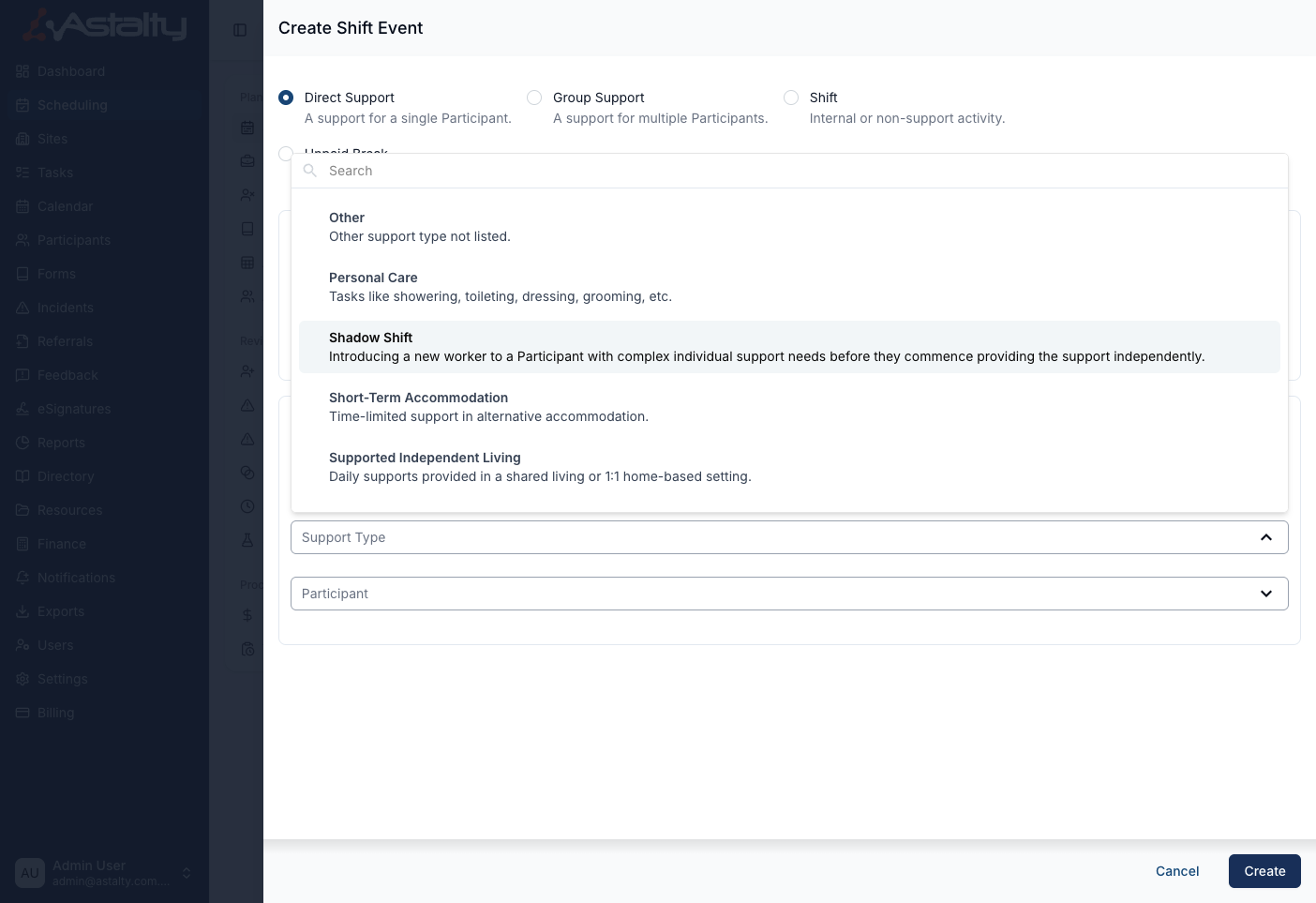
Shadow Shift
Shadow Shift is used when you are introducing a new worker to a Participant with complex individual support needs, before that worker commences providing the support independently.
In practice this is the shift you roster when a new or incoming Support Worker works alongside an experienced worker to learn a Participant's routine, preferences and support requirements — often called a buddy shift or shadowing a shift.
Available Support Types
The dropdown is searchable — you can type to match on either the name or its description. The options are:
| Support Type | Description |
|---|---|
| Behaviour Support Implementation | Where the shift involves following strategies from a behaviour support plan. |
| Capacity Building | Helping Participants develop skills like cooking, cleaning, budgeting. |
| Community Access | Support to get out and about – social outings, errands, recreation, appointments. |
| Education Support | Assistance to attend school, TAFE, or learning programs. |
| Employment Support | Support to maintain or develop employment skills or routines. |
| Group Support | Structured group activities or centre-based support. |
| High Intensity Support | For complex care needs – includes mealtime management, seizure care, continence, etc. |
| In-Home Support | General support provided in the home, not limited to personal care. |
| Other | Other support type not listed. |
| Personal Care | Tasks like showering, toileting, dressing, grooming, etc. |
| Shadow Shift | Introducing a new worker to a Participant with complex individual support needs before they commence providing the support independently. |
| Short-Term Accommodation | Time-limited support in alternative accommodation. |
| Supported Independent Living | Daily supports provided in a shared living or 1:1 home-based setting. |
| Therapy Support | Support Workers following therapy programs set by professionals. |
| Training | Training related to Participant support needs. |
| Transport | Supporting Participants to travel to activities, appointments, school, etc. |
What the Support Type is used for
The Support Type is a way of categorising supports. It flows through to:
- Schedule Colours — supports and group supports can be coloured by their Support Type.
- Cost Codes — cost code rules can match on the Support Type.
- Supports Report — filter the report by one or more Support Types.
- Sites — selecting a Site on a support can automatically apply a Support Type.