Voiding Invoices
Sometimes you may need to correct an invoice, for example because the wrong Charge Item was used or the Participant's management type changed. You can void a whole unpaid invoice for NDIA, Plan, or Self management. You can also void an unpaid line on an NDIA-managed invoice, even when other lines on that invoice have been paid.
Finding the invoice
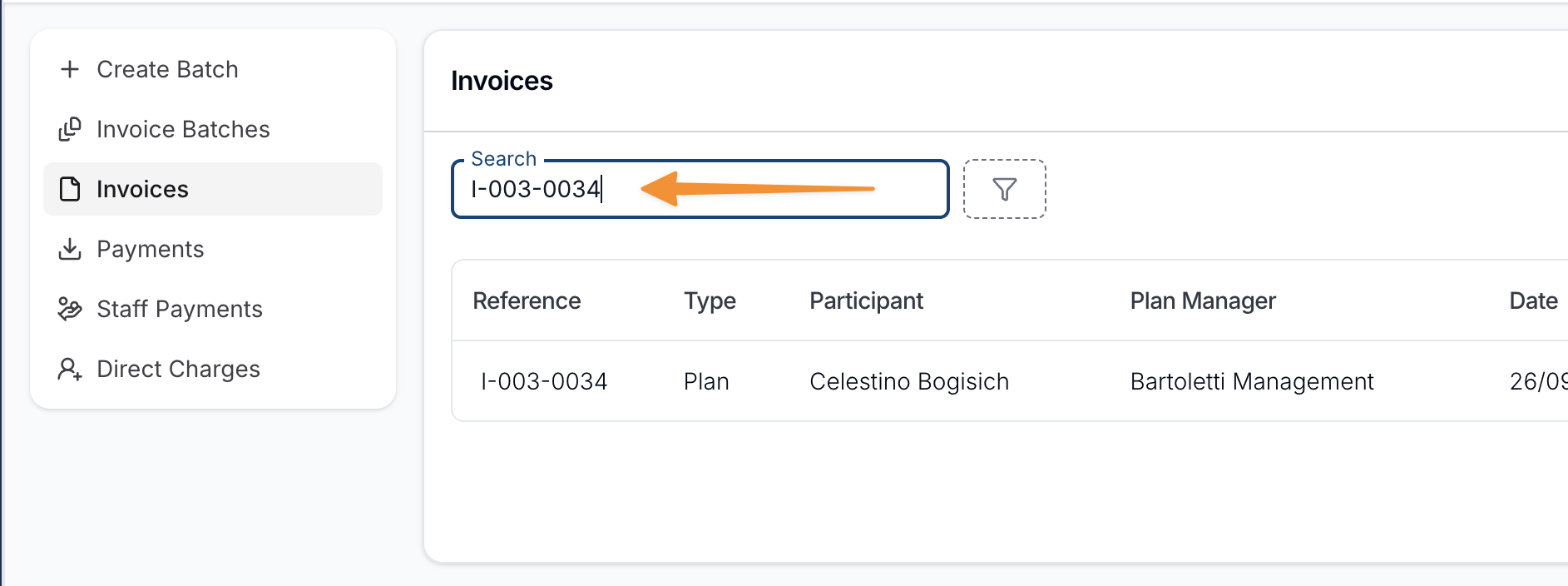
The first step when voiding an invoice is to find the invoice - this can be easily done on the Invoices page within the Finance section. The fastest way to find an invoice is to search by reference.
Void the invoice
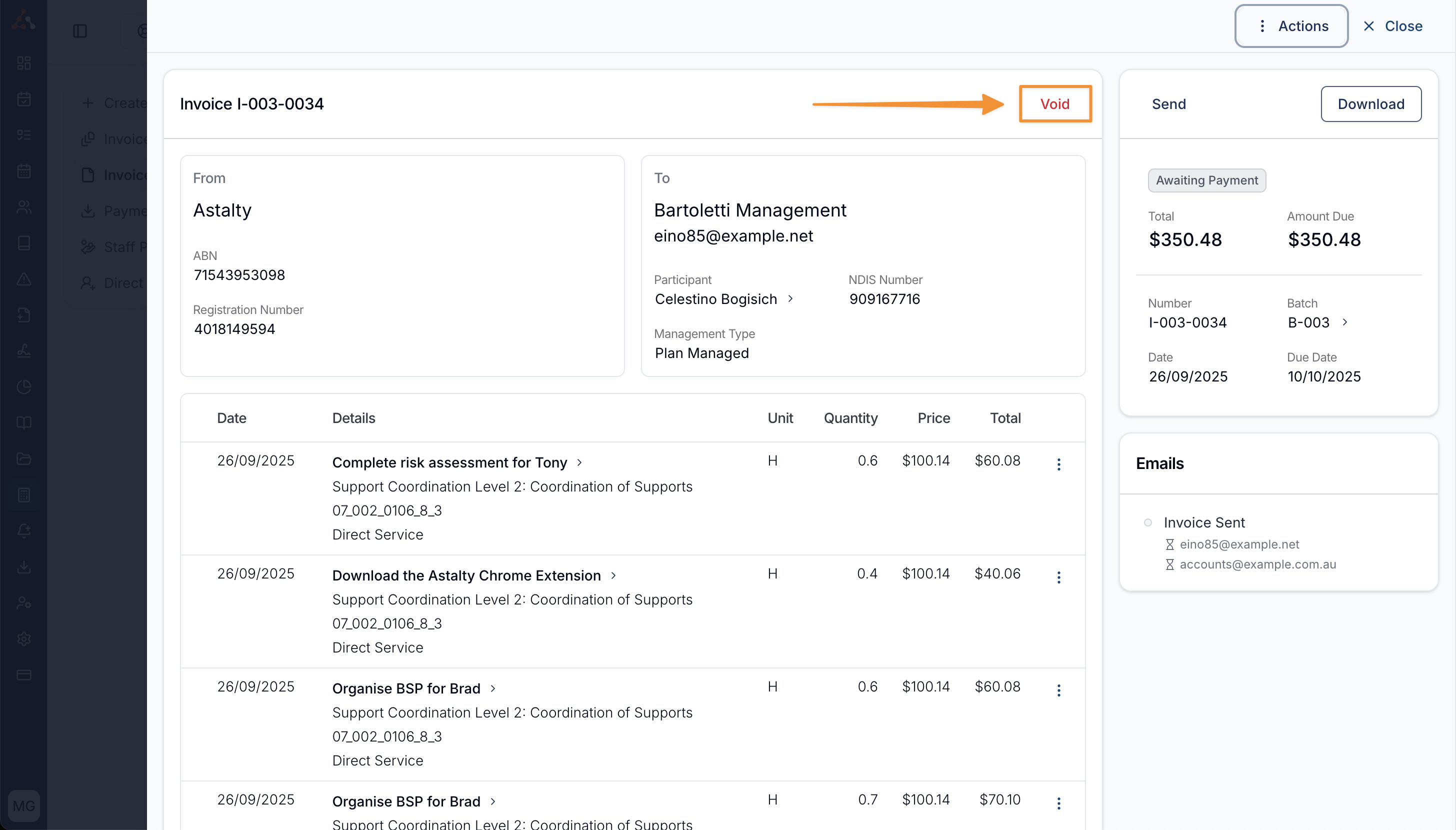
Once you have found the invoice, you can click on it to open the invoice page.
If the invoice can be voided, a red Void button will be showing and you can click this to void the invoice.
When voiding an invoice, you will be given the chance to add a reason for voiding the invoice. This is important for auditing and keeping track of changes. Voided reasons are shown in the Voided Charges report.
For Plan- and Self-managed invoices, providers with the optional invoice void notifications feature can also notify the original recipients when voiding the invoice.
Voiding individual lines
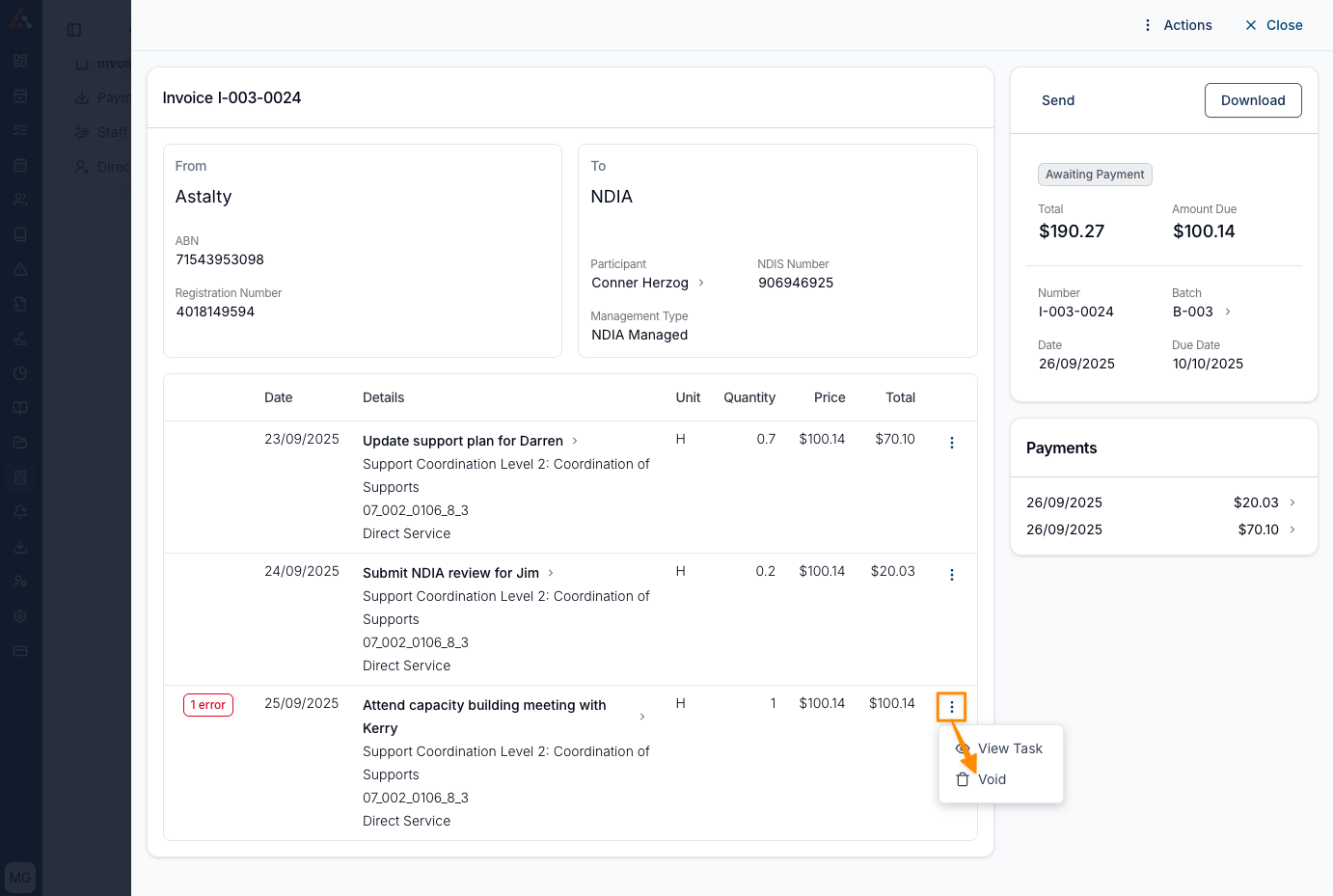
If the invoice is NDIA managed, Astalty allows you to void individual lines within an invoice. You can do this by clicking on the 3 dots for the line and clicking Void. Charges that have been partially or fully paid can not be voided.
Finding and fixing voided charges
Once a charge has been voided, usually you need to undertake some action to fix the charge so you can invoice for it again. Voided charges that have not yet been re-invoiced or deleted stay attached to the finalised invoice batch they came from, in an Unresolved Voided Charges card. Each row shows the date of the Task or support the charge relates to, so you can find the day you're chasing without opening every charge.
See Unresolved Voided Charges for how to find that card, what each column means, and how to get the charge back onto an invoice.